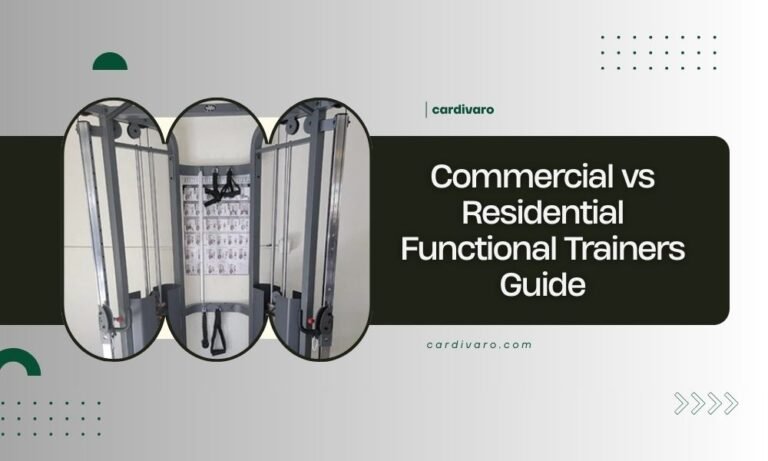
Functional trainer leg exercises target multiple muscle groups simultaneously, building strength, balance, and coordination more effectively than isolation movements.
The 12 best functional trainer leg exercises include squats, lunges, step-ups, lateral lunges, and single-leg deadlifts that mimic real-world movement patterns.
Why Functional Trainer Leg Workouts Beat Traditional Methods
You’ve probably wondered why functional training gets so much attention these days. The answer is simple: it works better.
Traditional leg workouts isolate muscles one at a time. Think leg curls or leg extensions. But when do you ever use just your hamstrings in real life?
Functional training teaches your muscles to work together. You build strength that actually transfers to daily activities. Picking up groceries, climbing stairs, playing with kids – all become easier.
The Science Behind Functional Movement
Research shows functional exercises activate more muscle fibers than isolation moves. I found studies indicating that compound movements like squats engage up to 200 muscles simultaneously (NCBI).
Your body learns to stabilize, coordinate, and generate power as one unit. That’s exactly how you move outside the gym.
Essential Equipment Setup for Maximum Results
Before jumping into exercises, let’s get your functional trainer ready. You don’t need much, but what you have matters.
Cable Height Positioning
Most exercises work best with cables at ankle height or mid-thigh level. This creates the right resistance angle for natural movement patterns.
Some movements need high cable positions. We’ll cover those as we go through each exercise.
Weight Selection Strategy
Start lighter than you think. Functional exercises challenge your balance and coordination. You might squat 200 pounds on a barbell but struggle with 50 pounds on cables.
That’s normal and expected. Your stabilizer muscles are learning to engage.
The 12 Best Functional Trainer Leg Exercises
1. Cable Squats
Set cables at chest height. Hold handles at shoulder level. Step back until you feel slight tension.
Lower into a squat while pulling handles toward your chest. The cables provide counter-balance, letting you sit back deeper than normal squats.
Why This Works
The cable resistance changes throughout the movement. You work harder at the bottom where you’re strongest. This matches your natural strength curve perfectly.
2. Single-Leg Cable Deadlifts
Face the machine with cable at ankle height. Hold one handle with both hands. Step back and shift weight to your right foot.
Hinge at your hip, extending your left leg behind you. Keep your back straight as you lower the weight.
Balance Challenge
This exercise forces your core and glutes to work overtime. You’re building stability while strengthening your entire posterior chain.
3. Lateral Lunges with Cable Row
Set cable at chest height. Hold handle with both hands. Step sideways into a deep lunge while pulling the cable to your chest.
This combines lower body strength with upper body pulling. Your legs and back work together, just like when you’re moving furniture or gardening.
4. Cable Step-Ups
Place a box or bench in front of the machine. Set cables at ankle height, one on each side.
Step up onto the box while pulling both cables. Step down slowly, controlling the weight on the way down.
Real-World Application
This mirrors climbing stairs while carrying bags. You’re training your body for actual daily activities.
5. Bulgarian Split Squats
Face away from the machine with cable at low position. Place your back foot on a bench behind you.
Lower into a lunge position while holding the cable handle at chest level. This adds rotational challenge to an already difficult exercise.
6. Cable Glute Bridges
Lie on your back with feet toward the machine. Loop cable around your hips or hold handles at hip level.
Drive your hips up, squeezing glutes at the top. The cable provides variable resistance that matches your strength curve.
7. Single-Leg Cable Squats
Hold one cable handle at chest height. Lift one foot slightly off the ground.
Squat down on your standing leg while maintaining balance. This exercise will humble even strong athletes.
Progression Tips
Start with just bodyweight. Add cable resistance once you can do 10 perfect reps on each leg.
8. Cable Reverse Lunges
Face the machine with cables at chest height. Hold both handles and step backward into a lunge.
Pull the cables as you lunge back, then return to starting position. This targets your glutes more than forward lunges.
9. Lateral Leg Raises
Attach ankle strap to low cable. Stand sideways to the machine with cable attached to your far leg.
Lift your leg sideways against resistance. This strengthens your hip abductors, which are often weak in most people.
10. Cable Calf Raises
Hold cables at shoulder height for added resistance. Rise up on your toes, pause at the top, then lower slowly.
The cables add upper body engagement that regular calf raises miss.
11. Single-Leg Cable Presses
Lie on your back with one foot in the cable strap. Press your leg away from the machine while keeping the other leg still.
This challenges your core stability while building single-leg strength.
12. Cable Curtsy Lunges
Hold cable at chest height. Step your right leg behind and across your left leg, like a curtsy.
This movement pattern targets glutes and inner thighs while improving hip mobility.
Creating Your Perfect Leg Day Routine
Now you have 12 exercises, but how do you put them together?
Beginner Approach
Pick 4-5 exercises. Do 2 sets of 8-12 reps each. Focus on perfect form over heavy weight.
Start with: Cable squats, lateral lunges, step-ups, glute bridges, and calf raises.
Intermediate Programming
Choose 6-8 exercises. Mix bilateral and unilateral movements. Do 3 sets of 10-15 reps.
Add single-leg variations and more challenging combinations.
Advanced Training
Use all 12 exercises in rotation. Focus on single-leg movements and complex patterns. Increase time under tension rather than just adding weight.
Common Mistakes That Kill Your Progress
Using Too Much Weight Too Soon
Your ego might want heavy weight, but your stabilizers need time to adapt. I’ve seen people struggle with cables after dominating traditional weights.
Start light. Build coordination first, strength second.
Forgetting About Form
Cables allow cheating in ways barbells don’t. You can lean, twist, or use momentum easily.
Move slowly and deliberately. Control the weight in both directions.
Skipping Single-Leg Work
Bilateral exercises are comfortable. Unilateral moves are humbling. But single-leg work reveals and fixes imbalances that bilateral training misses.
Include at least 2-3 single-leg exercises in every workout.
Troubleshooting Your Form
Cable Keeps Pulling You Forward
You’re standing too close or using too much weight. Step back until the pull feels manageable.
Can’t Keep Balance
Slow down. Functional training isn’t about speed. Focus on controlling every inch of movement.
Practice the exercises without weight first. Master the pattern, then add resistance.
Not Feeling It in the Right Muscles
Adjust your cable height or stance width. Small changes make big differences in muscle activation.
Measuring Your Progress
Functional training progress looks different than traditional lifting. You’re not just chasing bigger numbers.
What to Track
- How long you can hold single-leg positions
- Smoothness of movement patterns
- Ability to add complexity without losing form
- How you feel during daily activities
Take videos of yourself monthly. You’ll see improvements in balance and coordination that numbers can’t capture.
Safety Considerations
Functional trainers are generally safe, but cables under tension deserve respect.
Pre-Workout Checks
Inspect cables for fraying. Check that pins are fully inserted. Ensure nothing will interfere with your range of motion.
Listen to Your Body
Joint discomfort means something’s wrong with your setup or form. Muscle fatigue is normal. Sharp pain is not.
Conclusion
These 12 functional trainer leg exercises will transform how your legs work together. You’re not just building muscle – you’re creating a movement system that serves you in real life.
Start with the basics. Master the patterns. Progress gradually. Your legs will become stronger, more stable, and more coordinated than ever before.
Remember, the best exercise is the one you’ll actually do consistently. Pick exercises you enjoy and can perform with good form. Your future self will thank you for building a foundation of functional strength.
How often should I do functional trainer leg exercises?
Start with 2-3 times per week, allowing at least one day of rest between sessions. Your stabilizer muscles need more recovery time than larger muscle groups, especially when you’re learning new movement patterns.
Can I replace my regular leg day with functional trainer exercises?
Yes, functional trainer exercises can provide a complete leg workout. They often work muscles more comprehensively than traditional isolation exercises, but you may want to keep some heavy squats or deadlifts for maximum strength development.
What weight should I start with for each exercise?
Begin with 20-30% less weight than you’d use for similar barbell or dumbbell exercises. Focus on completing full range of motion with perfect balance before increasing resistance. Most people underestimate how challenging the stability component can be.
Are functional trainer leg exercises suitable for beginners?
Absolutely, but beginners should start with basic movement patterns before progressing to single-leg variations. The cable system provides support and guidance that can actually make learning proper form easier than free weights.
How do I know if I’m using the right cable height?
The cable should create resistance in the direction opposite to your intended movement. For squats, chest height works best. For deadlifts, use ankle height. If an exercise feels awkward or you can’t maintain good form, try adjusting the cable position up or down.