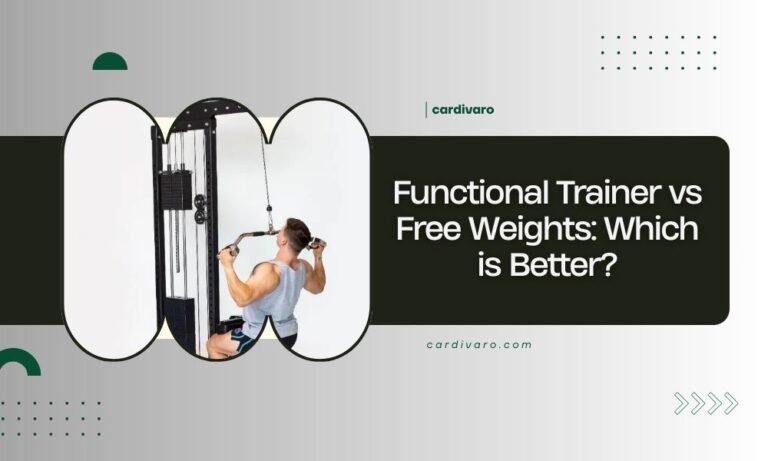
Functional trainers offer excellent options for rotator cuff exercises through adjustable cable systems that provide smooth, controlled resistance from multiple angles.
The best rotator cuff exercises for functional trainers include external rotations, internal rotations, face pulls, and high-to-low rotations that target all four rotator cuff muscles.
Why Your Rotator Cuff Needs Special Attention
Your rotator cuff is like the steering wheel of your shoulder. It’s made up of four small muscles that work together to keep your shoulder stable and moving smoothly.
These muscles get overlooked in most workouts. You focus on your chest, back, and arms. But your rotator cuff? It quietly does its job until something goes wrong.
I found research showing that rotator cuff injuries affect about 2 million Americans each year (American Academy of Orthopaedic Surgeons). That’s a lot of people dealing with shoulder pain and limited movement.
What Makes Functional Trainers Perfect for Rotator Cuff Work
Functional trainers beat free weights for rotator cuff exercises. Here’s why.
Smooth Resistance Throughout the Movement
Cables provide constant tension. Free weights rely on gravity, which means some parts of the movement get no resistance at all.
Your rotator cuff muscles are small and delicate. They respond better to smooth, controlled resistance than jerky movements with dumbbells.
Adjustable Angles Match Natural Movement
Your shoulder moves in multiple directions. Functional trainers let you adjust the cable height and angle to match exactly how your shoulder naturally moves.
Try doing external rotations with the cable at shoulder height, then at waist height. You’ll feel different parts of your rotator cuff working.
The Four Essential Rotator Cuff Exercises
External Rotations
This is the king of rotator cuff exercises. Set the cable at elbow height. Stand sideways to the machine.
Keep your elbow tucked against your side. Pull the handle away from your body by rotating your shoulder outward.
Start with light weight. I’m talking really light. Your rotator cuff muscles are small and get tired quickly.
Common Mistakes to Avoid
- Using too much weight
- Moving your elbow away from your body
- Rotating too fast
- Using your back muscles instead of your shoulder
Internal Rotations
Face the opposite direction from external rotations. Pull the handle across your body toward your stomach.
This exercise works the muscles on the front of your rotator cuff. Most people are stronger with internal rotation than external rotation.
Perfect Your Form
Keep your movements slow and controlled. Think of it like stirring honey, not water.
Your shoulder blade should stay still. All the movement comes from rotating your arm at the shoulder joint.
Face Pulls
Set the cable at face height. Use a rope attachment or dual handles.
Pull the handles toward your face. Your elbows should be higher than your hands at the end of the movement.
Face pulls work your rear deltoids and the back part of your rotator cuff. They also help fix forward head posture from sitting at desks all day.
Why Face Pulls Matter
I found that physical therapists often recommend face pulls for people with shoulder impingement (Cleveland Clinic). The exercise helps balance out tight chest muscles.
High-to-Low Rotations
Set the cable high above your head. Pull diagonally down and across your body.
This movement works your rotator cuff in a functional pattern. You use this same motion when you reach overhead and pull something down.
Programming Your Rotator Cuff Workouts
Frequency and Volume
Your rotator cuff recovers quickly because the muscles are small. You can train them every other day without problems.
Start with 2-3 sets of 12-15 reps per exercise. Focus on perfect form over heavy weight.
Weight Selection Guidelines
Use weights that feel almost too light. Your rotator cuff muscles fatigue fast and don’t need heavy resistance to get stronger.
If you can’t complete all reps with perfect form, the weight is too heavy. Drop it down and focus on quality movement.
Troubleshooting Common Problems
Shoulder Blade Movement
Your shoulder blade should stay stable during rotator cuff exercises. If it’s moving around, you’re probably using too much weight or compensating with other muscles.
Elbow Position
Keep your elbow at your side for most exercises. When it drifts away from your body, other muscles take over and your rotator cuff doesn’t work as hard.
Building a Complete Rotator Cuff Routine
Here’s a simple routine you can do 3 times per week:
| Exercise | Sets | Reps | Rest |
|---|---|---|---|
| External Rotations | 3 | 12-15 | 60 seconds |
| Internal Rotations | 3 | 12-15 | 60 seconds |
| Face Pulls | 2 | 15-20 | 60 seconds |
| High-to-Low Rotations | 2 | 10-12 | 60 seconds |
When to Progress and How
Signs You’re Ready to Progress
You can complete all sets and reps with perfect form. The last few reps feel challenging but not impossible.
You don’t feel sore or stiff the day after your workout.
How to Add Challenge
Add 2-5 pounds to the weight stack. If that’s too much, add more reps before increasing weight.
You can also slow down your movements. Taking 3 seconds to rotate out and 3 seconds to rotate back makes the exercise much harder.
Safety Considerations
Stop If You Feel Pain
Muscle fatigue is normal. Sharp pain is not. If something hurts, stop the exercise and check your form.
Your rotator cuff muscles are injury-prone. It’s better to be too careful than to push through pain and get hurt.
Warm Up First
Do some arm circles and light shoulder movements before starting your rotator cuff exercises. Cold muscles are more likely to get injured.
Conclusion
Your rotator cuff keeps your shoulders healthy and pain-free. Functional trainers give you the perfect tool to strengthen these small but important muscles.
Start light, focus on perfect form, and be consistent. Your shoulders will thank you for taking the time to train them properly.
Remember, strong rotator cuffs don’t just prevent injuries. They also help you lift heavier weights in your main exercises by keeping your shoulders stable and secure.
Can I do rotator cuff exercises every day?
You can do them every other day safely. Daily training might lead to overuse since these are small muscles that need recovery time between sessions.
How long before I see results from rotator cuff training?
Most people notice better shoulder stability and less stiffness within 2-3 weeks of consistent training. Strength gains become noticeable around 4-6 weeks.
Should I feel a burn in my rotator cuff muscles?
A light burn or fatigue feeling is normal, especially in the last few reps. Sharp pain or intense burning means you should stop and check your form or reduce the weight.
What cable height works best for rotator cuff exercises?
Elbow height works well for most rotator cuff exercises. You can adjust higher or lower to target slightly different muscle fibers, but elbow height is the most functional position.
How do I know if my rotator cuff is getting stronger?
You’ll be able to do more reps with the same weight, or use slightly heavier weight with good form. You might also notice less shoulder stiffness and better overhead reaching ability in daily activities.