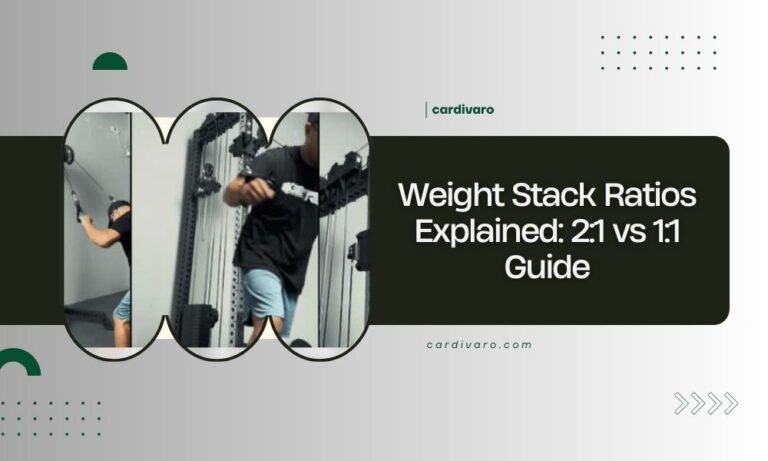
Scapular retractions on a functional trainer involve pulling your shoulder blades together against resistance using cable attachments, which strengthens the rhomboids and middle trapezius muscles.
You perform this exercise by grasping handles at chest height and squeezing your shoulder blades back while keeping your arms straight or slightly bent.
What Are Scapular Retractions
Think of your shoulder blades as two puzzle pieces that need to slide toward each other. That’s exactly what scapular retractions do.
This movement targets the muscles between your shoulder blades. Your rhomboids and middle traps do most of the work. These muscles often get weak from slouching at desks or looking down at phones all day.
I found that many fitness experts consider this one of the best exercises for fixing rounded shoulders. The functional trainer makes it even better because you get smooth, adjustable resistance.
Muscles Worked During the Exercise
Your rhomboids are the star players here. These diamond-shaped muscles pull your shoulder blades together like magnets.
The middle trapezius joins the party too. This muscle sits across your upper back and helps maintain good posture.
Your rear deltoids get some action as well. They’re the back portion of your shoulder muscles that help pull your arms back.
Primary Muscle Groups
- Rhomboids major and minor
- Middle trapezius fibers
- Lower trapezius (stabilizing)
Secondary Muscle Groups
- Posterior deltoids
- Infraspinatus
- Teres minor
How to Perform Scapular Retractions Correctly
Getting the setup right makes all the difference. I researched proper form extensively, and here’s what works best.
Start by adjusting the cables to chest height. You want the handles right at your sternum level when you’re standing tall.
Step-by-Step Setup Instructions
Walk up to your functional trainer and grab both handles. Step back until you feel slight tension in the cables.
Plant your feet shoulder-width apart. Keep a small bend in your knees. This gives you a stable base.
Hold your arms out straight in front of you. Your palms should face down or toward each other.
Starting Position Details
Your shoulders should sit directly over your hips. Don’t lean forward or backward.
Keep your core tight like someone might poke your belly. This protects your lower back.
Let your shoulder blades spread apart naturally. This is your starting position.
Movement Execution
Now comes the fun part. Squeeze your shoulder blades together like you’re trying to hold a pencil between them.
Pull back with your shoulder blades, not your arms. Your arms barely move during this exercise.
Hold the squeeze for one to two seconds. You should feel your upper back muscles working hard.
The Return Phase
Slowly let your shoulder blades drift apart again. Control the weight on the way back.
Don’t let the cables snap your arms forward. That’s cheating and can hurt your shoulders.
Stop when you feel a gentle stretch across your upper back. Then repeat.
Common Mistakes to Avoid
I found online that most people turn this into an arm exercise by accident. Your biceps shouldn’t be doing the work here.
Another big mistake is using too much weight. Start light and focus on feeling the right muscles activate.
Form Errors That Limit Results
Rolling your shoulders up toward your ears kills the exercise. Keep your shoulders down and back.
Arching your lower back too much is another red flag. Stay neutral through your spine.
Moving too fast robs you of the benefits. Slow and controlled wins every time.
Weight Selection Problems
Heavy weight makes you compensate with other muscles. You end up working everything except what you want to target.
Your ego might want more weight, but your shoulder blades need precision instead.
Benefits of Using a Functional Trainer
Functional trainers give you something dumbbells and barbells can’t match. The cables provide constant tension throughout the entire movement.
You also get perfect angle adjustment. Set the cables exactly where you need them for your height and arm length.
Advantages Over Free Weights
Free weights fight gravity in one direction. Cables can pull from any angle you want.
The resistance stays consistent from start to finish. With free weights, some positions feel easier than others.
Safety is better too. You won’t drop a weight on your foot if your grip fails.
Versatility Features
Change the height in seconds to target slightly different muscle fibers. High, middle, and low angles all work.
Switch between handles, ropes, or bars without changing equipment. Each attachment feels different.
Variations and Progressions
Once you master the basic version, you have plenty of ways to keep challenging yourself.
Single-arm retractions force each side to work independently. This helps fix muscle imbalances.
Equipment Modifications
Try using a rope attachment instead of handles. This changes your grip and muscle activation slightly.
Resistance bands work if you don’t have a functional trainer. Loop them around a sturdy anchor point.
| Variation | Difficulty | Best For |
|---|---|---|
| Basic two-arm | Beginner | Learning the movement |
| Single-arm | Intermediate | Fixing imbalances |
| High-to-low angle | Advanced | Lower trap activation |
Angle Adjustments
Pull from above your head down to chest level. This hits your lower traps harder.
Pull from below upward for a different challenge. Your middle traps work overtime here.
Programming Recommendations
I came across research suggesting that higher repetitions work best for postural muscles. These muscles need endurance more than raw strength.
Start with 2 to 3 sets of 12 to 15 repetitions. Focus on perfect form before adding weight or reps.
Frequency Guidelines
You can do scapular retractions almost daily. These muscles recover quickly from light to moderate work.
Many experts say 3 to 4 times per week gives the best results for posture improvement.
Integration with Other Exercises
Use these as a warm-up before pressing exercises. They activate your stabilizing muscles first.
Pair them with chest stretches for a complete posture routine. Balance is everything.
Conclusion
Scapular retractions on a functional trainer offer one of the most effective ways to strengthen your upper back and improve posture. The adjustable angles and constant tension help you target the exact muscles that fight against rounded shoulders and poor posture. Start with light weight, focus on feeling your shoulder blades squeeze together, and gradually build up your endurance. Your back will thank you for the attention, and you’ll stand taller with more confidence. Make this exercise a regular part of your routine, and watch your posture transform over time.
How often should I do scapular retractions for better posture?
You can perform scapular retractions 3 to 4 times per week safely. These postural muscles recover quickly, so frequent training helps reinforce proper movement patterns and gradually corrects rounded shoulder positioning.
What weight should beginners use for scapular retractions?
Start with very light resistance, around 10 to 20 pounds total. The goal is feeling your shoulder blades move properly, not lifting heavy weight. You should complete 12 to 15 clean repetitions without your arms taking over the movement.
Can I do scapular retractions without a functional trainer?
Yes, resistance bands work well as an alternative. Anchor the band at chest height and perform the same squeezing motion. Dumbbells lying face-down on a bench also work, though cables provide more consistent tension throughout the movement.
Why don’t I feel scapular retractions in my back muscles?
You’re likely using your arms instead of your shoulder blades. Try the movement without any weight first, focusing solely on squeezing your shoulder blades together. Keep your arms relatively straight and think about pulling your shoulder blades toward your spine.
Should scapular retractions hurt my neck or shoulders?
No, properly performed scapular retractions should feel comfortable. Pain usually means you’re shrugging your shoulders up or using too much weight. Keep your shoulders down and back, and reduce the resistance until you can move pain-free.