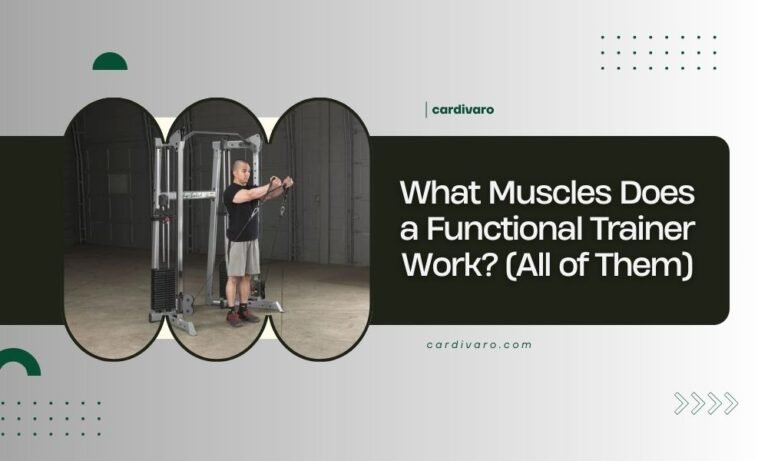
The single arm chest press on a functional trainer builds unilateral strength while improving core stability and correcting muscle imbalances between your left and right sides.
You’ll get better results by focusing on controlled movement, proper cable height positioning, and maintaining a stable stance throughout the exercise.
Why Single Arm Chest Press Works So Well
Your body works one side at a time in real life. When you push a heavy door or throw a ball, you’re using one arm while your core keeps you balanced.
The single arm chest press mimics this natural movement pattern. Research shows unilateral training can improve athletic performance and reduce injury risk (American Council on Exercise).
Key Benefits You’ll Notice
- Stronger core engagement compared to bilateral pressing
- Better balance between dominant and weaker sides
- Improved functional strength for daily activities
- Enhanced shoulder stability and control
Setting Up Your Functional Trainer
Getting the setup right makes or breaks this exercise. You want the cable at chest height when you’re standing naturally.
Cable Height Position
Set the pulley at your mid-chest level. Too high and you’ll feel it in your shoulders. Too low and you’ll lose the chest focus.
Stand about two feet away from the machine. This gives you room to press forward without the weight stack touching down at the bottom.
Handle Selection
A D-handle works great for most people. Some prefer a single grip handle for better wrist comfort.
Avoid rope attachments here. They don’t give you the stable grip you need for heavy pressing.
Weight Stack Considerations
Start with about 60-70% of what you’d use for bilateral chest press. Your stabilizing muscles need time to adapt.
Perfect Single Arm Chest Press Form
Think of this like throwing a punch, but controlled and deliberate.
Starting Position
Grab the handle with your working arm. Step into a staggered stance with your opposite foot forward.
Your non-working arm can rest on your hip or extend out for balance. Find what feels natural.
The Pressing Movement
Pull your shoulder blades together. Press the handle forward and slightly across your body.
Your arm should finish in line with the middle of your chest. Don’t let it drift too far across your centerline.
Common Form Mistakes
- Rotating your torso during the press
- Pressing too far across your body
- Using your legs to help the movement
- Letting your shoulder roll forward
Breathing and Tempo Tips
Breathe out as you press. Breathe in as you return to start.
Use a 2-1-2 tempo. Two seconds to press out, pause for one second, two seconds back.
Why Tempo Matters
Slow, controlled movements build more strength than fast, jerky ones. Your muscles work harder when they can’t use momentum.
I found that focusing on the negative (return) portion really improved my chest development.
Stance Variations That Work
Different stances challenge your body in different ways.
Staggered Stance
This is your go-to position. Opposite foot forward gives you stability while still challenging your core.
Parallel Stance
Feet side by side makes your core work harder. Try this once you’ve mastered the staggered version.
Single Leg Stance
Stand on your opposite leg only. This turns the exercise into a full-body challenge.
Only attempt this with lighter weight. Your balance will be the limiting factor, not your chest strength.
Programming Your Workouts
How often should you do single arm chest press? It depends on your goals.
For Strength Building
Do 3-5 sets of 5-8 reps per arm. Rest 2-3 minutes between arms.
Train this movement 2-3 times per week with at least one day between sessions.
For Muscle Building
Aim for 3-4 sets of 8-12 reps per arm. Keep rest periods around 60-90 seconds.
For Endurance and Stability
Try 2-3 sets of 12-20 reps per arm. Focus on perfect form over heavy weight.
Progression Strategies
Don’t just add weight every week. Your body adapts better with varied progression methods.
Weight Progression
Add 2.5-5 pounds when you can complete all sets with perfect form.
Some weeks, focus on adding reps instead of weight. Both approaches build strength.
Time Under Tension
Slow down your reps. Try a 3-1-3 tempo for an extra challenge.
Your muscles will work harder even with the same weight.
Range of Motion Challenges
Add a pause at the stretched position. This builds strength in your weakest range.
Troubleshooting Common Issues
Every exercise has its quirks. Here’s how to fix the most common problems.
Feeling It in Your Shoulders Instead of Chest
Lower the cable height slightly. Make sure you’re retracting your shoulder blades before pressing.
Think about pushing the handle away from your chest, not just forward.
Can’t Keep Your Torso Still
Reduce the weight. Your core might not be strong enough yet.
Practice the movement without weight first. Focus on keeping your hips and shoulders square.
Uneven Strength Between Arms
This is normal and exactly why you’re doing single arm work.
Always start with your weaker arm. Match the reps and weight with your stronger side.
| Issue | Quick Fix | Long-term Solution |
|---|---|---|
| Shoulder discomfort | Lower cable height | Improve shoulder mobility |
| Torso rotation | Reduce weight | Build core strength |
| Weak side lagging | Start with weak arm | Extra sets for weak side |
Advanced Techniques
Ready to take things up a notch? These techniques add new challenges.
Pre-Exhaustion Method
Do single arm flyes before your chest press. Your chest will be tired, forcing your stabilizers to work harder.
Isometric Holds
Hold the pressed position for 3-5 seconds. This builds strength at the hardest point of the movement.
Alternating Arms
Press with one arm while holding the other in the stretched position. Your core will thank you later.
Safety Considerations
Functional trainers are generally safe, but smart training prevents problems.
Warm-Up Protocol
Do arm circles and light chest stretches before starting. Your shoulders need to be ready for the rotation.
Start with very light weight for your first set. Think of it as part of your warm-up.
When to Stop
Stop if you feel sharp pain or can’t control the weight on the return.
Muscle fatigue is normal. Joint pain is not.
Conclusion
The single arm chest press transforms a basic pushing movement into a full-body stability challenge. You’ll build real-world strength while fixing muscle imbalances that traditional pressing might miss.
Start with lighter weight than you think you need. Focus on perfect form and controlled movement. Your core will get stronger, your weaker side will catch up, and you’ll develop the kind of functional strength that carries over to everything you do.
Remember, this isn’t about ego lifting. It’s about building a body that works better as a complete system. Give it a few weeks, and you’ll feel the difference in how you move.
How much weight should I start with for single arm chest press?
Begin with 60-70% of your bilateral chest press weight. Most people find this allows proper form while still providing adequate resistance for strength gains.
Can I do single arm chest press every day?
No, your muscles need recovery time to grow stronger. Train this exercise 2-3 times per week with at least one rest day between sessions for best results.
Which foot should be forward during the exercise?
Place the foot opposite to your working arm forward. If you’re pressing with your right arm, step your left foot forward for better stability and balance.
Why does my weaker arm shake during the movement?
Shaking indicates your stabilizing muscles are working hard to control the weight. This is normal and will improve with consistent practice. Reduce weight if shaking prevents proper form.
Should I feel this exercise in my core?
Yes, your core should work to prevent rotation and maintain posture. If you don’t feel core engagement, you might be using too little weight or compensating with poor form.