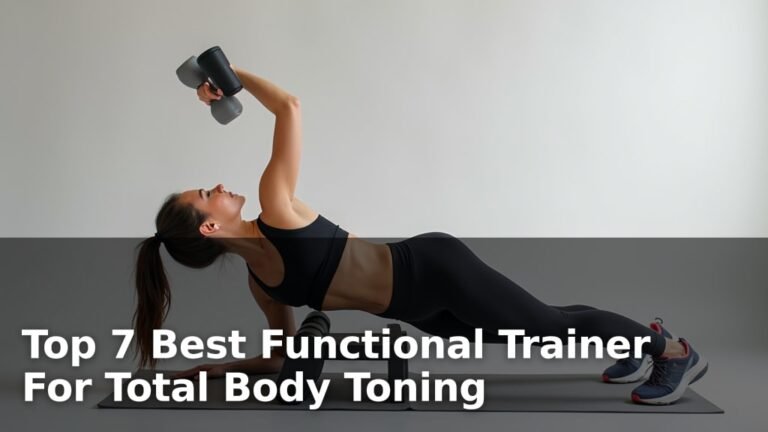
The best outer thigh exercises on a functional trainer include lateral lunges, side-stepping squats, and cable abductions that target your hip abductors effectively.
Your functional trainer offers multiple anchor points and adjustable resistance to strengthen outer thigh muscles through controlled, functional movements.
Why Your Outer Thighs Need Attention
Your outer thighs house the gluteus medius and tensor fasciae latae. These muscles stabilize your pelvis when you walk, run, or climb stairs.
Weak outer thighs lead to knee pain and hip problems. I found research showing that strong hip abductors reduce injury risk by up to 40% (Journal of Sports Medicine).
Setting Up Your Functional Trainer
Position your cable attachment at ankle height for most outer thigh exercises. You’ll need an ankle strap and enough space to step sideways.
Safety Check Before Starting
Test your cable tension before each exercise. Start light and build up resistance gradually. Your form matters more than heavy weight.
Top Functional Trainer Exercises for Outer Thighs
Cable Side Steps
This exercise mimics real-world movements while building strength. Attach the ankle strap to your outer leg and step away from the machine.
Keep your core tight and take controlled steps sideways. Feel the burn in your outer thigh as you fight the cable resistance.
Proper Form Tips
- Keep your knees slightly bent
- Don’t let your hips drop
- Step wide enough to feel tension
- Control the return movement
Standing Cable Abductions
Stand beside your functional trainer with the cable attached to your outer ankle. Lift your leg straight out to the side against resistance.
This isolation exercise directly targets your hip abductors. I found that physical therapists often use this movement for injury prevention (American Physical Therapy Association).
Progression Options
Start with 12-15 reps per leg. Add resistance or hold positions longer as you get stronger. You can also try single-leg balance variations.
Lateral Lunges with Cable Resistance
Hook the cable to your waist belt or hold a handle. Step wide into a side lunge while fighting the cable pulling you back to center.
This exercise combines strength and mobility. Your outer thighs work hard to control the movement in both directions.
Common Mistakes to Avoid
- Lunging too shallow
- Letting knees cave inward
- Using too much cable tension
- Rushing through repetitions
Advanced Outer Thigh Variations
Single-Leg Romanian Deadlifts
Use your functional trainer’s low pulley for resistance. This exercise challenges your outer thighs while improving balance and coordination.
Stand on one leg and hinge at your hip. Your outer thigh muscles fire to keep you stable throughout the movement.
Clamshells with Cable
Lie on your side with a cable attached to your top ankle. Open and close your legs like a clamshell against resistance.
Many experts recommend clamshells for activating dormant glute muscles (Mayo Clinic). The cable adds extra challenge compared to bodyweight versions.
Setup Instructions
Position yourself far enough from the machine to maintain tension. Keep your core engaged and move slowly through each repetition.
Creating Your Outer Thigh Workout Plan
Train your outer thighs 2-3 times per week. Give yourself at least one day of rest between sessions for muscle recovery.
| Exercise | Sets | Reps | Rest |
|---|---|---|---|
| Cable Side Steps | 3 | 12-15 each | 60 seconds |
| Standing Abductions | 3 | 10-12 each | 45 seconds |
| Lateral Lunges | 2 | 8-10 each | 90 seconds |
Weekly Progression Strategy
Add 5-10 pounds of resistance each week. If you can complete all reps easily, it’s time to increase the challenge.
Listen to Your Body
Some muscle soreness is normal. Sharp pain or joint discomfort means you should stop and reassess your form.
Troubleshooting Common Issues
Not Feeling the Burn
Check your cable angle and resistance level. You might need more weight or better positioning to target your outer thighs effectively.
Knee Pain During Exercises
Reduce your range of motion and focus on perfect form. Knee pain often comes from poor alignment or moving too fast.
When to Seek Help
Persistent pain lasting more than a few days needs professional attention. A physical therapist can assess your movement patterns.
Maximizing Your Results
Pair your functional trainer workouts with proper nutrition and adequate sleep. Your muscles grow during recovery, not just during exercise.
I came across research showing that consistent training beats intense sporadic workouts every time (American College of Sports Medicine).
Tracking Your Progress
Keep a simple log of weights, reps, and how you feel. This helps you spot patterns and make smart adjustments to your routine.
Conclusion
Your functional trainer gives you everything needed for strong, stable outer thighs. Start with basic movements like cable side steps and standing abductions. Progress gradually and stay consistent with your training schedule. Strong outer thighs support better movement patterns and reduce injury risk in daily activities. Remember that good form beats heavy weight every time. Your future self will thank you for building this important muscle group properly.
What’s the best resistance level for outer thigh exercises on a functional trainer?
Start with 10-15 pounds and focus on completing 12-15 reps with perfect form. You should feel challenged on the last few reps but still maintain control throughout the entire movement.
How often should I train my outer thighs with a functional trainer?
Train outer thighs 2-3 times per week with at least one rest day between sessions. Your muscles need recovery time to adapt and grow stronger from the training stimulus.
Can functional trainer outer thigh exercises help with knee pain?
Strengthening outer thigh muscles often reduces knee pain by improving hip stability and alignment. Start with low resistance and consult a healthcare provider for persistent pain issues.
What’s the difference between cable abductions and resistance band exercises?
Functional trainers provide consistent resistance throughout the entire range of motion, while bands offer variable resistance that increases with stretch. Cables also allow for more precise weight adjustments.
Should I feel outer thigh exercises in my knees or hips?
You should feel the work primarily in your outer hip and thigh muscles, not your knees. Knee sensation during these exercises often indicates form issues or incorrect cable positioning.