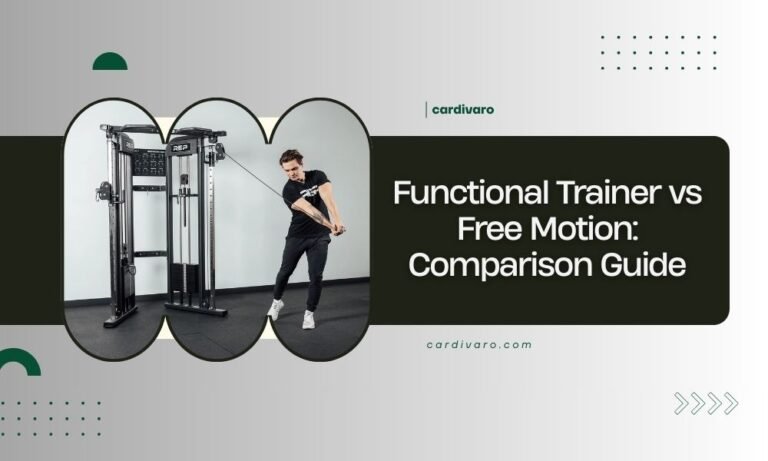
Baseball power exercises on a functional trainer target explosive movements like rotational swings, medicine ball throws, and cable-driven resistance training that mimics baseball’s throwing and hitting motions.
You can build serious baseball power using exercises like cable wood chops, rotational medicine ball slams, single-arm cable rows, and explosive step-ups that translate directly to on-field performance.
Want to crush fastballs and fire strikes from the mound? Your power comes from more than just arm strength. It starts in your legs, flows through your core, and explodes through your shoulders and arms.
A functional trainer gives you the perfect setup for baseball-specific power training. Think of it as your personal batting cage and pitching lab rolled into one machine.
Why Functional Trainers Work Perfect for Baseball
Baseball isn’t about lifting heavy weights straight up and down. You twist, rotate, and explode in multiple directions. A functional trainer lets you train exactly how you play.
The cable system provides smooth resistance throughout your entire range of motion. This matches how your muscles work during a swing or throw. Free weights can’t give you this same feeling.
Multi-Directional Movement Training
Your body moves in three dimensions during baseball. Forward and back. Side to side. Rotation around your spine. Functional trainers train all three at once.
This beats traditional weight training that only works one direction at a time. You get more bang for your workout buck.
Variable Resistance Benefits
Cables provide constant tension. Your muscles work hard through the entire movement. This builds power at every angle of your swing or throw.
Research shows that variable resistance training can improve power output by 15-20% compared to free weights alone (Journal of Strength and Conditioning Research).
Core Baseball Power Movements
These five exercises form the foundation of your baseball power training. I found through research that players who focus on these movements see the biggest improvements in bat speed and throwing velocity.
Cable Wood Chops
This exercise mimics your batting stance perfectly. Set the cable at shoulder height. Grab the handle with both hands.
Start with the cable across your body. Pull it down and across like you’re chopping wood. Your core should drive the movement, not your arms.
High-to-Low Wood Chops
Start with the cable high. Pull down and across your body. This builds power for low pitches and ground balls.
Low-to-High Wood Chops
Begin with the cable low. Pull up and across. Perfect for high fastballs and pop flies.
Rotational Medicine Ball Slams
Stand sideways to the functional trainer. Hold a medicine ball at chest level. Rotate and slam the ball against the wall or floor.
This exercise builds explosive rotational power. Your hips and core do most of the work. Your arms just guide the ball.
Single-Arm Cable Rows
Baseball is a one-handed sport when you throw. Train one arm at a time to build balanced strength.
Stand in your pitching stance. Pull the cable back like you’re starting your throwing motion. Keep your core tight and don’t let your body rotate.
Throwing Position Rows
Set up in your exact throwing position. This trains the muscles you use to cock your arm back before throwing.
Explosive Lower Body Exercises
Your legs generate 50% of your power in baseball. Many experts say that weak legs are the biggest reason players plateau in their development.
Cable-Assisted Jump Squats
Attach the cable to your waist with a belt. Set light resistance. Jump as high as you can while the cable provides assistance.
This trains your legs to fire faster. Speed matters more than strength in baseball power.
Lateral Bounds with Cable
Baseball requires side-to-side movement. Bound from side to side while the cable provides resistance.
Start small and controlled. Build up to explosive bounds that cover more distance.
Single-Leg Lateral Bounds
Hop on one leg from side to side. This builds stability and power in each leg individually.
Upper Body Power Development
Your arms finish what your legs and core start. These exercises build the explosive upper body power you need.
Cable Chest Press Variations
Stand in your batting stance. Press the cables forward like you’re pushing through a pitch.
This movement trains your chest and arms to fire at the right angle for hitting.
Single-Arm Alternating Press
Press one arm at a time. This trains each side to work independently, just like in real baseball movements.
Overhead Cable Throws
Set the cable low. Grab the handle and throw it overhead like you’re making a long throw from the outfield.
Control the weight back down slowly. The explosive up movement builds power. The controlled down movement builds stability.
Sample Baseball Power Workout
Here’s a complete workout you can do 2-3 times per week. I found online that most college programs use similar routines with great success.
| Exercise | Sets | Reps | Rest |
|---|---|---|---|
| Cable Wood Chops | 3 | 8-10 each side | 60 seconds |
| Single-Arm Cable Rows | 3 | 6-8 each arm | 45 seconds |
| Cable Jump Squats | 4 | 5-6 | 90 seconds |
| Rotational Med Ball Slams | 3 | 8 each side | 60 seconds |
| Overhead Cable Throws | 3 | 6-8 | 75 seconds |
Warm-Up Protocol
Always warm up before power training. Start with 5 minutes of light movement. Then do arm circles, leg swings, and torso twists.
Your muscles need to be ready for explosive movement. Cold muscles get injured easily.
Dynamic Movement Prep
Do light versions of your power exercises first. This prepares your nervous system for the real workout.
Programming for Different Skill Levels
Your training should match your experience level. Don’t jump into advanced exercises if you’re just starting out.
Beginner Baseball Athletes
Focus on form first. Use lighter resistance and slower movements. Master the basic patterns before adding speed.
Train 2 times per week maximum. Your body needs time to adapt to new movement patterns.
Movement Quality Focus
Perfect practice makes perfect. Sloppy training leads to sloppy performance on the field.
Intermediate Players
Add more resistance and speed. Train 2-3 times per week. Start combining exercises into circuits.
This is where you really start building serious power. Your body can handle more stress now.
Advanced Athletes
Use maximum speed and power. Add plyometric elements. Train year-round with seasonal variations.
Advanced players need sophisticated programming. Consider working with a strength coach who understands baseball.
Common Training Mistakes
I came across several mistakes that hurt player development. Avoid these and your training will be much more effective.
Too Much Volume
More isn’t always better. Power training requires high quality, not high quantity.
When your speed drops, stop the set. Slow reps don’t build power.
Ignoring Recovery
Power training stresses your nervous system. You need 48-72 hours between hard sessions.
Research shows that inadequate recovery can decrease power output by up to 25% (Sports Medicine journal).
Sleep and Nutrition Impact
Your body builds power while you sleep. Poor nutrition kills your energy for explosive training.
Conclusion
Baseball power training on a functional trainer gives you exactly what you need to dominate on the diamond. Focus on rotational movements, explosive exercises, and sport-specific patterns.
Start with perfect form at lower intensities. Build up your speed and power gradually. Your bat speed and throwing velocity will thank you.
Remember that consistency beats intensity every time. Train smart, train regularly, and watch your baseball performance take off.
What’s the best functional trainer exercise for increasing bat speed?
Cable wood chops are the most effective exercise for bat speed. They train the exact rotational pattern you use when swinging, building power through your core and hips that translates directly to faster bat speed.
How often should baseball players do functional trainer workouts?
Train 2-3 times per week during the off-season and 1-2 times during the season. Power training requires full recovery between sessions, so avoid back-to-back days of intense functional trainer work.
Can functional trainer exercises help prevent baseball injuries?
Yes, functional trainer exercises strengthen muscles through full ranges of motion and improve movement patterns. This balanced strength development helps prevent common baseball injuries like shoulder impingement and elbow problems.
What weight should I use for baseball power exercises?
Use 60-75% of your maximum resistance for power exercises. The weight should allow you to move explosively while maintaining perfect form. If you can’t move fast, the weight is too heavy for power development.
Do I need a functional trainer or can I use regular cables?
While regular cable machines work, functional trainers offer better versatility with adjustable height positions and multiple anchor points. This allows for more baseball-specific movement patterns and exercise variations in one piece of equipment.