A functional trainer is a versatile gym machine that uses a cable and pulley system to provide resistance for nearly any exercise. Think of it as a mini-gym in one station, allowing you to train your muscles from countless angles. It helps you mimic real-world movements.
You can adjust the resistance levels easily, making it great for all fitness levels, from beginners to advanced lifters. We found that these machines are fantastic for building balanced strength and mobility. They are a staple in many gyms because of their incredible versatility.
- Functional trainers are cable machines.
- They offer adjustable resistance.
- You can do many different exercises.
- Great for all fitness levels.
Ready to understand if a functional trainer is right for your fitness goals? Let’s break down everything you need to know about these amazing machines.
Understanding the Functional Trainer Machine
A functional trainer is a piece of exercise equipment. It uses a series of cables and pulleys. This setup lets you move your body in many different directions.
You can adjust the weight easily. This means you can challenge your muscles whether you’re just starting out or you’ve been working out for years. It’s like having a whole gym packed into one flexible system.
How Does a Cable Pulley System Work?
At its core, a functional trainer relies on a cable and pulley system. Weights are attached to cables that run through pulleys. These pulleys can be set at various heights.
When you pull on a handle, the cable moves. This lifts the weight stack. The resistance comes from the weight trying to return to its resting position.
This design creates a smooth, consistent resistance. Unlike free weights, the tension remains fairly constant throughout your entire movement. We found this helps with muscle engagement.
Key Components of a Functional Trainer
To really understand these machines, let’s look at their main parts. Knowing these will help you use one effectively.
Weight Stacks
These are the heavy plates that provide resistance. You usually select your desired weight by inserting a pin into the stack. Most functional trainers have two independent weight stacks.
This allows you to train one side of your body at a time. Or you can use different weights for each arm or leg. This is great for fixing strength imbalances.
Adjustable Pulleys
The pulleys are often mounted on vertical columns. You can slide them up and down. This lets you position the cable at any height.
Want to work your chest? Set the pulleys at shoulder height. Need to train your legs? Move them down low. This adjustability is key to its versatility.
Cable Handles and Attachments
Functional trainers come with a variety of handles. You’ll find D-handles, rope attachments, ankle straps, and straight bars. These let you perform many different exercises.
Changing attachments is usually quick and easy. This keeps your workout flowing. You can target specific muscles with the right handle.
Why Choose a Functional Trainer? Benefits You Should Know
You might wonder what makes functional trainers so special. We found several reasons why they are a popular choice for many exercisers. They offer some unique advantages over other equipment.
Unmatched Versatility for Any Workout
The biggest draw of a functional trainer is its ability to perform hundreds of exercises. It’s not just for strength training. You can also do cardio, rehabilitation, and sports-specific movements.
Imagine doing chest presses, rows, bicep curls, tricep extensions, squats, lunges, and even rotational core work—all on one machine. It really is a whole gym in a compact footprint.
Training for Real-Life Movements
Unlike machines that lock you into a fixed path, functional trainers allow for free-flowing movements. This is called “functional training.” It means you’re training your body for how it moves in daily life or sports.
Think about lifting groceries, swinging a golf club, or throwing a ball. These actions involve multiple muscles working together. Functional trainers help you mimic and strengthen these complex movements effectively.
Safe and Joint-Friendly Resistance
The consistent tension from cables is often gentler on your joints than free weights. There’s less shock or sudden impact. This makes them a good choice if you have joint issues or are new to lifting.
You also don’t have the same risk of dropping heavy weights. This adds an extra layer of safety. Many physical therapists use functional trainers for rehabilitation, as we found in our research (Cleveland Clinic).
Suitable for All Fitness Levels
Whether you’re a beginner or an advanced athlete, a functional trainer can meet your needs. Adjusting the weight is simple. This allows for quick changes between sets or exercises.
For beginners, you can start with very light resistance to learn proper form. Advanced users can load up the weight to challenge their muscles. The possibilities are vast.
Potential Downsides to Consider
While functional trainers are amazing, they aren’t without a few cons. It’s smart to know these before you make a decision.
Space Requirements and Cost
A functional trainer, even a compact one, still needs a decent amount of space. This might be a factor if you have a small home gym. They also represent a significant investment.
High-quality machines can cost hundreds or even thousands of dollars. We found that prices vary widely based on brand and features. This is something to factor into your budget.
Learning Curve for New Exercises
With so much versatility comes a slight learning curve. It takes time to learn all the different exercises you can do. Using proper form is critical to avoid injury and get results.
You might need to watch some videos or even work with a trainer initially. But don’t worry, once you get the hang of it, you’ll feel very confident.
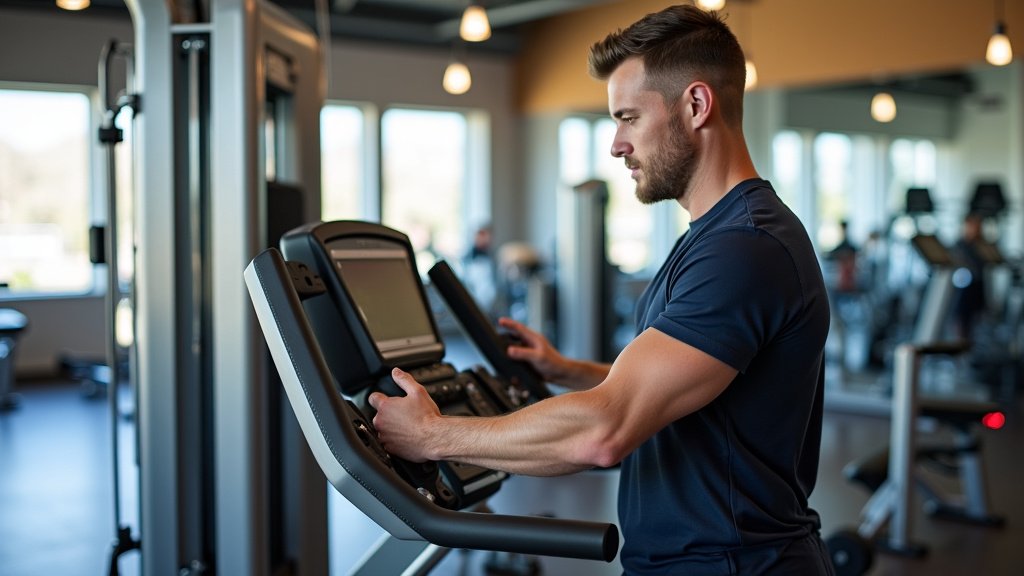
Functional Trainer vs. Other Gym Equipment
How does a functional trainer stack up against other common gym machines? Let’s take a quick look to help you decide what’s best for you.
| Equipment Type | Key Benefit | Why a Functional Trainer Might Be Better |
|---|---|---|
| Free Weights (Dumbbells/Barbells) | Builds maximum strength, balance. | Offers consistent tension, more exercise variety, lower injury risk, easier on joints. |
| Selectorized Machines | Easy to use, isolates muscles. | Allows for natural, multi-joint movements, trains coordination, more versatile. |
| Power Rack/Squat Rack | Heavy lifting, compound movements. | More dynamic exercises, smaller footprint for variety, targets smaller stabilizer muscles. |
| Resistance Bands | Portable, progressive resistance. | More precise weight selection, smoother resistance, wider range of motion without band snapping. |
Is a Functional Trainer Right for You? A Quick Checklist
Are you still on the fence? Here’s a quick checklist to help you decide if a functional trainer is a good fit for your fitness journey.
- You want to perform a wide variety of exercises.
- You’re looking for equipment that supports functional movement patterns.
- You want a machine that is gentle on your joints.
- You appreciate the ability to easily adjust resistance for all family members.
- You have the budget and space for this type of equipment.
- You’re interested in improving overall strength and mobility.
If you nodded along to most of these points, a functional trainer could be a fantastic addition to your workout routine. It offers a unique blend of benefits that other equipment often cannot match.
Conclusion
As you’ve seen, a functional trainer offers a unique blend of benefits for your fitness journey. Its versatility means you can build strength, improve mobility, and even perform sport-specific movements all on one machine. We found its joint-friendly nature and adjustable resistance make it suitable for almost anyone, from beginners to advanced athletes.
Yes, there’s an investment in space and cost, but the long-term gains in functional fitness are hard to beat. Consider your goals, your available space, and your budget. If you want a comprehensive and adaptable workout solution, exploring a functional trainer further could be one of your best fitness decisions.
Frequently Asked Questions
Can a functional trainer replace a full gym membership?
For many people, yes! A functional trainer’s versatility allows you to perform hundreds of exercises targeting every muscle group. While it might not offer every single machine found in a large commercial gym, it provides a very comprehensive workout solution.
What’s the best way to learn exercises on a functional trainer?
We recommend starting with instructional videos online or consulting a certified personal trainer. Many manufacturers also provide exercise guides specific to their machines. Begin with lighter weights to master your form before increasing the resistance.
Are functional trainers good for weight loss?
Absolutely! Consistent strength training with a functional trainer builds muscle, which boosts your metabolism. Combined with a balanced diet and cardiovascular exercise, it can be a highly effective tool for weight loss and body recomposition.
How much space do I really need for a functional trainer?
While models vary, you’ll generally need a space that’s about 7-8 feet wide, 4-5 feet deep, and at least 7 feet tall. This allows for the machine itself and enough room to perform exercises comfortably without hitting walls or furniture.
What maintenance does a functional trainer require?
Functional trainers are generally low maintenance. We found you should regularly check cables for wear, wipe down the frame after use, and occasionally lubricate the guide rods if recommended by the manufacturer. Keep the area around it clean and free of debris.