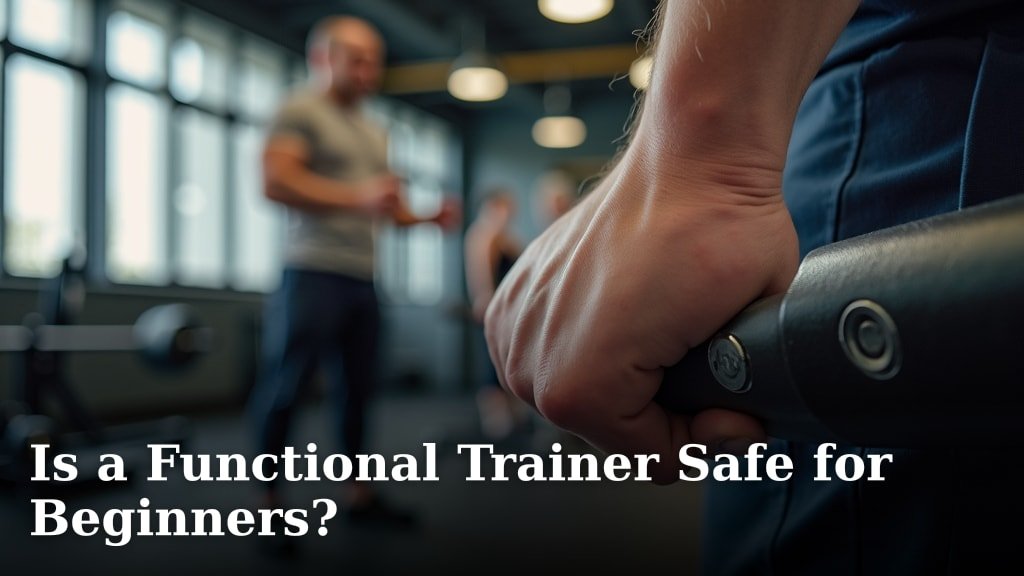
Yes, a functional trainer is safe for beginners when used correctly and with proper guidance. We found that these machines offer a highly controlled environment, making them an excellent choice for learning exercise movements.
You might be wondering if such a versatile piece of equipment is too advanced for starting out. Many experts say that functional trainers are actually very beginner-friendly due to their smooth, guided movements and adjustable resistance. They allow you to focus on form and muscle engagement without the instability of free weights.
- Functional trainers are generally safe for beginners.
- They provide controlled movements and adjustable resistance.
- Proper form is easier to learn than with free weights.
- Start with light weights and focus on technique.
- Guidance from a trainer can maximize safety and results.
So, let’s dive in and explore why a functional trainer might be your new favorite gym buddy and how you can use it safely and effectively from day one.
Understanding Functional Trainers for Beginners
You’re probably wondering what makes a functional trainer so suitable for someone just starting their fitness journey. We found it comes down to a few key design features that prioritize safety and control.
These machines use a system of cables and pulleys. This means your movements are smooth and guided. Unlike free weights, there’s less chance of sudden, uncontrolled motion.
The resistance comes from weight stacks, not gravity acting on dumbbells. This offers a constant tension throughout the exercise, which can help you feel your muscles working better.
How Functional Trainers Keep You Safe
Safety is a big concern for anyone new to exercise. Functional trainers are designed with this in mind. They offer a controlled environment that reduces common risks.
One major benefit is the fixed plane of motion. While you have freedom of movement, the cables pull in a consistent direction. This helps you maintain better balance and stability.
There’s also no risk of dropping heavy weights on yourself. The weight stacks are enclosed, and you simply select your desired resistance. This makes it a less intimidating experience.
Controlled Resistance Mechanisms
The resistance system is key to safety. You choose the weight with a pin. This means you can start very light, even with just a few pounds.
This fine-tuning allows for gradual progression. You can increase the weight in small increments. This helps your body adapt slowly and safely (American Council on Exercise).
The cables also provide resistance through the entire range of motion. This is different from free weights, where resistance can vary. It helps you build strength evenly.
Support and Stability Features
Many functional trainers include support handles or bars. These can help you stabilize your body. This is especially useful when learning new movements or if you have balance concerns.
The machine itself is usually heavy and sturdy. It won’t tip over during your workout. This provides a secure anchor point for all your exercises.
We found that this built-in stability is a huge advantage. It lets you focus on muscle engagement and form, not on trying to stay upright.
Benefits for New Exercisers
Beyond safety, functional trainers offer several advantages for beginners. They can make your early workouts more effective and enjoyable.
You’ll find that learning new exercises is often easier. The machine provides a natural path for your movements. This helps you master technique quickly.
Plus, the versatility is amazing. You can work almost every muscle group on one machine. This means you can get a full-body workout without switching equipment constantly.
Easier Form Learning
Getting your form right is crucial to prevent injury and get results. Functional trainers really shine here. The cables help guide your body through the proper motion, almost like a coach.
Imagine doing a chest press. With a functional trainer, the cables pull your hands in a straight line. This makes it easier to keep your elbows in the correct position. It helps you feel the exercise correctly.
Contrast this with dumbbells, where you might wobble. The functional trainer removes some of that instability. This lets you focus purely on the movement pattern (National Academy of Sports Medicine).
Adjustable Resistance and Progression
You can adjust the weight in very small steps. This is perfect for beginners. You won’t feel overwhelmed by jumps in resistance.
As you get stronger, you simply move the pin to a heavier weight. This allows for steady, consistent progress. You’ll see yourself getting stronger week by week.
Many experts say that this ability to make tiny adjustments is key. It prevents you from trying to lift too much too soon. It’s all about smart, gradual strength building.
Getting Started Safely with Your Functional Trainer
Now that you know why they’re great, let’s talk about how to use a functional trainer safely as a beginner. It’s all about starting smart and being mindful.
You don’t need to be a gym expert from day one. Just follow some basic guidelines. We found these steps will help you maximize your safety and results.
Think of it like learning to drive. You start slow, follow the rules, and practice. Soon, you’ll be navigating your workouts with confidence and skill.
Key Safety Practices to Remember
Before you even touch a cable, there are a few things to keep in mind. These simple steps can make a big difference in your workout experience.
Always do a quick check of the machine. Make sure the cables are connected properly. This is just a good habit for any gym equipment.
And remember, your body is your best guide. Listen to it. If something feels wrong or causes pain, stop immediately.
Start with Light Weights
This is probably the most important tip. You should always begin with a very light weight. Sometimes, even just the weight of the cable itself is enough to learn the movement.
Your goal initially is not to lift heavy. It’s to learn the correct form. Think of it as a dance: you need to learn the steps before you can perform a complex routine.
Many guidelines point to using a weight where you can easily do 10-15 repetitions with perfect form. If you can’t, lower the weight (Mayo Clinic).
Focus on Proper Form Over Quantity
Don’t chase reps or sets at first. Instead, focus on executing each movement slowly and deliberately. This helps you build muscle memory.
Watch yourself in a mirror if possible. This can help you see if your body is moving correctly. Are your joints aligned? Is your back straight?
It’s better to do five perfect reps than fifteen sloppy ones. Quality always trumps quantity, especially for beginners.
Understanding Cable Attachments and Adjustments
Functional trainers come with various handles and attachments. There are single grips, ropes, straight bars, and ankle cuffs. Each serves a different purpose.
For beginners, the single D-handle or rope attachment is often a good starting point. They allow for a natural grip and easy movement.
Also, learn how to adjust the cable height. This changes the angle of resistance. A high cable is great for presses, a low cable for rows or squats. Experiment to find the right setup for each exercise.
When to Seek Professional Guidance
While functional trainers are beginner-friendly, a little help can go a long way. Consider getting some professional guidance.
A certified personal trainer can show you the ropes. They can correct your form, suggest exercises, and help you create a safe workout plan.
This initial investment can prevent bad habits from forming. It also builds your confidence. You’ll feel much more comfortable using the machine on your own.
Benefits of a Personal Trainer
A trainer provides personalized instruction. They can tailor workouts to your body and goals. This is like having a custom-made map for your fitness journey.
They can spot tiny form errors you might miss. These small adjustments can make a big difference in preventing injury. They ensure you’re working the right muscles effectively.
Plus, they offer motivation and accountability. It’s easier to stick with a plan when someone is cheering you on. A trainer is your fitness partner.
Your Beginner’s Checklist for Functional Trainer Safety
Before each session, run through this quick checklist. It will help ensure a safe and effective workout.
-
Check equipment: Ensure cables and attachments are secure.
-
Warm up properly: Light cardio and dynamic stretches prepare your body.
-
Select light weights: Always start with a resistance you can control perfectly.
-
Focus on form: Prioritize slow, controlled movements over heavy lifting.
-
Listen to your body: Stop if you feel any sharp pain or discomfort.
-
Cool down and stretch: Help your muscles recover and improve flexibility.
Functional Trainer vs. Other Equipment for Beginners
You might be wondering how a functional trainer stacks up against other common gym equipment. Let’s compare it to free weights and traditional resistance machines.
Each type of equipment has its place. But for a beginner, some offer more advantages than others. It’s about finding the best fit for your starting point.
We found that functional trainers often provide a unique blend of safety and versatility. This makes them a strong contender for those new to exercise.
Comparing Safety and Ease of Use
Here’s a quick look at how different equipment types compare for beginners. We’ll focus on how easy they are to use safely.
| Equipment Type | Beginner Safety | Ease of Learning | Movement Freedom |
|---|---|---|---|
| Functional Trainer | High (controlled cables) | High (guided movements) | Moderate to High (multi-directional) |
| Free Weights (Dumbbells/Barbells) | Moderate (requires balance/skill) | Low (steep learning curve for form) | High (unrestricted) |
| Resistance Machines (Fixed Path) | Very High (fixed, supported) | Very High (simple, one movement) | Low (single plane) |
As you can see, functional trainers sit nicely in the middle. They offer more freedom than fixed machines but more control than free weights. This makes them a great bridge for building foundational strength.
Why Functional Trainers Stand Out
Functional trainers offer a balanced approach. They allow for natural, multi-joint movements. This is great for building real-world strength.
Traditional resistance machines, while safe, often restrict movement. They isolate single muscles. This can be less effective for improving overall body function.
Free weights are excellent but require more skill and coordination. For a beginner, the risk of injury is higher without proper supervision. A functional trainer offers a safer starting point.
We often hear people say they feel more “athletic” using a functional trainer. It allows for movements similar to those in sports or daily activities. This makes your workouts more relevant and engaging.
Conclusion
So, you’ve seen that a functional trainer is not just safe for beginners, but it’s also incredibly beneficial. We’ve found it helps you learn proper form with guided movements and adjustable resistance. It truly balances versatility with control. You can build strength effectively and safely from your very first workout. By focusing on light weights and good technique, you’ll gain confidence. Don’t hesitate to give this versatile machine a try. You’re now equipped to start your fitness journey confidently and safely with a functional trainer!
Frequently Asked Questions
What are some basic exercises I can do as a beginner on a functional trainer?
You can start with simple movements like cable chest presses, rows, bicep curls, tricep pushdowns, and leg abductions/adductions. Focus on slow, controlled repetitions and maintaining good posture. These exercises target major muscle groups effectively.
How do I know what weight to start with on a functional trainer?
Always begin with the lightest possible weight. Your goal is to master the movement pattern first, not to lift heavy. You should be able to perform 10-15 repetitions with perfect form and still feel like you could do a couple more if needed.
Is it better to use a functional trainer or resistance machines as a beginner?
Functional trainers offer more natural, multi-directional movement than fixed resistance machines. While machines can be very safe, the functional trainer helps you build more practical strength. It prepares your body for real-world activities better.
Can I get a full-body workout using only a functional trainer?
Absolutely, yes! Functional trainers are designed for full-body workouts. You can target every major muscle group by adjusting the cable height and using various attachments. This makes it an efficient choice for your fitness routine.
How often should a beginner use a functional trainer?
As a beginner, aim for 2-3 sessions per week on the functional trainer. Make sure to allow a rest day in between workouts for muscle recovery. This frequency helps your body adapt and build strength without overtraining.