For a functional trainer, you primarily need a good set of D-handles, an ankle strap, and a tricep rope. These core attachments let you perform a wide range of exercises right away.
You might already have some favorites in mind for your workouts. The right accessories can truly transform your functional trainer into a full gym. We looked at what users often buy first to maximize their training.
TL;DR:
- Start with D-handles, ankle straps, and a tricep rope.
- These basics unlock most exercises.
- More specialized attachments build on these.
- Consider your workout goals for advanced pieces.
- Quality matters for safety and durability.
Ready to get more from your functional trainer? Let’s walk through the essential accessories you’ll want to consider for a complete workout experience.
Essential Attachments for Your Functional Trainer
You’re ready to make the most of your functional trainer, and that means choosing the right accessories. Think of these as the keys that unlock different exercises. We’ve looked at what helps users get started quickly and efficiently.
The primary goal here is to give you a broad range of exercises without needing a mountain of equipment. Let’s dive into the core pieces that everyone should consider.
The Core Three: Your Starting Lineup
When you first get your functional trainer, you might wonder where to begin with accessories. Research shows that three attachments consistently rise to the top for their versatility and effectiveness. These are your absolute must-haves.
D-Handles (Single Cable Handles)
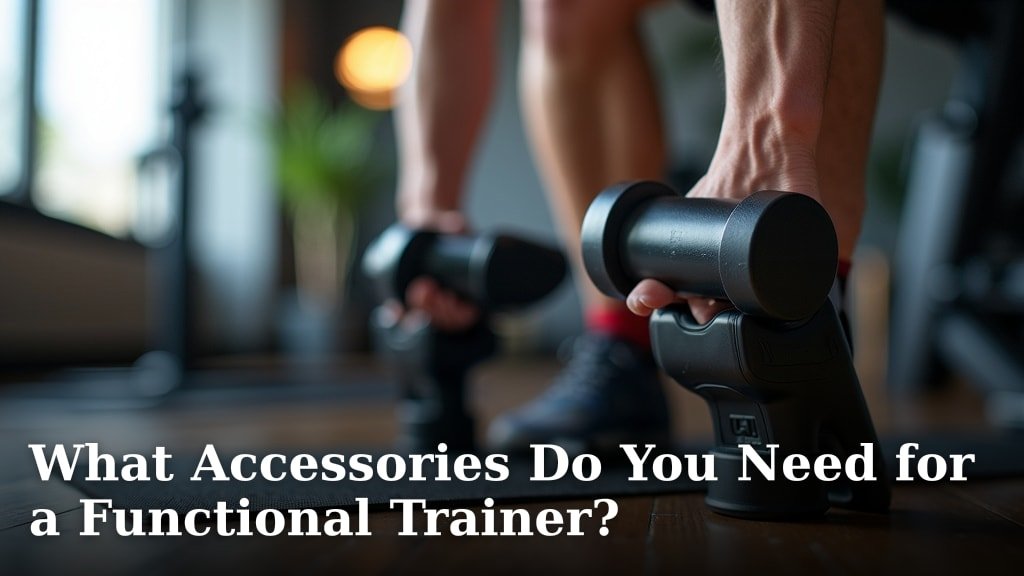
D-handles are probably the most fundamental accessory you’ll use. They get their name from their D-shape, making them comfortable to grip. You’ll attach one to each cable on your functional trainer.
These handles are incredibly versatile. You can use them for chest presses, rows, bicep curls, tricep extensions, and even some shoulder work. They allow for a natural range of motion, which is great for joint health (Journal of Sports Science & Medicine).
When choosing D-handles, look for ones with a comfortable grip. Some have rubber, others foam. Make sure they feel good in your hand, as you’ll be holding them a lot!
Ankle Straps
Don’t overlook the humble ankle strap. While they might seem specialized, they open up a whole new world of lower body exercises. Attaching one to your ankle lets you perform cable kickbacks, leg extensions, and hamstring curls.
These exercises are fantastic for targeting your glutes and strengthening your leg muscles. Many users find ankle straps essential for building a well-rounded physique. We found they are a popular choice for those focusing on lower body aesthetics and strength.
Ensure your ankle strap has a strong D-ring and comfortable padding. You want it to stay secure during your movements without digging into your skin.
Tricep Rope
The tricep rope is another powerhouse accessory. It typically attaches to both cables or a single cable. Its unique design allows for excellent isolation of your triceps, but its utility doesn’t stop there.
You can use a tricep rope for overhead extensions, face pulls (great for shoulder health), and even some core twists. It offers a different grip dynamic than D-handles, which can challenge your muscles in new ways.
Look for a rope with durable construction and good length. Some ropes have rubber stoppers at the ends for a better grip during exercises like tricep pushdowns.
Expanding Your Workout: Next-Level Accessories
Once you’re comfortable with the core three, you might start thinking about how to add more variety. These next accessories build upon your foundation, allowing for more specific muscle targeting and different training styles.
Many of these can help you simulate movements you’d typically do with barbells or dumbbells, but with the added benefit of constant cable tension (American Council on Exercise).
Bars and Handles for Diverse Grips
Different bars and handles change how you grip and move, which can activate muscles differently. It’s like having various tools for different jobs in your garage.
Straight Bar and Curl Bar
A straight bar is a simple, effective attachment. You can use it for bicep curls, tricep pushdowns, and even some rowing variations. It provides a fixed, symmetrical grip, which can be useful for certain lifts.
A curl bar, also known as an EZ-curl bar, has a wavy shape. This design is often more comfortable for wrist positioning during bicep curls and tricep extensions. If you experience wrist discomfort with a straight bar, a curl bar might be a great alternative for you.
When selecting these, check for knurling (the textured part) for a secure grip and a smooth swivel mechanism where it attaches to the cable.
Lat Pulldown Bar / Multi-Grip Bar
If you’re serious about back training, a dedicated lat pulldown bar is a game-changer. These are typically longer than straight bars and often have multiple grip positions (wide, narrow, neutral). This versatility lets you target different areas of your back.
A multi-grip bar also provides various hand placements, which is fantastic for progressive overload and hitting muscles from various angles. We found that users who prioritize back development often invest in this type of bar.
Ensure the bar is sturdy and long enough to accommodate your natural grip width for pulldowns. A textured surface is also key for preventing slips.
Specialized Accessories for Enhanced Training
These pieces might not be for everyone, but for specific goals or advanced training, they can be incredibly useful. They add precision and further expand your workout repertoire.
Ab Straps / Harnesses
For dedicated core work, ab straps (also called ab harnesses) are excellent. You loop your arms through them, allowing you to perform hanging knee raises or crunches with cable resistance. This setup can provide a very intense abdominal workout.
They take the strain off your grip, letting you focus purely on engaging your core muscles. If you want to really challenge your abs beyond basic crunches, these are worth considering.
Look for wide, padded straps that won’t dig into your arms or shoulders during intense sets.
Sport Handles / Agility Grips
Some functional trainers come with “sport handles” or “agility grips.” These are often shorter than D-handles and designed for movements that mimic sports. Think about swinging a golf club or a baseball bat against resistance.
They’re fantastic for rotational movements, anti-rotation exercises, and building power relevant to athletic performance. If your training goals include improving sports-specific strength, these can be very beneficial.
These typically have a slightly different feel and grip to allow for dynamic, multi-directional exercises.
Checklist: Prioritizing Your Functional Trainer Accessories
It can feel overwhelming with so many choices. To help you decide, here’s a quick checklist to guide your accessory purchases. Start with the essentials and build up from there based on your specific training goals.
- D-Handles: Essential for a vast range of upper body exercises.
- Ankle Straps: A must-have for effective lower body and glute work.
- Tricep Rope: Great for triceps, face pulls, and varied grip training.
- Straight/Curl Bar: For more traditional pressing and curling movements.
- Lat Pulldown Bar: If back development is a high priority for you.
- Ab Straps: For advanced and targeted core strengthening.
What to Look for in Quality Attachments
You’re investing in your fitness, so make sure your accessories can keep up. Poor quality attachments can be uncomfortable, break down, or even be unsafe. We found that durability and user comfort are key.
Material and Construction
Good quality attachments usually feature heavy-duty steel for the D-rings and carabiners. These points bear the most stress, so they need to be robust. Look for solid welding and smooth finishes.
Handles and grips should be made from comfortable yet durable materials like high-density rubber, textured plastic, or thick nylon. Avoid anything that feels flimsy or has sharp edges.
Many experts say that paying a little extra for quality up front saves money in the long run by preventing replacements (National Strength and Conditioning Association).
Comfort and Ergonomics
Remember, you’ll be holding onto these things for your entire workout! Comfort is crucial. Padded grips, smooth finishes, and ergonomic designs make a huge difference. If an attachment feels awkward or painful, you won’t want to use it.
Check for proper sizing too. Some handles might be too small for large hands, or too big for small hands. A good fit helps ensure you can focus on the exercise, not your grip.
Think about how your hands naturally grip. Does the bar or handle allow for a neutral wrist position? This small detail can prevent discomfort over time.
Compatibility and Swivel Mechanisms
Most functional trainer accessories use a standard carabiner clip, so compatibility isn’t usually an issue. However, always double-check the type of clip your functional trainer uses and the attachment’s loop.
For bars and ropes, a smooth swivel mechanism is vital. This allows the attachment to rotate freely, preventing the cable from twisting and providing a more fluid movement. A sticky swivel can disrupt your exercise flow and even create unnecessary friction on your cable.
Test the swivel if you can. It should move effortlessly, without grinding or sticking.
Table: Quick Comparison of Popular Attachments
Here’s a simple table to help you visualize the uses and benefits of the most common functional trainer accessories.
| Accessory | Primary Use | Key Benefit | Good For |
|---|---|---|---|
| D-Handles | Upper body pushes/pulls | Versatility, natural movement | Beginners, all-around training |
| Ankle Straps | Lower body, glutes | Targets legs/hips effectively | Leg day, glute focus |
| Tricep Rope | Triceps, face pulls | Unique grip, muscle isolation | Arm days, shoulder health |
| Straight/Curl Bar | Bicep curls, tricep extensions | Fixed, symmetrical grip | Traditional strength training |
| Lat Pulldown Bar | Back exercises | Multiple grip options for back | Back hypertrophy, strength |
| Ab Straps | Core work (hanging) | Intense abdominal isolation | Advanced core training |
Conclusion
Equipping your functional trainer doesn’t have to be complicated. By starting with the core three — D-handles, ankle straps, and a tricep rope — you immediately open up a huge range of exercises. From there, consider your fitness goals. Do you want to build a stronger back? A lat pulldown bar is your friend. Focusing on your core? Ab straps can make a real difference. Always prioritize quality materials and comfortable ergonomics to ensure your attachments last and enhance your workouts. Choose wisely, and you’ll transform your functional trainer into a complete home gym.
Frequently Asked Questions
How many attachments do I really need for a functional trainer?
You can get a fantastic workout with just three core attachments: D-handles, an ankle strap, and a tricep rope. These provide enough versatility for most muscle groups. As you progress, you might add more specialized pieces based on your specific fitness goals.
Can I use standard gym attachments with my functional trainer?
Yes, most functional trainers use standard carabiner clips, making them compatible with a wide range of accessories found in gyms or sold separately. Always check the attachment point on your machine to be sure, but compatibility is rarely an issue.
Is it worth buying cheaper functional trainer attachments?
Investing in quality attachments is highly recommended. Cheaper options can be less durable, less comfortable, and potentially unsafe due to weaker materials. Better quality means greater longevity, better performance, and a more pleasant workout experience.
How do I store all these functional trainer accessories?
Many functional trainers come with built-in storage hooks or trays for attachments. If yours doesn’t, consider a small gym accessory rack, a sturdy basket, or wall-mounted hooks. Keeping them organized makes your workouts smoother and prevents losing pieces.
What’s the best way to clean my functional trainer attachments?
For most attachments, a simple wipe-down with a damp cloth and mild soap is sufficient. For rubber grips, you can use a disinfectant wipe. Make sure to dry them thoroughly to prevent rust on metal parts and maintain hygiene.