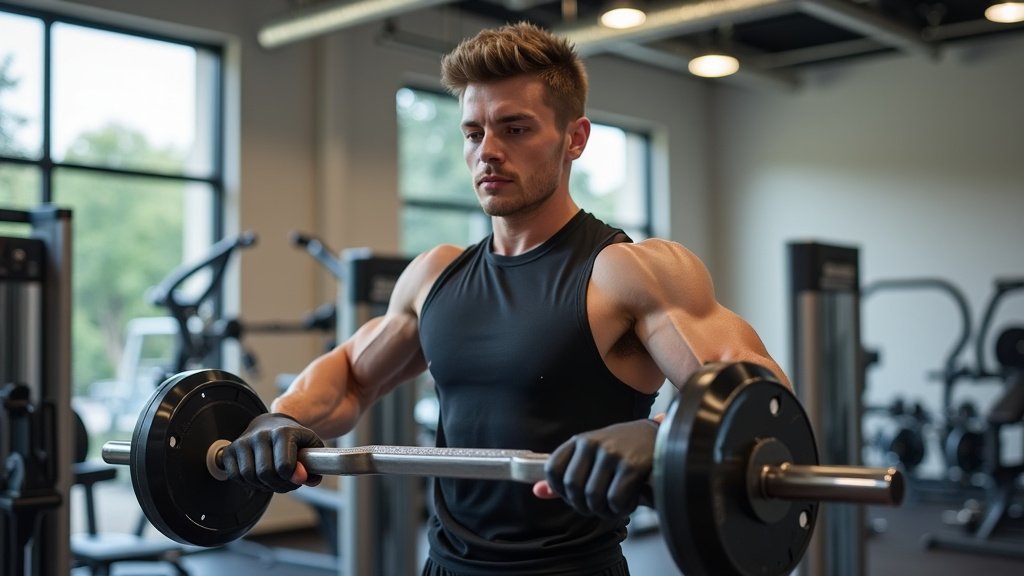
To do bicep curls on a cable machine, you first need to set the cable to a low position and attach a straight or EZ bar. Then, stand facing the machine, grab the bar with an underhand grip, and curl the weight up towards your shoulders, squeezing your biceps at the top. It’s a fantastic way to build strong, sculpted arms.
You want to get those biceps popping, right? We get it. Many folks find that cable machines offer constant tension throughout the movement, which can be great for muscle growth. Unlike free weights, the cable keeps the resistance steady, making your muscles work harder at every point of the lift. It’s about getting the most out of every rep.
Set up the cable machine correctly.
Grab the bar with a proper grip.
Focus on controlled movements.
Keep your elbows tucked in.
Squeeze your biceps at the peak.
Ready to sculpt those arms? Let’s walk through the exact steps to nail your cable bicep curls, ensuring you get the most effective workout possible.
Before you even touch the weight, you need to set up your cable machine correctly. A proper setup ensures you get the most effective workout and helps prevent injuries. Think of it like tuning an instrument before playing a song; you want everything just right.
First, find a cable station. These are usually versatile machines with adjustable pulleys. You’ll want to adjust the pulley to the lowest setting. This ensures the resistance pulls upwards, directly opposing your bicep’s curling motion. If it’s too high, you might engage other muscles more than intended.
Choosing the Right Attachment
The attachment you use can slightly change how your biceps are engaged. Which one is best for you? It often comes down to comfort and muscle activation. Don’t be afraid to try a couple of options.
The Straight Bar
The straight bar is a classic choice. It allows for a standard, pronated grip (palms up). Many lifters find this comfortable and effective for targeting both heads of the bicep equally. It’s a great starting point if you’re new to cable curls.
Even muscle engagement: Targets both the long and short heads of your biceps.
Stronger grip: Can sometimes allow you to lift heavier weights compared to other grips.
Less wrist rotation: Keeps your wrists in a fixed position throughout the movement.
The EZ Curl Bar
The EZ curl bar, with its wavy shape, offers a slightly different experience. This bar allows for a semi-supinated grip (palms angled inwards). Many people find this grip more comfortable on their wrists and elbows. If you experience discomfort with a straight bar, this is often a better option.
Wrist comfort: Reduces strain on your wrists compared to a straight bar.
Elbow friendly: Can be easier on your elbows, especially for those with existing issues.
Slightly varied muscle activation: Some research suggests it might emphasize the outer head of the bicep slightly more (Journal of Strength and Conditioning Research).
Regardless of the bar, make sure it’s securely attached to the cable. Give it a gentle tug to ensure it won’t detach mid-set.
Mastering Your Stance and Grip
Your body position and how you hold the bar are critical for isolating your biceps and getting a good contraction. Small adjustments here can make a big difference in how effective the exercise feels. It’s about setting your foundation for a strong lift.
Finding Your Footing
Conclusion
You’ve now got the blueprint for effective cable bicep curls. Remember, proper setup and form are everything. Choosing the right bar, whether straight or EZ, depends on your comfort and goals. Focus on that controlled movement and strong bicep squeeze to maximize your gains. Constant tension from the cable machine makes every rep count. Start integrating these tips into your arm day routine.
Go ahead, hit the gym with confidence and start building those bigger, stronger biceps today!
Frequently Asked Questions
Can I do cable bicep curls with one arm?
Yes, absolutely! Single-arm cable bicep curls are a great way to address muscle imbalances. Simply attach a D-handle to the cable and perform the curl one arm at a time. This also helps improve your mind-muscle connection.
What weight should I use for cable bicep curls?
Start with a lighter weight where you can maintain perfect form for 10-12 repetitions. You want to feel the bicep working, not just moving the weight. Gradually increase the weight as you get stronger, but never sacrifice form.
How many sets and reps should I do?
For muscle growth, aim for 3-4 sets of 8-12 repetitions. If your goal is endurance, you might do slightly higher reps (12-15). Always listen to your body and adjust as needed.
Why do my forearms get tired before my biceps?
This can happen if your grip is too tight or you’re using too much momentum. Try consciously relaxing your grip slightly, focusing on pulling with your biceps. The EZ bar can also help reduce forearm involvement for some people.
Can cable curls replace dumbbell curls?
Cable curls offer constant tension, which is a unique benefit free weights don’t provide as consistently. They can definitely be a primary bicep exercise. However, incorporating both cable and dumbbell curls gives you a more well-rounded approach to bicep training.
Cardivaro is dedicated to helping you build the ultimate home workout space. We specialize in reviewing everything from compact cardio machines to durable gym flooring, ensuring you find the right tools for your fitness goals and your floor plan.
A lat pulldown bar is a piece of gym equipment used to target and strengthen your back muscles, specifically your latissimus dorsi, or “lats.” It helps you perform exercises that…
The best functional trainer lat pulldown variations include wide-grip pulldowns, single-arm pulls, reverse-grip pulls, and high-to-low diagonal patterns that target your lats from multiple angles. You can transform your back…
To build a home gym around a functional trainer, you should focus on adding versatile, space-saving equipment that complements the trainer’s capabilities. Start with your functional trainer, then strategically add…
To track progress on a functional trainer routine, you should consistently record key metrics like resistance levels, repetitions, sets, and workout duration. We found that regularly reviewing these logs helps…
The functional trainer pullover targets your lats, chest, and core by pulling the cable from overhead to your hips in a smooth arc motion. Set the cable at the highest…
A cable machine is incredibly good for providing a versatile, full-body workout by using adjustable resistance and a wide range of motion. It allows you to perform countless exercises, making…