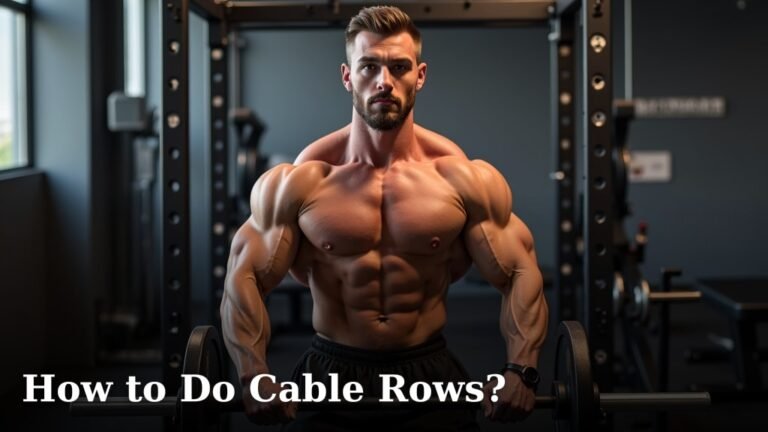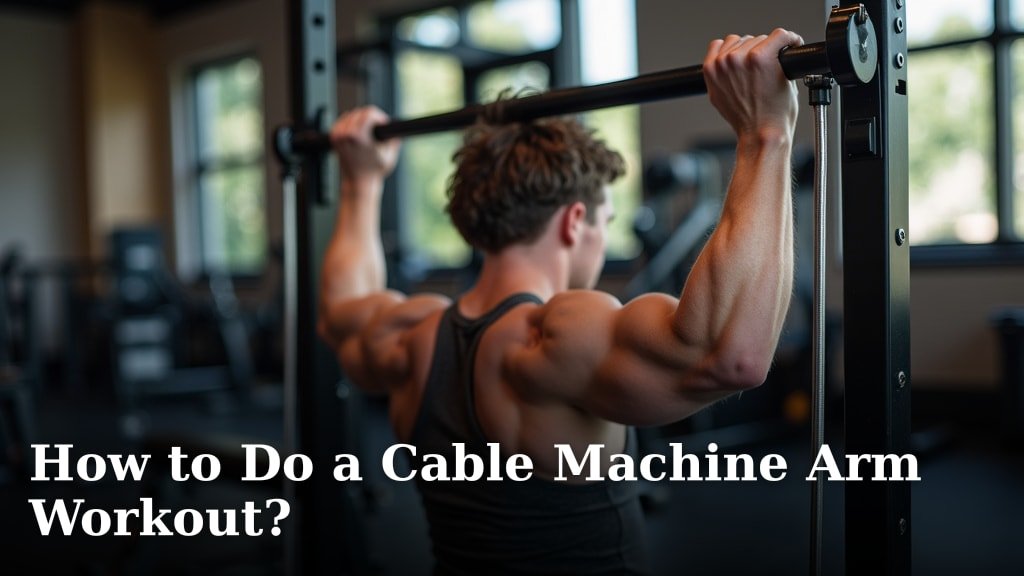
To do a cable machine arm workout, you should focus on exercises that target your biceps and triceps. You’ll want to use the cable machine’s adjustable pulleys and various attachments to hit these muscles from different angles. It’s a fantastic way to create constant tension, leading to effective muscle growth.
Many people find cable machines offer a unique challenge compared to free weights. They provide consistent resistance throughout each movement, which can be hard to achieve with dumbbells or barbells. This constant tension is key for really working those arm muscles and building strength and definition, making it a versatile piece of gym equipment.
- Target biceps and triceps with specific exercises.
- Use different cable attachments for varied movements.
- Adjust pulley height to change the angle of resistance.
- Focus on controlled movements for best results.
- Cable machines offer constant tension for muscle growth.
Ready to sculpt your arms? Let’s walk through how to set up your cable machine and perform the best exercises for a complete arm workout.
Crafting Your Cable Arm Workout
You’re ready to build those biceps and triceps. But how do you start? A well-planned cable machine arm workout focuses on hitting these muscles from all the right angles. It’s about more than just moving weight; it’s about mind-muscle connection and controlled movements.
We’ll guide you through setting up the machine and performing exercises that will give you a fantastic pump. You’ll learn how to get the most out of each repetition. Remember, consistency is key for results, so aim for regular workouts.
Understanding the Cable Machine Setup
First things first: get familiar with the machine. Cable machines might look a bit intimidating with all their pulleys and attachments, but they’re actually quite simple to operate. You’ll usually find two main towers with adjustable pulleys on either side. These allow you to set the resistance height for different exercises.
The weight stack is another important component. You select your desired weight by inserting a pin into the stack. Always start with a lighter weight to perfect your form before going heavy. This helps prevent injury and ensures you’re targeting the right muscles.
Choosing the Right Attachments
The attachments are where the cable machine truly shines. They allow for a huge variety of exercises. You’ll typically encounter several common types. Each one offers a slightly different feel and works your muscles in unique ways.
- Straight Bar: Great for biceps curls and triceps pushdowns. It provides a stable grip.
- EZ Curl Bar: The curved shape can be more comfortable for some wrists during curls.
- Rope Attachment: Excellent for triceps pushdowns, face pulls, and hammer curls. It allows for a greater range of motion and external rotation at the end of some movements.
- D-Handle (Single Handle): Perfect for unilateral (one arm at a time) exercises, like single-arm curls or triceps extensions.
- V-Bar: Often used for triceps pushdowns, similar to a straight bar but with a narrower, neutral grip.
Don’t be afraid to experiment with different attachments. You might find one feels better or targets your muscles more effectively for certain exercises. The goal is to find what works best for you and your body.
Warming Up Your Arms
Before you dive into your workout, a proper warm-up is crucial. This prepares your muscles and joints for the work ahead, helping to prevent injuries. A good warm-up also increases blood flow to your arms, which can improve performance.
Start with some light cardio, like 5 minutes on a stationary bike or elliptical. Then, move into some dynamic stretches for your arms and shoulders. Think arm circles, shoulder rotations, and light cable movements with a very low weight. You want to feel loose and ready, not fatigued.
Essential Cable Bicep Exercises
Now, let’s talk about building those peaks! Your biceps are a relatively small muscle group, but they respond well to targeted training. The cable machine provides that constant tension we love, which can lead to impressive gains. Here are a few must-do exercises.
Cable Bicep Curls
This is a classic for a reason. Cable curls provide continuous tension throughout the entire range of motion, unlike dumbbells where the tension can drop at the top or bottom of the movement. You’ll really feel the burn with these! For a more in-depth guide on this fundamental exercise, learn how to do bicep curls on a cable machine.
How to Perform Standing Cable Bicep Curls
- Attach a straight bar or EZ curl bar to the low pulley of the cable machine.
- Stand facing the machine, feet shoulder-width apart. Grab the bar with an underhand grip, hands about shoulder-width apart.
- Keeping your elbows tucked into your sides, curl the bar up towards your chest. Squeeze your biceps at the top.
- Slowly lower the bar back to the starting position, controlling the movement. Don’t let the weight just drop.
- Focus on a full range of motion. Avoid swinging your body; let your biceps do the work.
Many people find that slowing down the eccentric (lowering) phase of the movement really enhances the effectiveness of this exercise. It’s about quality over quantity here.
Cable Hammer Curls
Hammer curls target both your biceps and your brachialis, a muscle underneath your bicep that can contribute to overall arm thickness. Using a rope attachment makes these particularly effective. You’ll feel a slightly different kind of tension.
Executing Cable Hammer Curls
- Attach a rope attachment to the low pulley.
- Stand facing the machine, holding one end of the rope in each hand with a neutral grip (palms facing each other).
- Keeping your elbows pinned to your sides, curl the rope up towards your shoulders.
- Squeeze at the top, then slowly lower the rope back down, maintaining control.
- Keep your wrists straight throughout the movement.
This exercise is fantastic for building grip strength too! Don’t underestimate the power of a good grip for all your lifts. It’s often a limiting factor in many upper body movements.
Top Cable Triceps Exercises
Don’t forget your triceps! They make up about two-thirds of your upper arm mass, so training them is essential for truly sculpted arms. Cable machines are incredibly versatile for triceps, allowing for various angles to hit all three heads of the muscle (long, lateral, and medial).
Cable Triceps Pushdowns
This is probably the most common cable triceps exercise, and for good reason. It’s effective and relatively easy to learn. You’ll really feel a strong contraction in your triceps with proper form.
Performing Cable Triceps Pushdowns
- Attach a straight bar, EZ curl bar, or rope attachment to the high pulley.
- Stand facing the machine, holding the attachment with an overhand grip (straight bar) or neutral grip (rope).
- Tuck your elbows into your sides. Lean forward slightly from your hips.
- Push the bar down towards your thighs, extending your arms fully. Squeeze your triceps at the bottom.
- Slowly return the attachment to the starting position, controlling the upward movement.
Remember to keep your elbows still throughout the exercise. They should act as a hinge. The movement comes solely from your forearms extending. Many experts say that locking your elbows at the bottom of the movement is key for maximal triceps contraction (American Council on Exercise).
Overhead Cable Triceps Extensions
This exercise targets the long head of your triceps, which is often harder to hit with other movements. It’s fantastic for overall arm development and a really satisfying stretch. You might feel a deep stretch in your triceps at the top of the movement. You can find a detailed guide on performing overhead tricep extensions for even more effective triceps development.
Executing Overhead Cable Triceps Extensions
- Attach a rope attachment or D-handle to the low pulley.
- Turn your back to the machine, grab the attachment with both hands (or one hand for single-arm extensions), and step forward to create tension.
- Extend your arms overhead, keeping your elbows close to your head.
- Lower the attachment by bending your elbows, letting your forearms go behind your head.
- Extend your arms back up, squeezing your triceps at the top.
Keep your core engaged throughout this exercise to protect your lower back. It’s easy to arch your back if you’re not careful. Think about keeping a straight line from your head to your hips.
Sample Cable Arm Workout Routine
Ready to put it all together? Here’s a sample routine you can follow. Remember to adjust the sets and reps based on your fitness level and goals. You want to aim for a challenging weight where the last few reps are tough but still maintain good form.
| Exercise | Sets | Reps | Rest |
|---|---|---|---|
| Cable Bicep Curls (Straight Bar) | 3 | 10-12 | 60-90 seconds |
| Cable Triceps Pushdowns (Rope) | 3 | 10-12 | 60-90 seconds |
| Cable Hammer Curls (Rope) | 3 | 10-12 | 60-90 seconds |
| Overhead Cable Triceps Extensions (Rope) | 3 | 10-12 | 60-90 seconds |
| Single-Arm Cable Bicep Curls (D-Handle) | 3 per arm | 10-12 per arm | 60-90 seconds |
Feel free to mix and match attachments or vary your grip to keep things interesting. Your muscles respond well to new stimuli. Don’t let your workouts become too predictable!
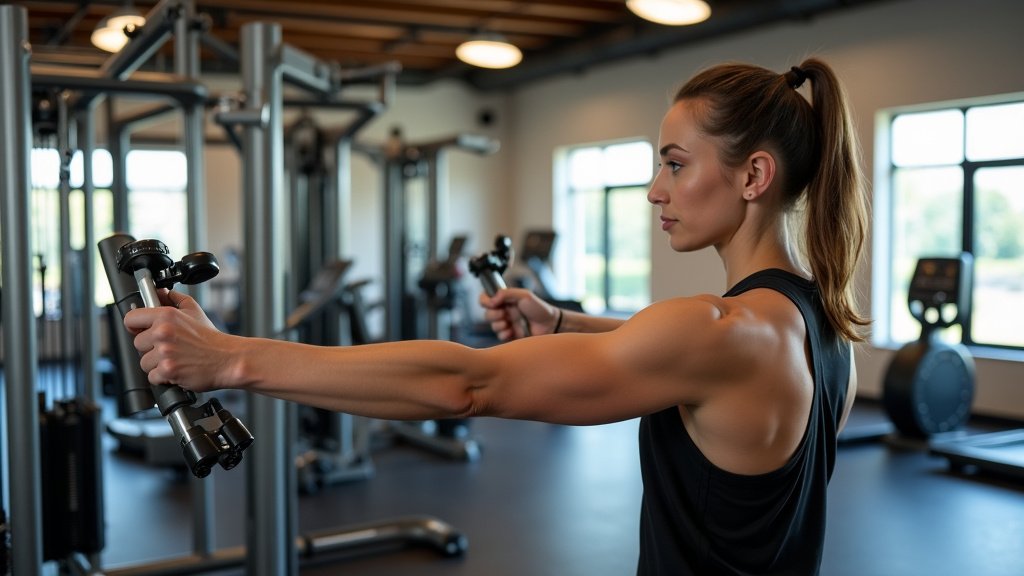
Tips for Maximizing Your Cable Arm Workout
You’ve got the exercises down, but how do you make sure you’re getting the absolute most out of every session? A few key principles can really enhance your results. It’s about working smarter, not just harder.
Focus on Mind-Muscle Connection
This is a game-changer. Instead of just moving the weight, actively think about the muscle you’re trying to work. Visualize it contracting and stretching. This focus helps recruit more muscle fibers and can lead to better growth over time (Journal of Strength and Conditioning Research).
For example, during a bicep curl, really squeeze your bicep at the top of the movement. Don’t just let your hand come up. Feel the muscle doing the work. This deliberate approach can make a huge difference in your results.
Maintain Constant Tension
One of the biggest advantages of cable machines is their ability to provide constant tension. Don’t let the weight stack touch down between reps, especially on the lowering phase. Keep that muscle under tension for the entire set.
This “time under tension” is crucial for muscle hypertrophy (growth). It keeps your muscles working harder for longer, which can lead to greater adaptation and strength gains. Think of it as always keeping the muscle “on.”
Prioritize Proper Form Over Weight
We’ve said it before, but it’s worth repeating: form is king. Lifting too much weight with poor form doesn’t just increase your risk of injury; it also reduces the effectiveness of the exercise. You might be engaging other muscles to compensate, taking the work away from your arms.
Start with a weight you can handle comfortably for 10-12 reps with perfect form. As you get stronger, you can gradually increase the weight. This progressive overload is essential for muscle growth, but it must be done safely and effectively.
Listen to Your Body
Pay attention to what your body is telling you. If something feels like a sharp pain, stop immediately. A little muscle soreness after a workout is normal, but joint pain or unusual discomfort is a red flag. Give yourself enough rest and recovery time.
Remember that recovery is just as important as the workout itself. Your muscles grow and repair when you’re resting, not when you’re lifting. Ensure you’re getting enough sleep and good nutrition to support your efforts.
Your Cable Arm Workout Checklist
- Perform a 5-10 minute warm-up with light cardio and dynamic stretches.
- Select appropriate attachments for each bicep and triceps exercise.
- Focus on proper form and a strong mind-muscle connection.
- Maintain constant tension throughout each set.
- Choose a challenging yet manageable weight for 10-15 repetitions.
- Ensure adequate rest between sets and sufficient recovery post-workout.
Conclusion
You now have a solid understanding of how to perform an effective cable machine arm workout. By utilizing different attachments and adjusting pulley heights, you can hit your biceps and triceps from every angle. Remember, constant tension and a strong mind-muscle connection are your best friends for muscle growth.
Prioritize proper form over heavy weight, and always listen to your body. Incorporate these exercises into your routine, and you’ll be well on your way to building stronger, more defined arms. Start with the sample routine, and don’t be afraid to experiment to find what works best for your body!
Frequently Asked Questions
How often should I do a cable arm workout?
For most people, training your arms with the cable machine 2-3 times per week is effective. Make sure you allow at least 48 hours of rest for your muscles to recover and grow between sessions. Overtraining can hinder your progress and increase injury risk.
Can I build big arms just using a cable machine?
Yes, absolutely! Cable machines provide constant tension throughout the entire range of motion, which is excellent for muscle hypertrophy. Many bodybuilders and fitness enthusiasts use cable machines extensively to build and sculpt their arms. Consistency and progressive overload are key.
What weight should I use for cable arm exercises?
You should choose a weight that allows you to complete 10-15 repetitions with good form, where the last few reps feel challenging but not impossible. It’s better to use a lighter weight with perfect form than to go too heavy and compromise your technique. As you get stronger, you can gradually increase the weight.
Are cable machines better than free weights for arms?
Neither is inherently “better”; they just offer different benefits. Cable machines provide constant tension and allow for more controlled movements, which can be great for isolating muscles. Free weights engage more stabilizing muscles. Combining both in your routine can offer the most comprehensive arm development.
What if I only have one cable machine tower?
If you only have access to a single cable tower, you can still get an excellent arm workout! Focus on unilateral exercises like single-arm bicep curls and single-arm triceps extensions. You can also perform many bilateral movements by positioning yourself correctly and using a straight bar or rope attachment. It just requires a bit more creativity.