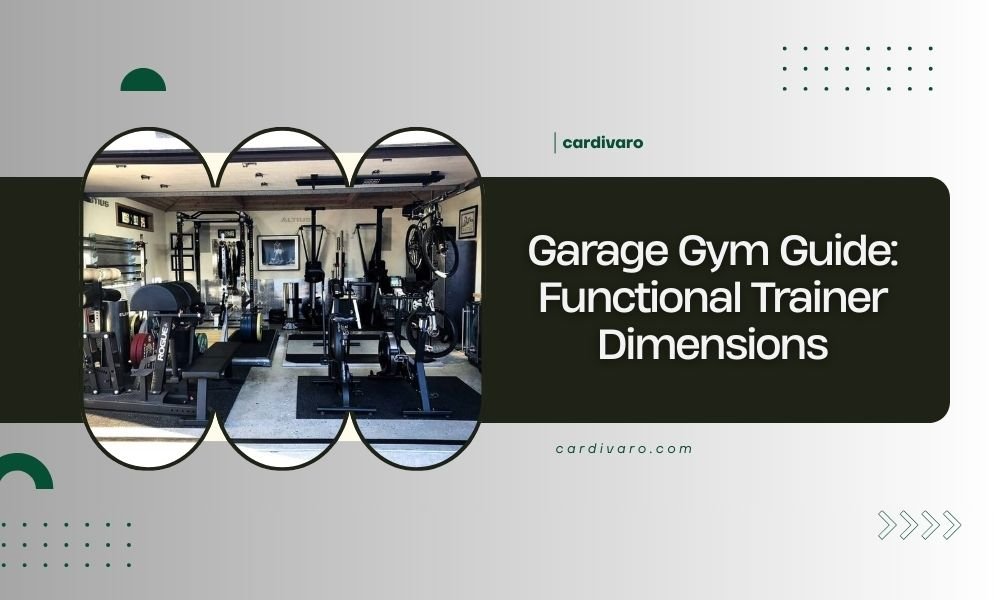
Most garage gyms need at least 8×8 feet of floor space for functional trainer dimensions, with 8-9 feet of ceiling height for overhead movements.
A standard functional trainer measures 4-6 feet wide, 3-4 feet deep, and 7-8 feet tall, but you need extra clearance space around all sides for safe exercise performance.
What Size Space Do You Really Need?
Your garage gym functional trainer setup depends on more than just the machine itself. You need room to move, stretch, and perform exercises safely.
I researched various garage gym setups and found that most people underestimate space requirements. The machine footprint is just the starting point.
Minimum Space Requirements
Here’s what fitness experts recommend for functional trainer placement:
- Front clearance: 6-8 feet for cable exercises
- Side clearance: 2-3 feet on each side
- Rear clearance: 2 feet minimum for maintenance
- Overhead clearance: 1-2 feet above the tallest pulley
Ideal Space Dimensions
An ideal garage gym functional trainer setup works best in these dimensions:
- Floor space: 10×10 feet minimum
- Ceiling height: 9-10 feet preferred
- Width: 12 feet gives you comfortable movement
- Depth: 12 feet allows full cable extension
Functional Trainer Machine Dimensions
Different brands make different sized machines. Let me break down what I found from popular manufacturers.
Compact Home Models
These smaller units fit tighter spaces but offer fewer features:
- Width: 48-54 inches
- Depth: 36-42 inches
- Height: 80-84 inches
- Weight: 300-450 pounds
Full-Size Commercial Style
Larger machines provide more exercise options and stability:
- Width: 60-72 inches
- Depth: 48-60 inches
- Height: 84-96 inches
- Weight: 500-800 pounds
Weight Stack Considerations
Heavier weight stacks mean larger machines. A 200-pound dual stack system takes up more space than a 150-pound single stack.
Garage Ceiling Height Issues
Many garage gyms face ceiling height challenges. Standard garage ceilings range from 7-8 feet, which can limit your options.
Low Ceiling Solutions
If your garage ceiling is under 8 feet, consider these options:
- Compact functional trainers under 80 inches tall
- Wall-mounted cable systems
- Adjustable height pulley systems
- Multi-station home gyms instead
Measuring Your Ceiling Height
Don’t forget about garage door tracks and lighting fixtures. These can reduce your actual usable height by 6-12 inches.
Garage Door Track Problems
Overhead garage doors create dead zones where you can’t place tall equipment. Plan your layout around these obstacles.
Floor Space Planning
Smart floor planning makes your garage gym more functional and safer to use.
Traffic Flow Patterns
Think about how you move through your garage. You need clear paths between your car, storage, and exercise equipment.
Multi-Use Considerations
Most garage gyms serve double duty. Your functional trainer should allow for:
- Car parking when needed
- Storage access
- Other exercise equipment
- Walking space around everything
Seasonal Storage Impact
Holiday decorations and seasonal items can shrink your exercise space. Plan for these temporary storage needs.
Ventilation and Climate Control
Garage gyms need proper airflow around equipment. This affects your space planning too.
Air Circulation Requirements
Functional trainers with enclosed weight stacks need air circulation to prevent moisture buildup. Leave at least 6 inches between the back of your machine and any wall.
Temperature Control Zones
Your exercise area needs different climate control than storage areas. Plan your functional trainer placement with airflow in mind.
Common Garage Gym Layout Mistakes
I found that most garage gym owners make these planning errors:
Underestimating Cable Sweep
Cable exercises need more room than most people think. A lat pulldown requires 6-8 feet of forward clearance.
Forgetting About Assembly Space
You need extra room to assemble your functional trainer. Most require 12-15 feet of temporary clearance during setup.
Delivery and Moving Challenges
Large functional trainers might not fit through standard doors. Check your delivery path before ordering.
Space-Saving Design Ideas
Smart garage gym design helps you fit more functionality into less space.
Corner Placement Strategies
Corner installations can save 15-20% of your floor space while maintaining full functionality.
Fold-Away Options
Some functional trainers fold against walls or have removable components for multi-use spaces.
Modular System Benefits
Modular functional trainers let you add or remove features based on available space and current needs.
Measuring Your Garage Space
Accurate measurements prevent expensive mistakes. Here’s how to measure properly.
Essential Measurements
Record these dimensions before shopping for equipment:
- Floor length and width
- Ceiling height at multiple points
- Door and window locations
- Electrical outlet positions
- Obstacles like support posts
Creating a Floor Plan
Draw your garage to scale on graph paper. This helps visualize equipment placement and traffic flow.
Conclusion
Planning your garage gym functional trainer dimensions takes careful measurement and thoughtful space planning. Most setups work best with 10×10 feet of floor space and 9+ feet of ceiling height. Remember to account for exercise clearance, not just machine footprint. Measure twice, buy once, and your garage gym will serve you well for years to come.
What’s the smallest space that works for a functional trainer?
The absolute minimum is 8×8 feet with 8-foot ceilings, but this only works with compact models and limits exercise variety. Most people find 8×8 too cramped for comfortable workouts.
Can I fit a functional trainer in a one-car garage?
Yes, most one-car garages (12×20 feet) can accommodate a functional trainer while still parking a car. You’ll need to plan the layout carefully and choose a compact machine.
Do I need special flooring under my functional trainer?
Heavy functional trainers benefit from rubber mats or interlocking foam tiles to protect your concrete floor and reduce vibration. The flooring adds about 0.5-1 inch to your height requirements.
How much clearance do I need for cable crossover exercises?
Cable crossover exercises need 8-10 feet of space in front of the machine and about 6 feet of width for full arm extension. This is often the limiting factor in garage gym layouts.
Should I buy the functional trainer first or plan the space first?
Always plan your space first, then choose equipment that fits comfortably. It’s easier to find a machine that fits your space than to modify your garage around oversized equipment.