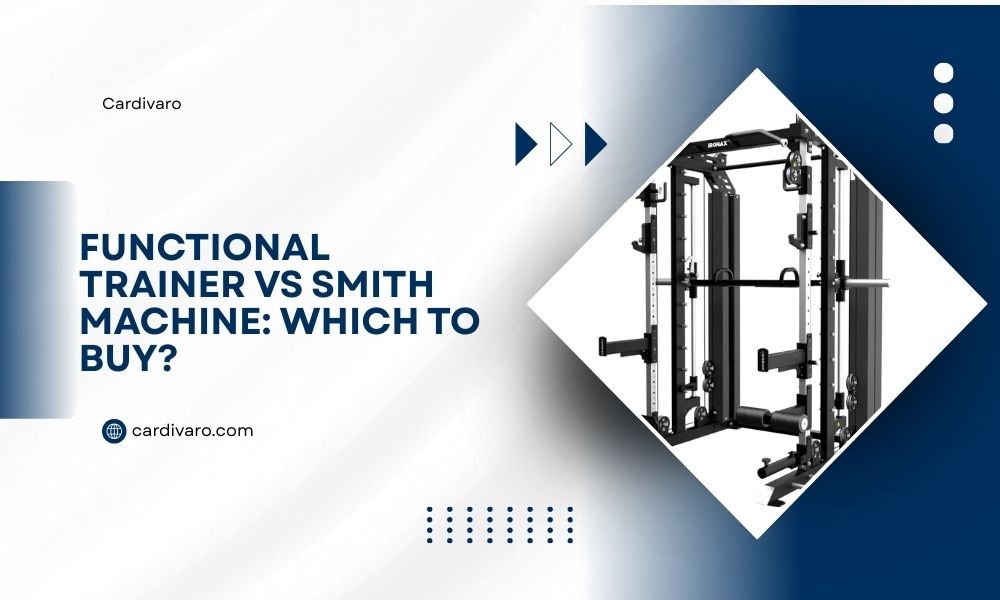
A functional trainer wins for versatility and real-world movement patterns, while a Smith machine excels for heavy lifting and safety when training alone.
Your choice between a functional trainer vs Smith machine depends on your goals: choose functional trainers for athletic performance and varied workouts, or Smith machines for traditional strength training with guided support.
What Makes These Machines Different
Think of a functional trainer as your personal gym trainer that never gets tired. It uses cables and pulleys to let you move in any direction you want.
A Smith machine is more like having a spotter built into the equipment. The barbell moves up and down on fixed rails, keeping you safe during heavy lifts.
How Functional Trainers Work
Functional trainers have cable systems on both sides. You can adjust the height and resistance for hundreds of different exercises.
From what I researched, these machines let you train movement patterns you actually use in daily life. You’re not locked into one specific motion.
How Smith Machines Operate
Smith machines guide a barbell along vertical rails. Safety catches prevent the bar from dropping too far if you can’t complete a rep.
The fixed path makes exercises more predictable. You don’t need to worry about balancing the weight left to right.
Space and Setup Requirements
Functional Trainer Space Needs
Most functional trainers need about 8 feet by 6 feet of floor space. You’ll want extra room around the sides for cable movements.
Height matters too. Make sure you have at least 8 feet of ceiling clearance for overhead exercises.
Assembly Time
I found that functional trainers typically take 2-4 hours to assemble. The cable routing can be tricky, but most people can handle it with basic tools.
Smith Machine Space Requirements
Smith machines are usually more compact front-to-back. They need about 7 feet by 4 feet of floor space.
The height requirement is similar at 7-8 feet. Some models include pull-up bars that add extra height needs.
Setup Complexity
Smith machines often assemble faster than functional trainers. The simpler design means fewer moving parts to connect.
Exercise Variety Comparison
What You Can Do With Functional Trainers
Functional trainers shine for total-body workouts. You can train every muscle group with smooth, natural movements.
- Cable rows from multiple angles
- Rotational movements for core strength
- Unilateral training (one side at a time)
- Functional movements like wood chops
- Rehabilitation exercises
Upper Body Options
The cable system works great for chest flies, lat pulldowns, and shoulder exercises. You can hit muscles from angles that free weights can’t match.
Lower Body Training
Cable squats, lunges, and leg curls all work well. The constant tension from cables challenges your muscles differently than traditional weights.
Smith Machine Exercise Selection
Smith machines focus on traditional barbell movements. They’re perfect for the big compound exercises that build serious strength.
- Squats with safety support
- Bench press variations
- Overhead press
- Bent-over rows
- Calf raises
Safety Features for Heavy Lifting
The guided barbell path lets you push harder without a spotter. Safety catches prevent injury if you reach muscle failure.
Cost Analysis
Functional Trainer Pricing
Quality home functional trainers start around $1,200 and can reach $4,000 for commercial-grade models.
The cable systems and adjustable components make these machines more expensive to manufacture.
Long-Term Value
I researched maintenance costs and found functional trainers need cable replacements every few years. Budget about $100-200 for parts over time.
Smith Machine Investment
Basic Smith machines start around $800. High-end models with multiple stations can cost $3,000 or more.
The simpler design usually means lower maintenance costs compared to functional trainers.
Who Should Choose Each Machine
Functional Trainers Work Best For
Athletes who need sport-specific training will love functional trainers. The movement variety helps improve real-world performance.
People recovering from injuries also benefit from the smooth, adjustable resistance. Physical therapists often recommend cable exercises.
Fitness Enthusiasts
If you get bored easily, functional trainers keep workouts interesting. You can create hundreds of different exercise combinations.
Smith Machines Suit These People
Beginners who want to learn proper form safely should consider Smith machines. The guided movement teaches correct patterns.
Powerlifters and strength athletes who focus on the big three lifts (squat, bench, deadlift) will appreciate the heavy-duty construction.
Solo Trainers
Training alone at home? Smith machines let you push your limits without needing a spotter for safety.
| Feature | Functional Trainer | Smith Machine |
|---|---|---|
| Exercise Variety | High (200+ exercises) | Moderate (50+ exercises) |
| Space Required | 8′ x 6′ | 7′ x 4′ |
| Price Range | $1,200-$4,000 | $800-$3,000 |
| Best For | Athletic training | Heavy lifting |
Making Your Final Decision
Consider Your Training Goals
Want to get stronger at basic movements? A Smith machine supports heavy, progressive overload perfectly.
Looking for athletic performance or functional fitness? The functional trainer gives you movement freedom that translates to real life.
Think About Your Experience Level
New to strength training? Smith machines teach proper movement patterns safely. You can focus on form without worrying about balance.
More experienced? Functional trainers challenge your stabilizer muscles and coordination in ways that fixed machines can’t.
Budget and Space Reality Check
Measure your space twice before buying. Both machines take up significant room, but in different ways.
Remember to factor in ongoing costs. Cables need replacement, and weight plates cost extra if not included.
Conclusion
Both functional trainers and Smith machines earn their place in home gyms, but they serve different purposes. Functional trainers excel at movement variety and athletic training, while Smith machines dominate for heavy lifting and safety. Your choice should match your goals, space, and budget. If you’re unsure, visit a gym that has both machines and try them out. The right equipment is the one you’ll actually use consistently for years to come.
Can you build serious muscle with a functional trainer?
Yes, functional trainers build muscle effectively through constant cable tension and progressive overload. Many bodybuilders use cables for muscle isolation and growth, especially for finishing exercises and targeting specific muscle fibers.
Are Smith machines bad for your joints?
Smith machines aren’t inherently bad for joints when used properly. The fixed bar path can feel unnatural for some people, but proper form and gradual progression minimize injury risk. Listen to your body and adjust accordingly.
Which machine takes up less storage space?
Smith machines typically have a smaller footprint but are taller. Functional trainers spread out more horizontally but may have lower height requirements. Neither machine stores compactly, so permanent space is necessary for both.
Can beginners use functional trainers safely?
Beginners can safely use functional trainers with proper instruction. Start with light weights and focus on controlled movements. The adjustable resistance makes it easy to progress gradually as strength and coordination improve.
What’s the maintenance difference between these machines?
Functional trainers require more maintenance due to cables, pulleys, and moving parts. Smith machines have simpler mechanisms but need occasional lubrication of rails and safety mechanisms. Budget for cable replacements every 2-3 years with functional trainers.