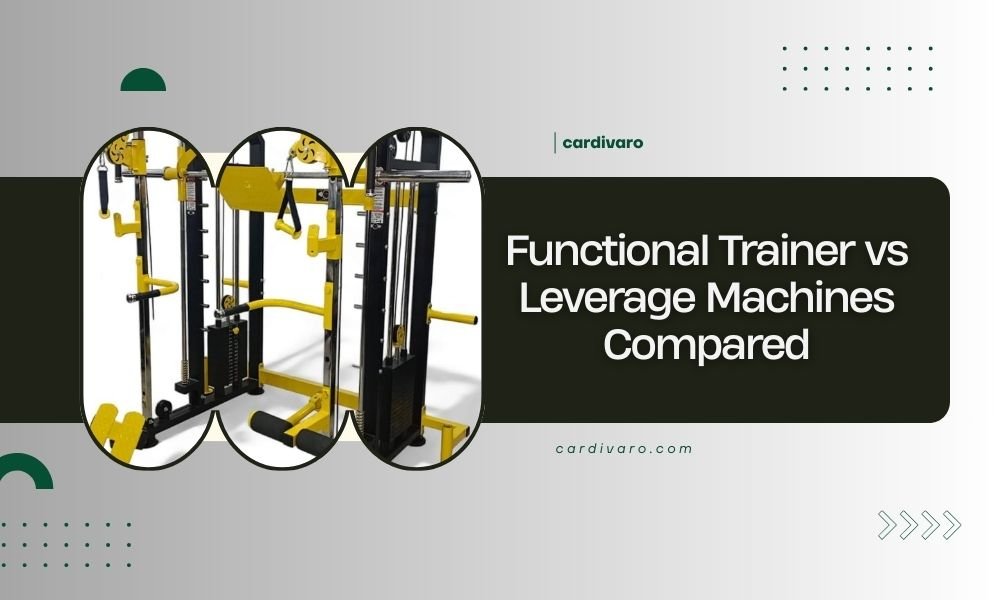
Functional trainers use cables and adjustable pulleys for versatile resistance training, while leverage machines use fixed pivot points and weight stacks for targeted muscle isolation.
Your choice between functional trainer vs leverage machines depends on your fitness goals, space, and budget – functional trainers offer more exercise variety but cost more.
What Are Functional Trainers?
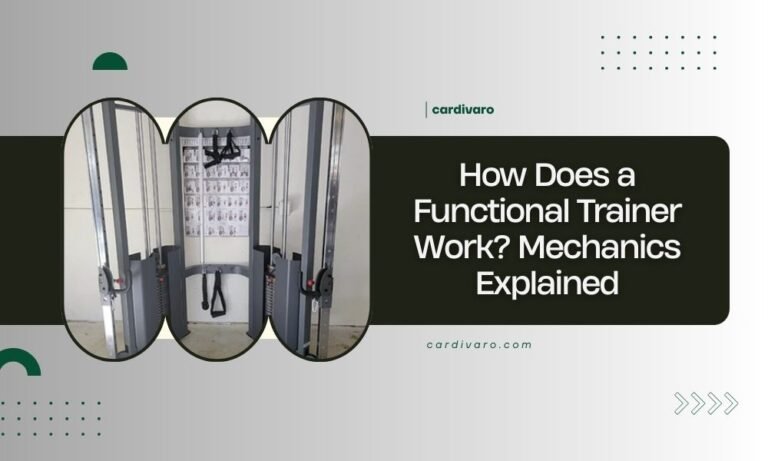
Functional trainers are cable-based machines with two adjustable weight stacks. You can move the pulleys up and down to change angles. This lets you copy real-world movements like lifting boxes or playing sports.
Think of them as the Swiss Army knife of home gym equipment. One machine gives you dozens of exercise options. You can work every muscle group from multiple angles.
Key Features of Functional Trainers
Most functional trainers share these features:
- Dual weight stacks (usually 150-200 pounds each)
- Adjustable pulley heights
- Multiple cable attachment points
- Wide range of motion
- Smooth cable systems
Popular Functional Trainer Brands
I found that top brands include Freemotion, TRX, and Rep Fitness. Each offers different weight stack sizes and build quality levels.
What Are Leverage Machines?
Leverage machines use your body weight plus added plates for resistance. They have fixed movement paths that guide your form. Think of machines like leg presses or seated rows.
These machines feel more like free weights but with built-in safety. The leverage system makes the weight feel different at various points in your rep.
How Leverage Systems Work
The magic happens through mechanical advantage. The machine’s pivot point and lever arm change how heavy the weight feels during your exercise.
At some points in the movement, 100 pounds might feel like 80. At others, it might feel like 120. This matches how your muscles naturally get stronger or weaker through a range of motion.
Common Leverage Machine Types
- Chest press machines
- Leg press units
- Seated row machines
- Shoulder press stations
- Lat pulldown units
Exercise Variety Comparison
Here’s where functional trainers really shine. One machine can replace an entire gym’s worth of equipment.
| Machine Type | Exercise Options | Muscle Groups |
|---|---|---|
| Functional Trainer | 50+ exercises | All major groups |
| Single Leverage Machine | 1-3 exercises | 1-2 groups |
Functional Trainer Exercise Options
With a functional trainer, you can do chest flies, squats, rows, and bicep curls. You can also do functional movements like wood chops and rotational exercises.
The adjustable cables let you hit muscles from angles that free weights can’t match. Want to do a chest fly at a 45-degree angle? Easy.
Leverage Machine Limitations
Each leverage machine typically does one main exercise really well. A chest press machine gives you an amazing chest workout. But that’s about it.
You’d need multiple leverage machines to match one functional trainer’s versatility.
Space Requirements
Space planning matters a lot for home gyms. Let me break down what you need for each option.
Functional Trainer Space Needs
Most functional trainers need about 8 feet by 8 feet of floor space. You also need ceiling height of at least 8 feet for overhead movements.
The good news? That’s all the space you need for a complete workout. No need for additional equipment storage.
Compact Functional Trainer Options
Some brands make smaller units for tight spaces. These might have lighter weight stacks but still offer great exercise variety.
Leverage Machine Space Planning
Individual leverage machines vary widely in size. A leg press might need 10 feet of length. A compact chest press might fit in 6 feet.
The real space issue comes when you want multiple machines. Three or four leverage machines can fill a two-car garage.
Cost Analysis
Money talks, especially for home gym investments. I researched current pricing to give you realistic numbers.
Functional Trainer Costs
Quality functional trainers range from $1,500 to $4,000. Commercial-grade units can cost $6,000 or more.
Yes, that’s a big upfront cost. But think about the value per exercise. You’re getting 50+ exercises for that price.
Hidden Functional Trainer Costs
Don’t forget accessories. You’ll want different handle attachments, ankle straps, and maybe a bench. Budget an extra $200-400 for accessories.
Leverage Machine Pricing
Individual leverage machines cost $800 to $2,500 each. High-end commercial units can hit $4,000.
The math gets scary when you want variety. Four different machines could cost $6,000 to $10,000 total.
Safety Considerations
Both machine types offer safety advantages over free weights. But they have different risk profiles.
Functional Trainer Safety
Cables are generally safe because the weight moves smoothly. You won’t drop a barbell on your chest during bench press.
The main risk comes from cable snap or pulley failure. Quality machines from reputable brands rarely have these issues.
Leverage Machine Safety
Fixed movement paths help prevent form breakdown. The machine guides you through the correct motion pattern.
Some people feel safer with leverage machines because the movement feels more controlled and predictable.
Maintenance Requirements
All gym equipment needs care to last. Here’s what you’re signing up for with each type.
Functional Trainer Maintenance
Cables and pulleys need regular inspection. I found that most manufacturers recommend monthly visual checks for fraying or wear.
You’ll also need to lubricate moving parts occasionally. It’s not hard work, but it does require attention.
Common Functional Trainer Issues
- Cable stretching over time
- Pulley bearing wear
- Weight stack guide rod maintenance
Leverage Machine Upkeep
These machines have fewer moving parts, so maintenance is usually simpler. Most need basic cleaning and occasional pivot point lubrication.
The trade-off is that repairs can be more complex when something does break.
Who Should Choose Functional Trainers?
Functional trainers work best for specific situations and goals.
Best Candidates for Functional Trainers
You’re a good fit if you want maximum exercise variety in minimal space. Athletes who need sport-specific movements also benefit greatly.
People who get bored easily love functional trainers. You can change your workout routine completely without buying new equipment.
Functional Training Benefits
Research shows that functional movements can improve daily activities better than isolation exercises (American Council on Exercise).
Who Should Choose Leverage Machines?
Leverage machines suit different personality types and goals.
Ideal Leverage Machine Users
If you prefer structured, predictable workouts, leverage machines feel more comfortable. Bodybuilders often prefer them for targeted muscle isolation.
People new to strength training sometimes find leverage machines less intimidating than cables.
Making Your Decision
Your choice comes down to priorities. Do you value variety or specialization? Space efficiency or targeted training?
Consider your long-term goals too. Will you get bored doing the same exercises? Or do you prefer perfecting specific movements?
Conclusion
Functional trainers win for versatility, space efficiency, and exercise variety. They cost more upfront but offer better value per exercise. Leverage machines excel at targeted muscle building and provide a more traditional gym experience.
Your best choice depends on your space, budget, and training style. If you want one machine that does everything, choose a functional trainer. If you prefer specialized equipment for specific goals, leverage machines make more sense.
Can I build muscle effectively with just a functional trainer?
Yes, functional trainers provide enough resistance and exercise variety for muscle building. Many users successfully build strength and size using only cable-based resistance training.
How long do functional trainers typically last?
Quality functional trainers can last 10-15 years with proper maintenance. Commercial units in home settings often last even longer due to lighter usage compared to gym environments.
Are leverage machines better for beginners?
Many beginners find leverage machines easier to learn initially because of fixed movement patterns. But functional trainers aren’t difficult to master and offer more learning opportunities for movement skills.
What’s the minimum ceiling height needed for a functional trainer?
Most functional trainers need at least 8 feet of ceiling height for overhead movements. Some compact models work with 7.5-foot ceilings but limit exercise options.
Can I add leverage attachments to a functional trainer?
Some functional trainers accept leverage attachments like lat pulldown bars or leg press accessories. Check with your manufacturer about compatible add-ons before purchasing.