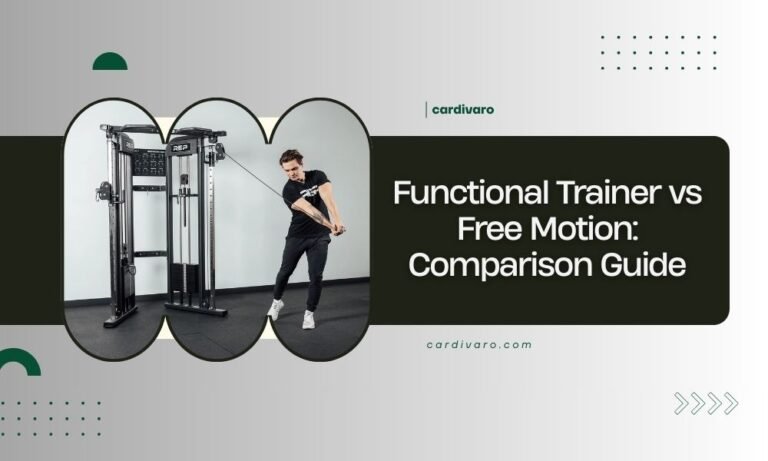
Wall mounted functional trainers offer space-saving versatility but require permanent installation and weight capacity considerations for your home gym setup.
These compact machines deliver full-body workouts in tight spaces, though they typically provide less resistance range than floor-standing models.
What Are Wall Mounted Functional Trainers?
Wall mounted functional trainers attach directly to your wall studs or reinforced surfaces. They use cable and pulley systems to create resistance for strength training exercises.
Think of them as gym machines that fold against your wall when not in use. You pull handles connected to weight stacks or resistance mechanisms to work different muscle groups.
How They Work
Most units feature adjustable cable heights and multiple attachment points. You can perform exercises from floor level up to overhead positions.
The resistance comes from weight stacks, resistance bands, or pneumatic systems. Some models combine multiple resistance types for varied training options.
Major Advantages of Wall Mounted Units
Space Efficiency
Your biggest win is floor space savings. These trainers typically extend 18-24 inches from the wall during use.
When folded up, many units sit just 6-8 inches from your wall. That’s perfect for apartments or multi-purpose rooms.
Cost Savings
Wall mounted models often cost 30-50% less than comparable floor units. You skip the heavy base frame and stabilizing components.
Installation is usually DIY-friendly if you have basic tools and can locate wall studs.
Exercise Variety
You can perform hundreds of exercises on quality wall trainers. Chest presses, rows, lat pulldowns, and functional movements all work well.
The adjustable cable heights let you target muscles from different angles. This keeps your workouts interesting and effective.
Upper Body Focus
These machines excel at upper body training. Arms, shoulders, chest, and back exercises feel natural and smooth.
Core Engagement
Without a bench or seat, your core works harder to stabilize your body during exercises. This adds functional strength benefits.
Notable Disadvantages
Installation Requirements
You need solid wall construction to safely mount these trainers. Drywall alone won’t support the dynamic loads.
Most units require mounting to at least two wall studs. Some heavier models need additional reinforcement or blocking between studs.
Rental Property Concerns
Renters face challenges with permanent wall modifications. Landlord approval and potential damage deposits become issues.
Limited Weight Resistance
Wall mounted units typically max out around 150-200 pounds of resistance. Serious strength athletes may outgrow this quickly.
The mounting system limits how much weight the unit can safely handle. Floor models often provide 300+ pounds of resistance.
Stability Challenges
High-force exercises can stress the wall mounting points. You might feel slight movement during heavy pulling motions.
This becomes more noticeable as resistance levels increase or during explosive movements.
Wall Stress Points
Repeated loading cycles can loosen mounting hardware over time. Regular inspection and maintenance become necessary.
Who Benefits Most From Wall Trainers?
Apartment Dwellers
If you have limited square footage but decent wall space, these trainers make sense. They disappear when not in use.
Budget-Conscious Buyers
You get solid functionality without the premium price of floor-standing units. The exercise variety still supports full-body training.
Moderate Strength Levels
People using 50-150 pounds of resistance find wall trainers perfectly adequate. This covers most general fitness goals.
Installation Considerations
Wall Structure Assessment
You need to verify your wall can handle dynamic loads. Concrete, masonry, or wood stud walls work best.
Metal stud walls or older plaster construction may need reinforcement. When in doubt, consult a contractor.
Stud Spacing
Standard 16-inch stud spacing works for most trainers. Some wider units require 24-inch spacing or custom blocking.
Clearance Requirements
Plan for 6-8 feet of clearance in front of the trainer. You need room to perform exercises safely.
Side clearance matters too, especially for rotational movements or wide-grip exercises.
| Feature | Wall Mounted | Floor Standing |
|---|---|---|
| Floor Space Used | Minimal | 6-8 sq ft |
| Max Resistance | 150-200 lbs | 200-400 lbs |
| Installation | Wall mounting required | Assembly only |
| Price Range | $300-800 | $600-1500 |
Maintenance and Safety
Regular Inspections
Check mounting bolts monthly for looseness. The wall anchor points take constant stress and may need retightening.
Inspect cables for fraying or wear. Replace them before they fail during exercise.
Weight Limits
Never exceed the manufacturer’s weight ratings. This applies to both resistance weight and user body weight.
Some units have separate limits for different exercise positions. Read your manual carefully.
Making Your Decision
Space vs Performance Trade-off
Wall trainers work great if space is your primary concern. You sacrifice some performance capability for convenience.
If you have room and budget for a floor unit, you’ll get more resistance options and better stability.
Long-term Goals
Consider your strength progression plans. Will 150-200 pounds of resistance meet your needs in two years?
Beginners and intermediate trainees often find wall units perfectly adequate for their goals.
Conclusion
Wall mounted functional trainers solve the space problem that prevents many people from having home gyms. They offer legitimate full-body training in minimal space at reasonable prices.
The trade-offs are real though. You get less resistance capacity, require permanent installation, and may experience some stability limitations. For many people, these compromises are worth the space savings and lower cost. Assess your wall structure, space constraints, and strength goals to decide if a wall mounted trainer fits your situation.
Can wall mounted trainers support heavy users over 200 pounds?
Most quality wall trainers support users up to 250-300 pounds when properly installed in solid wall construction. The user weight limit is usually higher than the resistance weight limit. Always check manufacturer specifications for your specific model and body weight.
What tools do I need to install a wall mounted functional trainer?
You’ll typically need a stud finder, level, drill with bits, socket wrench set, and measuring tape. Some units require masonry bits for concrete walls. Most manufacturers include mounting hardware, but you may need longer bolts for thicker walls or additional blocking.
Do wall trainers work for lower body exercises effectively?
Wall trainers can handle lower body exercises like squats, lunges, and leg curls, but they’re not ideal for heavy leg training. The cable angles and resistance limits make them better suited for upper body and functional movement patterns. Consider adding resistance bands or free weights for comprehensive lower body work.
How much wall damage occurs when removing a wall mounted trainer?
Removal leaves 6-12 bolt holes that require patching and painting. The holes are usually 1/2 inch or smaller and easy to repair with spackling compound. Some units use toggle bolts that create slightly larger holes. Plan for minor wall repair work if you move or upgrade equipment.
Can I mount a functional trainer on an exterior wall?
Exterior walls often provide excellent mounting strength due to thicker construction and closer stud spacing. Make sure to seal any holes properly to prevent moisture intrusion. Avoid mounting on walls with extensive plumbing or electrical runs that could interfere with bolt placement.