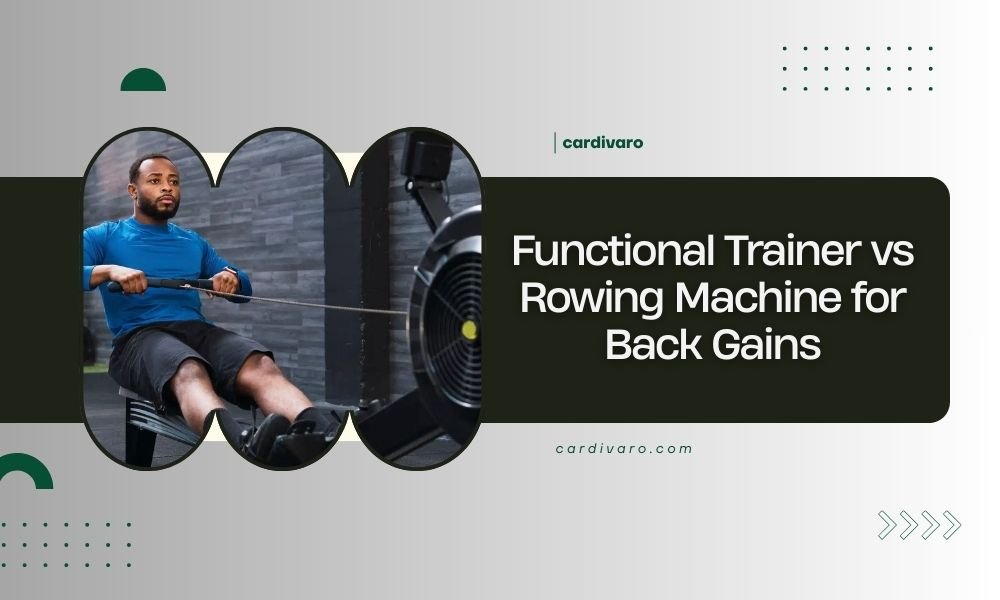
Functional trainers are better for back gains than rowing machines because they offer versatile pulling exercises at multiple angles, targeting all back muscle groups effectively.
Rowing machines excel at cardiovascular fitness and overall back endurance, but functional trainers provide the resistance variety needed for serious muscle growth and strength development.
Why Your Back Training Equipment Choice Matters
Your back contains multiple muscle groups that need different types of stimulation. The latissimus dorsi, rhomboids, middle traps, and rear delts all respond differently to various pulling patterns.
I researched how these two popular machines target back muscles. The differences surprised me. Each machine has clear strengths and weaknesses for building a stronger, more muscular back.
Functional Trainer Advantages for Back Development
Multiple Angle Training
Functional trainers let you pull from high, middle, and low positions. This variety hits your back muscles from different directions.
You can perform lat pulldowns, seated rows, and reverse flyes all on one machine. Your back muscles adapt to various movement patterns, promoting balanced development.
Progressive Overload Options
Weight stacks on functional trainers typically range from 10 to 200+ pounds per arm. You can increase resistance gradually as you get stronger.
This progressive overload is key for muscle growth. Research shows that gradually increasing resistance leads to better strength gains over time (ACSM).
Unilateral Training Benefits
Each arm works independently on functional trainers. This helps fix muscle imbalances between your left and right sides.
Many people have one side stronger than the other. Independent arm training forces your weaker side to catch up, creating better symmetry.
Rowing Machine Benefits for Back Training
Full-Body Movement Pattern
Rowing machines engage your entire posterior chain simultaneously. Your lats, traps, rhomboids, and rear delts all work together during each stroke.
This coordination mirrors real-world activities. You train your back muscles to work as a team rather than in isolation.
Cardiovascular Integration
You get cardio and strength training combined. Your heart rate stays elevated while your back muscles work continuously.
This dual benefit saves time if you want both cardiovascular fitness and back muscle endurance in one workout.
Low Impact Exercise
Rowing is gentle on your joints while still challenging your back muscles. The smooth, controlled motion reduces injury risk compared to other cardio options.
Direct Comparison: Muscle Activation Patterns
| Muscle Group | Functional Trainer | Rowing Machine |
|---|---|---|
| Latissimus Dorsi | High activation with pulldowns | Moderate continuous activation |
| Rhomboids | Targeted with specific exercises | Good activation during pull phase |
| Middle Traps | Excellent with rowing variations | Good continuous engagement |
| Rear Delts | Isolated targeting possible | Moderate activation |
Best Functional Trainer Exercises for Back Gains
Lat Pulldowns
Attach a wide bar to the high pulley. Pull down to your upper chest while leaning slightly back. This targets your lats directly for width development.
Seated Cable Rows
Use the middle pulley with a narrow grip handle. Pull to your lower chest while keeping your torso upright. This builds thickness in your middle back.
Single-Arm Rows
Work one side at a time using the low or middle pulley. This helps correct imbalances and allows you to focus on proper form.
Form Tips for Maximum Results
Keep your shoulders down and back throughout each movement. Squeeze your shoulder blades together at the end of each rep.
Control the weight on both the pulling and returning phases. Slow, controlled movements create more muscle tension than fast, jerky motions.
Optimal Rowing Machine Technique for Back Development
Proper Stroke Sequence
Start with your arms extended and knees bent. Push with your legs first, then lean back slightly, and finally pull with your arms.
The reverse happens on the return: arms extend, torso leans forward, then knees bend. This sequence maximizes back muscle engagement.
Resistance and Timing Settings
Set the damper between 3-5 for muscle building. Higher settings create more resistance but may compromise your technique.
Focus on powerful pulls rather than maximum speed. Aim for 20-24 strokes per minute when training for strength.
Common Rowing Mistakes
Don’t pull with your arms first. This reduces back muscle activation and can cause injury. Your legs should initiate each stroke.
Avoid hunching your shoulders forward. Keep your chest up and shoulders back to engage your back muscles properly.
Which Machine Wins for Muscle Growth?
Functional trainers win for pure muscle building. The ability to perform multiple exercises with progressive overload gives you more growth potential.
You can target specific weak points and adjust resistance precisely. This flexibility leads to better overall back development over time.
When Rowing Machines Make Sense
Choose rowing if you want cardiovascular benefits alongside back training. It’s also better if you have limited workout time.
Rowing machines work well for athletic training where total-body coordination matters more than isolated muscle growth.
Budget and Space Considerations
Cost Comparison
Quality functional trainers typically cost $1,500-$5,000. Good rowing machines range from $300-$2,000.
Functional trainers offer more exercise variety, but rowing machines provide better value if you mainly want cardio with some back training.
Space Requirements
Functional trainers need about 8×8 feet of floor space. Rowing machines require roughly 9×4 feet but can often be stored vertically.
Consider your available space carefully. A machine you can’t use comfortably won’t help your back development.
Making Your Decision
Choose a Functional Trainer If You Want:
- Maximum muscle building potential
- Exercise variety for all muscle groups
- Ability to target specific weaknesses
- Progressive overload capabilities
Choose a Rowing Machine If You Want:
- Combined cardio and strength training
- Full-body coordination development
- Lower equipment cost
- Joint-friendly exercise option
Conclusion
Functional trainers beat rowing machines for serious back gains because they offer targeted resistance training with progressive overload. You can isolate specific muscles, fix imbalances, and gradually increase weight for continued growth.
Rowing machines excel at cardiovascular fitness and total-body coordination but fall short for pure muscle development. Your choice depends on whether you prioritize muscle building or overall fitness.
If building a muscular, strong back is your main goal, invest in a functional trainer. You’ll have the tools needed to target every back muscle effectively and track your strength progress over time.
Which machine is better for beginners wanting back muscle growth?
Functional trainers are better for beginners because you can start with very light weights and learn proper form on each exercise. The controlled movements are safer than rowing, which requires coordination to avoid injury.
Can you build significant back muscle mass with just a rowing machine?
Building significant mass with rowing alone is difficult because you can’t progressively overload specific muscles. Rowing builds endurance and moderate muscle tone, but functional trainers provide the heavy resistance needed for substantial growth.
How often should you train back with each machine for best results?
Train 2-3 times per week with functional trainers, allowing rest days between sessions for muscle recovery. You can use rowing machines more frequently since they’re lower intensity, even daily for cardiovascular benefits.
Do rowing machines work the same back muscles as pull-ups?
Rowing machines work similar muscles but with different emphasis. Pull-ups target lats more intensely, while rowing emphasizes middle traps and rhomboids. Functional trainers can mimic both movement patterns better than rowing machines.
Which machine is better for fixing rounded shoulders and poor posture?
Functional trainers are superior for posture correction because you can specifically target rear delts, middle traps, and rhomboids with isolated exercises. These muscles directly counteract rounded shoulders better than the rowing pattern alone.