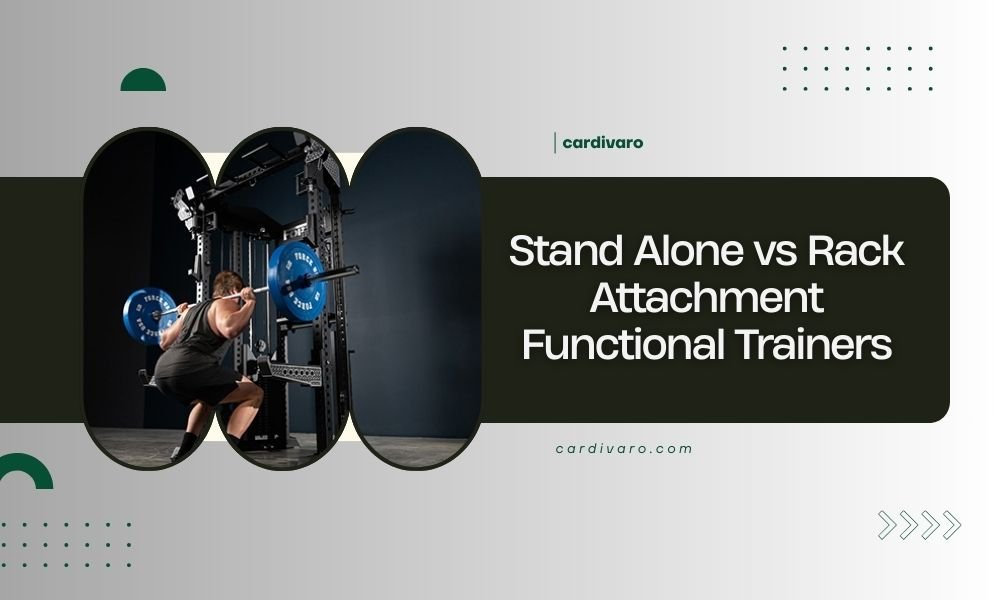
Stand alone functional trainers offer more exercise options and stability, while rack attachment functional trainers save space and cost less but require an existing power rack.
Your choice between stand alone vs rack attachment functional trainers depends on your budget, available space, and workout preferences.
What Are Functional Trainers?
Functional trainers are cable-based exercise machines that mimic natural movement patterns. They use adjustable pulleys and weight stacks to work multiple muscle groups.
Think of them as your personal gym trainer that never gets tired. They help you build strength while improving coordination and balance.
Stand Alone Functional Trainers Explained
Stand alone functional trainers are complete, independent machines. They come with their own frame, weight stacks, and pulley systems.
These machines typically measure 6-8 feet tall and 4-6 feet wide. You can place them anywhere in your home gym without additional equipment.
Key Features of Stand Alone Models
Most stand alone trainers include dual weight stacks ranging from 150-200 pounds each. This gives you up to 400 pounds of total resistance.
The cable ratios usually run 2:1, meaning you feel half the actual weight stack resistance. So a 200-pound stack feels like 100 pounds of resistance.
Popular Stand Alone Options
From what I found online, brands like Freemotion, Hoist, and Inspire Fitness lead this category. Their machines often cost between $2,000-$4,000.
Many experts say these machines last 10-15 years with proper care. That’s excellent value for serious home gym users.
Rack Attachment Functional Trainers Overview
Rack attachment functional trainers bolt onto existing power racks or squat racks. They add cable functionality to your current setup.
These attachments typically cost $800-$1,500. But remember, you need a compatible rack first.
How Rack Attachments Work
Most rack attachments use weight plates instead of built-in stacks. You load Olympic plates onto a loading pin system.
The pulley ratios vary by brand. Some offer 1:1 ratios, others use 2:1 or 4:1 systems.
Installation Requirements
Your existing rack needs specific mounting points and dimensions. Not all racks work with all attachments.
Installation usually takes 30-60 minutes with basic tools. Most people can handle it themselves.
Space Comparison: Which Takes Less Room?
Rack attachments win the space battle hands down. They use your existing rack footprint without adding much width.
Stand alone trainers need their own dedicated floor space. That’s 24-36 square feet minimum.
Ceiling Height Considerations
Both options need 8-9 feet of ceiling height for full range exercises. Low basement ceilings can limit your exercise choices.
Some rack attachments telescope or fold when not in use. This helps in tight spaces.
Cost Analysis: Initial Investment
Here’s where things get interesting. The upfront costs tell only part of the story.
| Option | Initial Cost | Additional Needs | Total Investment |
|---|---|---|---|
| Stand Alone | $2,000-$4,000 | None | $2,000-$4,000 |
| Rack Attachment | $800-$1,500 | Power Rack ($400-$1,200) | $1,200-$2,700 |
Long-Term Value Considerations
Stand alone trainers often include warranties and service support. Rack attachments may have limited warranty coverage.
Weight stacks cost more to replace than Olympic plates. But weight stacks rarely need replacement.
Exercise Variety and Range
Stand alone trainers typically offer more exercise stations and attachment points. You get pull-up bars, dip handles, and multiple cable heights.
Rack attachments focus purely on cable exercises. But you still get hundreds of movement options.
Dual vs Single User Capability
Most stand alone trainers allow two people to work out simultaneously. Each person gets their own weight stack and cable system.
Rack attachments usually serve one person at a time. This matters if you share your gym with family.
Weight Resistance Limits
Stand alone models max out at their weight stack capacity. Adding more weight means buying stack extensions.
Rack attachments can handle whatever plates you own. Want 500 pounds of resistance? Just load more plates.
Build Quality and Durability
Stand alone trainers use heavier gauge steel and commercial-grade components. They’re built to handle daily use for years.
Rack attachments vary widely in build quality. Some match commercial standards, others feel flimsy.
Maintenance Requirements
Both options need regular cable inspection and lubrication. Stand alone models may need more maintenance due to complexity.
I found that most problems come from cable wear and pulley bearing failure. These issues affect both types equally.
Installation and Setup Differences
Stand alone trainers arrive partially assembled. Expect 2-4 hours of assembly time with 2 people.
The weight stacks come pre-assembled, which saves time. But moving these heavy machines requires planning.
Delivery and Moving Considerations
Stand alone trainers weigh 400-600 pounds. You’ll need help getting them to your gym space.
Rack attachments ship in smaller boxes and weigh 50-150 pounds. Much easier to handle alone.
Which Option Fits Your Goals?
Choose stand alone if you want the ultimate home gym experience. You get maximum exercise options and dual-user capability.
Pick rack attachments if you’re building a gym gradually or have limited space and budget.
Beginner vs Advanced User Needs
Beginners often prefer stand alone trainers for their simplicity. Everything’s included and ready to use.
Advanced users might prefer rack attachments for their customization options and integration with existing equipment.
Making Your Final Decision
Ask yourself these key questions: Do you have an existing power rack? How much space can you dedicate? Will multiple people use it?
Your answers will point you toward the right choice. Neither option is wrong, just different.
Conclusion
Stand alone functional trainers offer the complete package with maximum features and dual-user capability. They cost more but provide a premium experience.
Rack attachment functional trainers give you cable training at a lower cost and smaller footprint. They’re perfect for space-conscious gym builders.
Both options deliver excellent workouts and build functional strength. Your choice comes down to space, budget, and personal preferences. Either way, you’ll get years of effective training.
Can I convert a rack attachment to stand alone later?
No, rack attachments need the structural support of a power rack. They won’t function safely as standalone units.
Do rack attachments work with any power rack brand?
Most rack attachments work with standard 3×3 inch racks with 1-inch holes. Always check compatibility before buying.
Which option is quieter during workouts?
Stand alone trainers with weight stacks tend to be quieter than rack attachments using loose plates that can clank together.
Can I add more weight to a stand alone trainer?
Some manufacturers offer weight stack add-ons, but options are limited. Rack attachments offer unlimited weight capacity with more plates.
Which type holds its resale value better?
Stand alone trainers from reputable brands typically maintain better resale value due to their complete package and brand recognition.