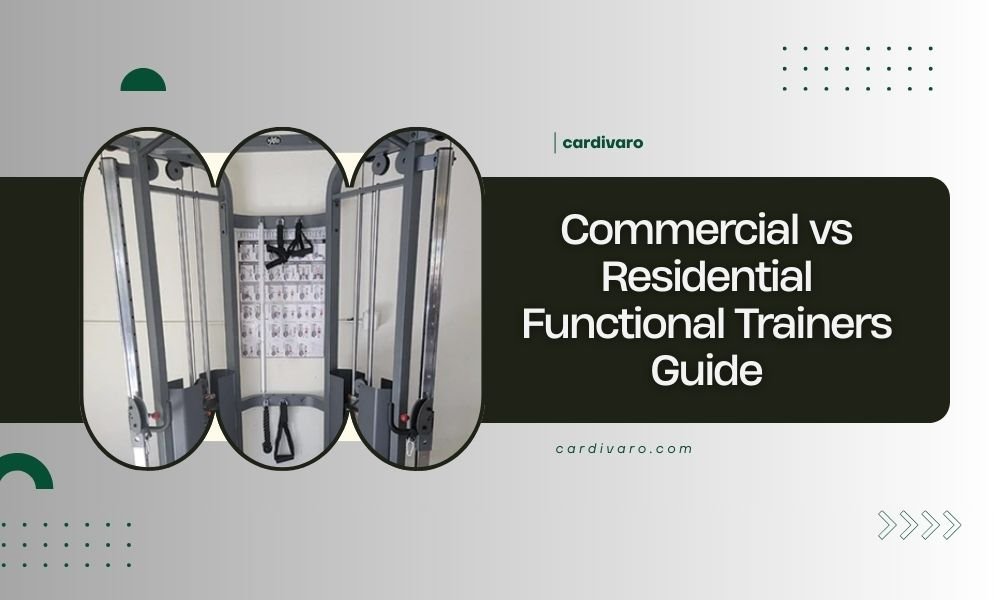
Commercial functional trainers cost $3,000-$15,000+ and handle 8-12 hours daily use, while residential models range $800-$4,000 for home workouts.
The main differences between commercial vs residential functional trainers include build quality, warranty length, weight capacity, and intended usage frequency.
What Makes Commercial Functional Trainers Different
Commercial functional trainers live in gyms where hundreds of people use them daily. They’re built like tanks because they have to be.
These machines handle serious abuse. Think about it – your home gym sees maybe 1-2 workouts per day. A commercial gym? That same machine might see 50+ sessions.
Heavy-Duty Construction Standards
Commercial units use thicker steel frames, usually 11-gauge or 12-gauge steel. The welds are stronger. The cables are aircraft-grade.
I found that most commercial models weigh 400-800 pounds when fully assembled. That’s not just for stability – it’s because every component is overbuilt.
Weight Stack Specifications
Commercial machines typically offer 200-300 pound weight stacks per side. Some go up to 400 pounds per stack.
The weight plates themselves are often thicker and more durable than residential versions.
Extended Warranty Protection
Commercial warranties usually cover 3-10 years on the frame and 1-3 years on moving parts. Some manufacturers offer lifetime frame warranties for commercial use.
Residential warranties are typically shorter because the expected usage is much lower.
Residential Functional Trainers: Built for Home Use
Your home functional trainer doesn’t need to survive a zombie apocalypse. It just needs to give you great workouts for years.
Residential models focus on smart design, space efficiency, and features that matter to home users.
Space-Conscious Design
Most home models fit in 8×8 foot spaces or smaller. They’re designed around standard ceiling heights (8-9 feet).
Many residential trainers have folding or compact designs. Some even mount to walls to save floor space.
Weight and Portability
Home models typically weigh 150-400 pounds. You can actually move them if needed, unlike their commercial cousins.
Assembly is usually more DIY-friendly with clearer instructions and fewer parts.
Feature Focus for Home Users
Residential trainers often include features that gyms don’t need. Think smartphone apps, workout videos, or compact storage solutions.
The cable systems might have 150-200 pound weight stacks, which works perfectly for most home users.
Cost Breakdown: What You’re Really Paying For
Here’s where the rubber meets the road. Commercial machines cost 3-5 times more than residential ones.
| Feature | Commercial | Residential |
|---|---|---|
| Price Range | $3,000-$15,000+ | $800-$4,000 |
| Weight Capacity | 300-400 lbs per side | 150-250 lbs per side |
| Daily Usage Rating | 8-16+ hours | 1-3 hours |
| Frame Warranty | 5-10+ years | 2-5 years |
Hidden Costs to Consider
Commercial machines often need professional installation. That’s another $200-$800.
Shipping costs more too. These things are heavy and require freight delivery.
Long-Term Value Calculation
A quality residential trainer lasting 10 years costs about $1 per day. Commercial units might last 20+ years but cost 4x more upfront.
For most home users, residential makes more financial sense.
Which Type Fits Your Workout Needs
Your workout style matters more than you might think. Are you doing light rehab work or training like an athlete?
Light to Moderate Training
If you’re doing general fitness, weight loss, or basic strength training, residential trainers handle this perfectly.
Most people never max out a 200-pound weight stack anyway.
Rehabilitation and Physical Therapy
Many physical therapists recommend functional trainers for home recovery work. Residential models work great for this.
The smooth cable action helps with joint mobility and controlled movements.
Serious Athletic Training
If you’re training multiple athletes or doing heavy resistance work daily, commercial makes sense.
The extra weight capacity and durability pay off when you’re pushing limits regularly.
Space and Installation Requirements
Your available space might make this decision for you. Let’s get practical about room requirements.
Ceiling Height Needs
Most functional trainers need 8-9 feet of ceiling clearance. Commercial units sometimes need 10+ feet.
Measure twice, buy once. Trust me on this one.
Floor Space Planning
Plan for workout space around the machine. You’ll need 3-4 feet on all sides for full range of motion.
Consider door widths too. Some commercial units won’t fit through standard doorways assembled.
Foundation and Flooring
Commercial machines might need reinforced flooring, especially on upper floors.
Residential units usually work fine on any solid floor with proper mats.
Maintenance and Longevity Differences
Commercial machines need more maintenance but they’re built to handle it. It’s like comparing a city bus to your car.
Regular Upkeep Requirements
Commercial units need monthly cable inspections, quarterly lubrication, and annual professional service.
Home models typically need basic cleaning and occasional cable adjustments.
Replacement Parts Availability
Commercial manufacturers usually guarantee parts availability for 10+ years. They have to – gyms depend on it.
Residential brands sometimes discontinue parts sooner, but the machines also need fewer repairs.
Making Your Final Decision
Here’s the bottom line: buy based on your actual needs, not your fantasy workout routine.
If you’re working out 3-5 times per week at moderate intensity, residential is perfect. Save the money for other equipment or gym memberships.
Choose commercial only if you truly need the extra capacity or plan to train multiple people daily.
Conclusion
The choice between commercial vs residential functional trainers comes down to usage, budget, and space. Commercial machines excel in durability and capacity but cost significantly more. Residential models offer excellent value for typical home use while taking up less space and requiring lower maintenance. Most home users will find residential trainers meet their needs perfectly while saving thousands of dollars. Choose commercial only if you need maximum weight capacity or plan intensive daily use by multiple people.
Do I need a commercial functional trainer for my home gym?
Most home users don’t need commercial-grade equipment. Unless you’re training multiple people daily or need maximum weight capacity, a quality residential model will serve you better and save thousands of dollars.
How long do residential functional trainers typically last?
Quality residential functional trainers usually last 8-12 years with regular home use. Proper maintenance like cable lubrication and keeping the machine clean can extend lifespan even further.
Can I get commercial-quality workouts on a residential machine?
Yes, absolutely. The workout quality depends more on your programming and consistency than the machine’s commercial rating. Residential trainers offer the same exercise variety and smooth motion as commercial units.
What’s the minimum ceiling height needed for functional trainers?
Most functional trainers require 8-9 feet of ceiling clearance for full range of motion on overhead exercises. Measure your space carefully before purchasing, as some exercises need the full height.
Are commercial functional trainers worth the extra cost for serious athletes?
For serious athletes training daily with heavy resistance, commercial machines offer better durability and higher weight capacities. However, many professional athletes train successfully on high-end residential equipment that costs much less.