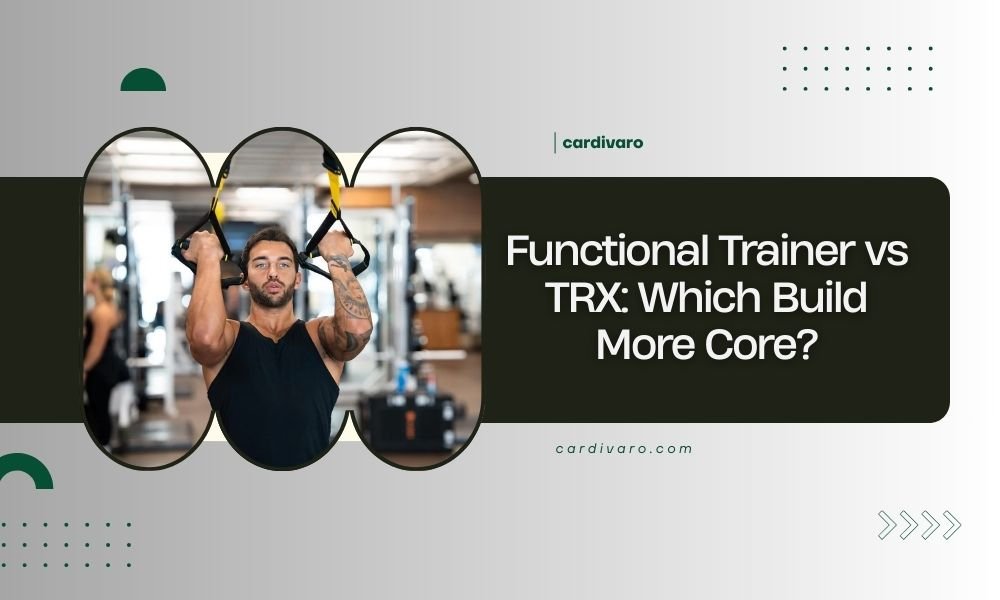
Functional trainers build more core strength than TRX systems due to their weight resistance and stability challenges that engage deep abdominal muscles throughout every movement.
TRX suspension training excels at core activation and endurance, while functional trainers provide progressive overload for measurable core muscle growth and power development.
What Makes Core Training Effective?
Your core isn’t just your abs. It includes over 35 muscles that wrap around your torso like a natural weight belt. These muscles stabilize your spine and transfer power between your upper and lower body.
Effective core training needs three things: resistance, instability, and progressive challenge. Both functional trainers and TRX systems deliver these elements, but in different ways.
How Functional Trainers Target Your Core
Functional trainers use weight stacks and cable systems to create constant tension. Every rep challenges your core muscles to resist rotation, flexion, and extension forces.
Weight Resistance Builds Muscle
The adjustable weight stacks let you progressively overload your core muscles. Start with 20 pounds for wood chops, then work up to 60 pounds as you get stronger.
This progressive overload triggers muscle growth. Your core adapts by building more muscle fibers and increasing strength output.
Multi-Angle Cable System
Most functional trainers have adjustable pulleys at high, mid, and low positions. This lets you train your core from multiple angles in one workout.
- High pulley: Targets upper abs and obliques
- Mid pulley: Hits rotational core muscles
- Low pulley: Works lower abs and hip flexors
Unilateral Training Benefits
Single-arm and single-leg exercises on functional trainers create anti-rotation challenges. Your core works overtime to keep your body stable while one limb moves.
Research from the Journal of Strength and Conditioning shows unilateral training increases core activation by 40% compared to bilateral movements.
How TRX Systems Challenge Your Core
TRX suspension training uses your body weight and gravity as resistance. The unstable straps force your core to fire constantly for balance and control.
Instability Training Effects
Every TRX exercise creates instability. Your core muscles work as stabilizers throughout the entire movement, not just during the main lifting phase.
This constant activation improves muscular endurance and neuromuscular control. You’ll notice better balance and coordination in daily activities.
Body Weight Limitations
TRX resistance depends on your body angle and positioning. While you can make exercises harder by changing your stance, you can’t add external weight.
This limits progressive overload options compared to weighted systems. Advanced users may plateau without additional resistance.
Core Activation Patterns
Studies from the American Council on Exercise found TRX planks activate rectus abdominis 73% more than standard floor planks. The instability forces deeper muscle engagement.
TRX pike movements and mountain climbers create dynamic core challenges that improve power transfer and athletic performance.
Direct Comparison: Core Building Potential
| Factor | Functional Trainer | TRX System |
|---|---|---|
| Resistance Type | Adjustable weights | Body weight only |
| Progressive Overload | Easy to increase load | Limited by body weight |
| Muscle Building | High potential | Moderate potential |
| Core Activation | Targeted engagement | Constant activation |
| Exercise Variety | 100+ exercises | 50+ exercises |
Best Core Exercises for Each System
Top Functional Trainer Core Moves
Wood Chops
Set the pulley at shoulder height. Pull the cable across your body in a diagonal pattern. This trains rotational power and oblique strength.
Pallof Press
Hold the cable at chest level and press straight out. The weight tries to rotate your body, so your core fights to stay square.
Cable Crunches
Kneel facing the high pulley with a rope attachment. Crunch down while keeping your hips stable. This isolates your rectus abdominis effectively.
Top TRX Core Exercises
TRX Pike
Start in plank position with feet in straps. Pull your hips up into an inverted V shape. This targets your entire core dynamically.
TRX Mountain Climbers
Plank position with feet in straps. Alternate bringing knees to chest rapidly. Great for core endurance and power.
TRX Side Plank
Side plank with feet stacked in straps. The instability forces your obliques to work much harder than floor variations.
Which System Builds More Core Strength?
Functional trainers win for pure core strength building. The ability to progressively add weight resistance creates measurable strength gains over time.
You can start with light resistance and work up to heavy loads that challenge even advanced athletes. This progressive overload principle drives muscle growth and strength development.
Measurable Progress
With functional trainers, you can track exact weight increases week by week. Going from 30-pound wood chops to 50-pound wood chops shows clear strength gains.
TRX progress is harder to measure. You might hold a plank longer or complete more reps, but the resistance stays relatively constant.
Which System Builds Better Core Function?
TRX systems excel at building functional core stability and endurance. The unstable environment mimics real-world movement patterns better.
If you play sports or want better everyday movement quality, TRX training transfers well to these activities.
Athletic Performance Benefits
Research from the International Journal of Sports Physical Therapy shows suspension training improves balance and proprioception more than traditional weight training.
Athletes who used TRX training showed better core endurance and movement control during sports activities.
Cost and Space Considerations
Functional Trainer Investment
Quality functional trainers cost $2,000 to $8,000. They need dedicated floor space and proper mounting or weight distribution.
The higher cost brings more exercise options and long-term durability. You’re investing in a complete home gym system.
TRX Budget-Friendly Option
TRX systems cost $100 to $300. They pack small and work anywhere with an anchor point.
Perfect for small spaces, travel, or budget-conscious fitness enthusiasts. You get excellent core training without the major investment.
Who Should Choose Each System?
Choose Functional Trainers If You Want:
- Maximum core strength gains
- Progressive overload options
- Complete home gym solution
- Variety in resistance levels
- Isolated muscle targeting
Choose TRX If You Want:
- Functional movement patterns
- Portable training option
- Budget-friendly solution
- Core endurance focus
- Athletic performance benefits
Can You Use Both Systems Together?
Combining both systems gives you the best of both worlds. Use the functional trainer for strength-building phases and TRX for endurance and stability work.
Many fitness professionals program both tools in periodized training cycles. Strength phases emphasize functional trainer work, while conditioning phases feature more TRX exercises.
Safety Considerations
Functional Trainer Safety
Start with light weights to learn proper form. The weight stacks can cause injury if you lose control during exercises.
Always check cable and pulley condition before workouts. Worn cables can snap under load.
TRX Safety Tips
Inspect anchor points regularly. A failed anchor can cause falls and injuries.
Learn proper strap adjustments before attempting advanced exercises. Incorrect setup reduces effectiveness and increases injury risk.
Conclusion
Both functional trainers and TRX systems build strong cores, but they excel in different areas. Functional trainers provide superior strength-building potential through progressive weight resistance and targeted muscle isolation. TRX systems offer exceptional functional stability training and movement quality improvements at a fraction of the cost.
Your choice depends on your goals, budget, and space. Want maximum core strength? Choose a functional trainer. Need portable, functional training? TRX is your answer. Either way, you’ll build a stronger, more stable core that supports all your activities.
Which system requires less setup time for core workouts?
TRX systems win for quick setup. You can anchor the straps and start exercising within 30 seconds. Functional trainers need weight selection and pulley adjustments, adding 1-2 minutes to your prep time.
Can beginners use both systems safely?
Yes, both systems work for beginners with proper instruction. TRX allows easier difficulty adjustments by changing body angles, while functional trainers let you start with very light weights and progress gradually.
Do either systems help with back pain relief?
Both can help strengthen core muscles that support spinal stability. Many physical therapy research studies show core strengthening reduces lower back pain episodes (American Physical Therapy Association). Always consult healthcare providers before starting new exercise programs for back issues.
How often should you train core with each system?
Core muscles recover quickly, so you can train 4-6 times per week with either system. Alternate high-intensity strength days (functional trainer) with stability-focused sessions (TRX) for optimal results.
Which system provides better value for money long-term?
TRX offers better initial value due to low cost and portability. Functional trainers provide better long-term value if you use them regularly, as they replace multiple gym memberships and offer more exercise progression options over many years.