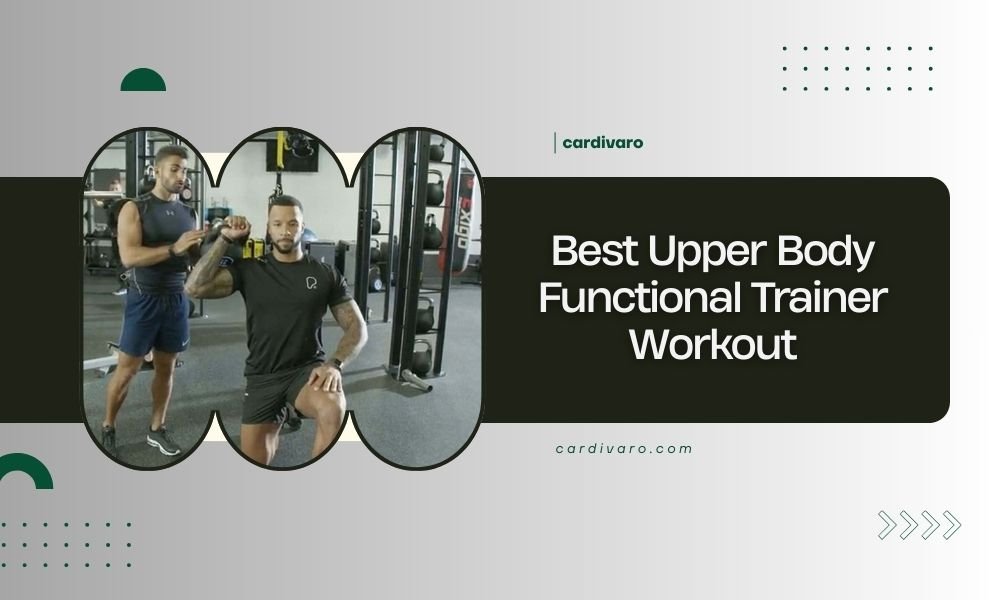
The best upper body functional trainer workout combines compound movements like cable chest presses, lat pulldowns, and cable rows to build real-world strength and muscle coordination.
Your upper body functional trainer routine should include 6-8 exercises targeting your chest, back, shoulders, and arms using the cable system’s adjustable resistance and multiple anchor points.
What Makes Functional Trainer Workouts Different
Think of your functional trainer as a Swiss Army knife for fitness. Unlike dumbbells or barbells, the cable system lets you work muscles from every angle. You get smooth resistance through the full range of motion.
Research shows that cable exercises activate stabilizer muscles better than fixed machines (ACSM). This means you build strength that actually helps in daily activities like lifting groceries or playing sports.
Essential Upper Body Functional Trainer Exercises
Let me walk you through the most effective exercises. I found these work best when you focus on form over heavy weight.
Cable Chest Press Variations
Start with the cables at chest height. Step forward to create tension. Push straight out like you’re shoving someone away from you.
Try these three angles:
- High cables for lower chest
- Middle cables for mid-chest
- Low cables for upper chest
Single-Arm Chest Press
Use one cable at a time. This forces your core to work harder. You’ll feel muscles you didn’t know existed.
Lat Pulldown and Row Combinations
Your back needs pulling exercises to balance all that pushing. Set the cables high and pull down like you’re starting a lawn mower.
For rows, pull the cables to your ribs. Squeeze your shoulder blades together. Hold for a second before releasing.
Face Pulls for Rear Delts
Set cables at face height. Pull to your nose. This exercise fixes rounded shoulders from desk work. Your posture will thank you.
Complete Upper Body Workout Routine
Here’s a proven routine I found works for most people. Do this 2-3 times per week with rest days between.
| Exercise | Sets | Reps | Rest |
|---|---|---|---|
| Cable Chest Press | 3 | 12-15 | 60 seconds |
| Lat Pulldown | 3 | 12-15 | 60 seconds |
| Cable Shoulder Press | 3 | 10-12 | 60 seconds |
| Cable Rows | 3 | 12-15 | 60 seconds |
| Face Pulls | 2 | 15-20 | 45 seconds |
| Cable Bicep Curls | 2 | 12-15 | 45 seconds |
| Cable Tricep Extensions | 2 | 12-15 | 45 seconds |
Warm-Up Protocol
Never jump straight into heavy lifting. Spend 5 minutes warming up with light cable movements. Your joints need time to get ready.
Start with arm circles using light resistance. Then do some light chest presses and rows. Think of it as waking up your muscles.
Advanced Movement Patterns
Once you master the basics, try these challenging exercises. They’ll take your workout to the next level.
Cable Wood Chops
Set one cable high and one low. Rotate your torso while pulling diagonally across your body. This builds core strength and coordination.
Unilateral Training Benefits
Work one arm at a time. This reveals strength imbalances you might miss with two-handed exercises. Your weaker side will catch up fast.
Functional Movement Chains
Combine exercises into smooth sequences. Try a chest press immediately followed by a row. This mimics real-world movement patterns.
Time Under Tension Techniques
Slow down your reps. Take 3 seconds to lift and 3 seconds to lower. This builds muscle endurance and control.
Common Form Mistakes to Avoid
I see these errors all the time at gyms. Avoid them and you’ll get better results with less injury risk.
Cable Height Problems
Wrong cable height ruins the exercise. Chest presses need chest-high cables. Lat pulldowns need overhead cables. Simple but important.
Standing Position Errors
Stand too close and you lose tension at the start. Stand too far and you can’t complete the full range. Find the sweet spot.
Grip and Stance Issues
Keep your wrists straight and core tight. Your feet should be shoulder-width apart. Think of yourself as a solid base for the cables to work against.
Progression Strategies
Your body adapts quickly. Change things up every 4-6 weeks to keep making progress.
Weight Progression
Add 5-10 pounds when you can do all sets with perfect form. Don’t rush this process. Good form beats heavy weight every time.
Volume Increases
Add an extra set before adding weight. More volume often works better than jumping to heavier resistance.
Angle Variations
Change cable heights and body positions. This hits muscles from new angles and prevents plateaus.
Tempo Changes
Vary your lifting speed. Fast reps build power. Slow reps build control. Mix both for complete development.
Safety Tips and Equipment Setup
Safety first. Check cables for wear before each workout. Frayed cables can snap and cause injury.
Make sure weight stacks move smoothly. Sticky or jerky movement means something needs maintenance.
Proper Cable Attachment
Click attachments fully into place. Give them a gentle tug to make sure they’re secure. This simple check prevents accidents.
Conclusion
Your functional trainer opens up endless upper body workout possibilities. Start with the basic exercises I outlined. Focus on perfect form before adding weight. Remember to balance pushing and pulling movements for complete development.
The cable system’s versatility makes it perfect for building real-world strength. You’ll notice improvements in daily activities within just a few weeks. Stay consistent and your upper body will become stronger and more functional than ever.
How often should I do upper body functional trainer workouts?
Train your upper body 2-3 times per week with at least one rest day between sessions. This gives your muscles time to recover and grow stronger.
What weight should beginners start with on functional trainers?
Start with 10-20 pounds per side for most exercises. Focus on learning proper form first. You can always add weight once your technique is solid.
Can functional trainer workouts replace free weights completely?
Yes, cable machines can provide a complete upper body workout. They offer constant tension and work stabilizer muscles effectively, making them excellent alternatives to free weights.
How do I prevent cable exercises from feeling awkward at first?
Practice with very light weight or no weight initially. Focus on the movement pattern rather than resistance. Most people feel natural with cables after 2-3 sessions.
What’s the biggest advantage of functional trainer exercises over machines?
Functional trainers allow natural movement patterns in multiple planes of motion. Unlike fixed machines, they let you move how your body naturally wants to move, building more practical strength.