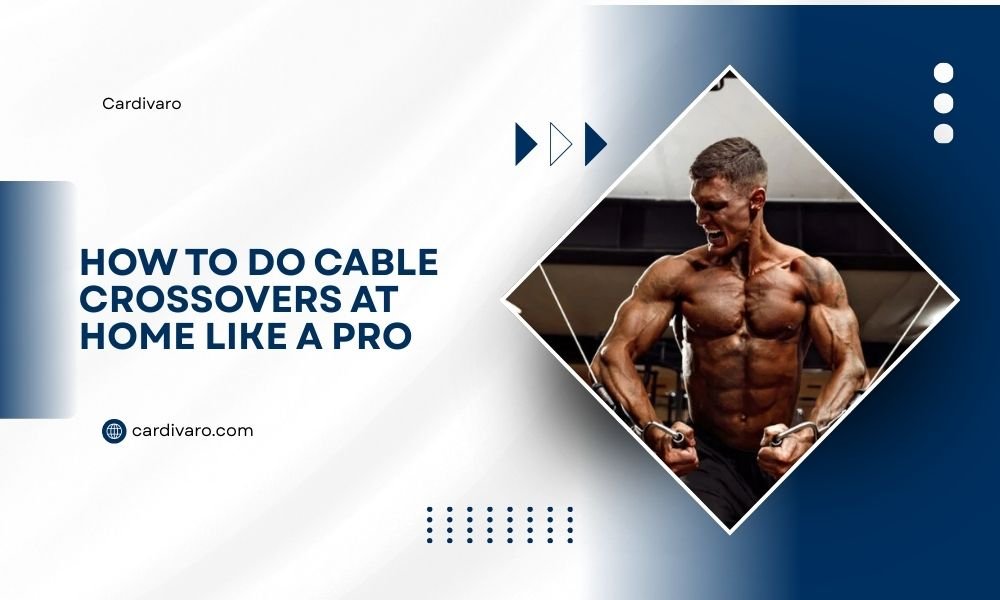
Cable crossovers at home require a functional trainer machine or adjustable cable system with two high pulleys positioned at shoulder height or above.
You can master cable crossovers by setting the right cable height, maintaining proper form, and controlling the movement through your chest muscles.
Setting Up Your Home Cable Crossover Station
Your home setup needs two cable points positioned wider than shoulder-width apart. I found that most functional trainers work perfectly for this exercise.
Position the pulleys at chest height or slightly above. This angle targets your middle chest fibers best. Too high hits your lower chest more. Too low works your upper chest.
Equipment You Need
Here’s what works for cable crossovers at home:
- Functional trainer with dual cable system
- Adjustable cable machine with high and low pulleys
- Cable crossover attachment handles
- Resistance bands with door anchors (budget option)
Space Requirements
You need about 8 feet of width and 6 feet of depth. This gives you room to step forward and complete the movement safely.
Perfect Cable Crossover Form Step-by-Step
Good form makes the difference between building muscle and wasting time. Let me walk you through each step.
Starting Position
Grab both cable handles with palms facing down. Step forward into the center, about 2-3 feet from the machine.
Plant one foot slightly ahead of the other. This stance keeps you stable during the movement.
Body Alignment
Keep your chest up and shoulders back. Your arms should be slightly bent, like you’re hugging a large tree.
Lean forward just a bit from your hips. This position protects your lower back and engages your core.
The Movement Pattern
Bring your hands together in front of your chest in a smooth arc. Think about squeezing a beach ball between your arms.
Stop when your hands meet or cross slightly. You should feel a strong squeeze in your chest muscles.
Return Phase
Slowly let your arms open back to the starting position. Control this part – don’t let the weight snap back.
Keep tension in your chest throughout the entire range of motion.
Common Cable Crossover Mistakes to Avoid
I’ve seen people make these errors over and over. Here’s how to fix them.
Using Too Much Weight
Heavy weight forces you to use momentum instead of muscle. Start lighter than you think you need.
Your form should look smooth and controlled. If you’re jerking or swinging, drop the weight.
Wrong Arm Position
Straight arms put too much stress on your elbows. Keep a slight bend throughout the movement.
Think “long arms” not “straight arms.” This protects your joints while keeping tension on your chest.
Letting Cables Pull You Back
The return should be just as controlled as the squeeze. Fight the weight on the way back.
This negative portion builds just as much muscle as the positive squeeze.
Cable Crossover Variations for Different Goals
Different cable heights target different parts of your chest. Here’s how to use each one.
High Cable Crossovers
Set the pulleys above your head. Pull down and across to hit your lower chest.
This variation works great if you want that lower chest definition.
Low Cable Crossovers
Position cables near floor level. Pull up and across to target your upper chest.
Use this if your upper chest needs more development.
Mid-Level Cable Crossovers
Chest-height cables work your middle chest fibers. This is the most common variation.
Most people get the best overall chest development from this angle.
Programming Cable Crossovers Into Your Routine
Cable crossovers work best as a finishing exercise after your main chest work.
Sets and Reps
Research suggests 3-4 sets of 12-15 reps works well for muscle growth (NCBI). The isolation nature of this exercise responds better to higher reps.
| Goal | Sets | Reps | Rest |
|---|---|---|---|
| Muscle Building | 3-4 | 12-15 | 60-90 seconds |
| Endurance | 2-3 | 15-20 | 45-60 seconds |
| Strength | 4-5 | 8-12 | 90-120 seconds |
Weekly Frequency
Two to three times per week gives your chest enough stimulus without overtraining.
Space your chest workouts at least 48 hours apart for proper recovery.
Troubleshooting Your Cable Crossover Setup
Not every home setup is perfect. Here’s how to work with what you have.
Limited Cable Height Options
If you can’t adjust cable height, change your body position instead. Lean forward more for upper chest emphasis. Stand more upright for lower chest.
Uneven Cable Resistance
Check that both sides have equal weight. Uneven resistance throws off your form and muscle development.
Most functional trainers have independent weight stacks. Make sure they match.
Space Constraints
In tight spaces, try single-arm cable crossovers. Work one side at a time with the same form principles.
Safety Tips for Home Cable Training
Home training means you’re your own spotter. Safety comes first.
Machine Inspection
Check cables for fraying or wear before each workout. Replace damaged cables immediately.
Make sure all pins and attachments are secure. A loose pin can cause serious injury.
Proper Warm-Up
Your chest and shoulders need warming up before heavy cable work. Five minutes of arm circles and light movements prepare your joints.
Progression Strategies
Getting stronger requires a plan. Here’s how to progress your cable crossovers.
Weight Progression
Add 5-10 pounds when you can complete all sets with perfect form. Don’t rush this process.
Volume Progression
Add an extra set before adding weight. This builds work capacity first.
Tempo Changes
Slow down the negative portion. Take 3-4 seconds to return to start position.
This increases time under tension without adding weight.
Conclusion
Cable crossovers at home give you professional-level chest training in your own space. The key is proper setup, controlled movement, and consistent progression. Start with lighter weight to master the form, then gradually increase the challenge. Your home gym can deliver results that rival any commercial facility when you apply these techniques correctly.
Can I do cable crossovers without a cable machine?
Yes, resistance bands with door anchors can substitute for cables. Set two bands at chest height on opposite sides of a doorway and follow the same movement pattern.
How do I know if I’m using the right weight?
Choose weight that allows 12-15 controlled reps with the last 2-3 being challenging but not breaking your form. You should feel muscle fatigue, not joint strain.
Should my hands touch during cable crossovers?
Your hands can meet or cross slightly at the bottom of the movement. The important part is feeling a strong contraction in your chest muscles at this position.
What’s the difference between cable crossovers and chest flyes?
Cable crossovers maintain constant tension throughout the movement while dumbbell flyes lose tension at the top. Cables also allow for different angles by adjusting pulley height.
How often should beginners do cable crossovers?
Beginners should start with 2 times per week, allowing at least one full day of rest between chest workouts. Focus on learning proper form before increasing frequency.