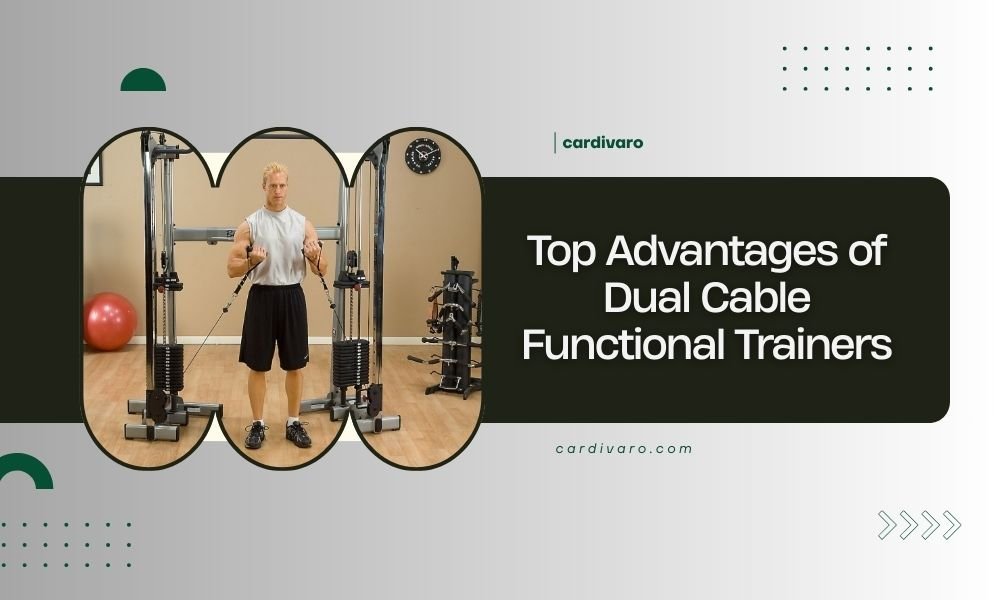
Dual cable functional trainers offer complete body workouts with smooth, natural movements that target multiple muscle groups simultaneously.
These versatile machines provide adjustable resistance and unlimited exercise options, making them ideal for strength training, rehabilitation, and athletic performance.
What Makes Dual Cable Systems Special
You get two independent cable systems working together. This setup lets you train both sides of your body at once or focus on single-arm movements.
Think of it like having two personal trainers spotting you from different angles. Each cable moves freely, so your muscles work harder to stabilize and coordinate.
Independent Cable Movement
Each cable operates separately from the other. Your left arm can’t compensate for your weaker right side.
This forces balanced muscle development. No more lopsided strength gains that happen with barbells or machines.
Adjustable Height Settings
Most dual cable trainers offer 17-20 height adjustments per side. You can position cables anywhere from floor level to overhead.
This range lets you mimic real-life movements. Lifting groceries, throwing a ball, or climbing stairs all become trainable motions.
Space Efficiency Benefits
You replace 15-20 different machines with one dual cable trainer. That’s a huge win for home gyms.
Most units fit in an 8×8 foot space. Compare that to a full weight room setup, and you save serious square footage.
Replaces Multiple Equipment Pieces
Here’s what one dual cable trainer can replace:
- Lat pulldown machine
- Seated row machine
- Chest fly machine
- Tricep pushdown station
- Cable crossover system
- Functional trainer attachments
Compact Footprint Design
The average dual cable trainer measures 4 feet wide by 7 feet deep. That’s smaller than most home treadmills.
You still get a full range of motion in all directions. The compact design doesn’t limit your workout options.
Storage Solutions
Built-in accessory holders keep your attachments organized. No more hunting for the right handle or rope.
Weight stacks stay enclosed, so you don’t need extra floor space for plates and storage racks.
Exercise Variety and Flexibility
Research from the American Council on Exercise shows cable exercises activate stabilizing muscles 40% more than fixed machines.
You can perform over 100 different exercises on one dual cable system. That’s more variety than most commercial gyms offer.
Upper Body Training Options
Cable systems excel at upper body work. You get smooth resistance through the entire range of motion.
Popular upper body exercises include chest press, rows, lat pulldowns, and shoulder raises. Each movement feels natural and fluid.
Chest and Back Combinations
You can superset opposing muscle groups without changing equipment. Do a chest fly, then immediately switch to a reverse fly.
This saves time and keeps your heart rate up during strength training.
Lower Body Power Movements
Don’t overlook the legs with dual cables. Squats, lunges, and step-ups all work great with cable resistance.
The constant tension challenges your muscles differently than free weights. You feel resistance at the bottom of squats, not just the top.
Functional Movement Patterns
Cable training mimics daily activities better than traditional weights. Lifting, pulling, and rotating motions translate to real life.
Athletes use cables to train sport-specific movements. Tennis players practice serves, golfers work on their swing plane.
Safety and Joint Health Advantages
Cables provide controlled resistance that’s easier on your joints. There’s no sudden loading like you get with free weights.
The Mayo Clinic notes that cable exercises reduce injury risk compared to traditional weightlifting when proper form is maintained.
Reduced Injury Risk
You can’t drop a cable weight stack on yourself. The guided motion prevents dangerous lifting paths.
If you lose control, the weight stack simply returns to the starting position. No crashing plates or pinned limbs.
Controlled Range of Motion
Cables guide your movement without forcing a rigid path. You get structure with freedom to move naturally.
This balance helps prevent the overextension injuries common with free weights.
Joint-Friendly Resistance
Cable tension builds gradually as you stretch the cable. Your joints don’t get shocked by sudden loads.
This makes dual cable trainers perfect for older adults or anyone with joint concerns.
Rehabilitation Applications
Physical therapists often use cable systems for injury recovery. The variable resistance helps rebuild strength safely.
You can start with very light resistance and progress gradually as your body heals.
Cost-Effectiveness Analysis
A quality dual cable trainer costs $2,000-4,000. That sounds expensive until you calculate the alternatives.
Buying separate machines for the same exercises would cost $15,000-25,000. The cable trainer pays for itself quickly.
| Equipment Option | Initial Cost | Space Required | Exercise Variety |
|---|---|---|---|
| Dual Cable Trainer | $2,000-4,000 | 64 sq ft | 100+ exercises |
| Separate Machines | $15,000-25,000 | 300+ sq ft | 50-75 exercises |
| Home Gym Setup | $8,000-12,000 | 200+ sq ft | 75-100 exercises |
Long-Term Investment Value
Quality cable trainers last 15-20 years with minimal maintenance. That breaks down to about $10-15 per month.
Compare that to a gym membership at $50-100 monthly, and you save money within 2-3 years.
Conclusion
Dual cable functional trainers give you maximum workout variety in minimum space. They’re safer than free weights, more versatile than machines, and cost less than buying separate equipment.
You get smooth, natural movements that build real-world strength. Whether you’re recovering from injury or training for competition, these systems adapt to your needs.
The investment pays off through years of reliable service and endless exercise options. Your home gym will never feel boring again.
Can I build serious muscle with just cable exercises?
Yes, cables provide enough resistance for muscle growth. Many bodybuilders use cables for isolation work and definition. The key is progressive overload – gradually increasing weight, reps, or time under tension.
How much ceiling height do I need for a dual cable trainer?
You need at least 8.5 feet of ceiling height, though 9-10 feet is better. This allows full overhead movements without the cables hitting the ceiling during lat pulldowns or shoulder exercises.
Are dual cable trainers suitable for beginners?
Absolutely. Cables are actually safer for beginners than free weights. The guided motion reduces form errors, and you can start with very light resistance. Most systems include exercise guides and workout programs.
What’s the difference between functional trainers and cable crossover machines?
Functional trainers have adjustable pulleys that move up and down, while cable crossovers typically have fixed high and low positions. Functional trainers offer more exercise variety and better simulate real-world movements.
How do I maintain a dual cable functional trainer?
Monthly lubrication of cables and pulleys keeps everything smooth. Check cable wear every few months and replace when frayed. Keep weight stacks clean and ensure proper alignment. Most quality units need minimal maintenance beyond basic cleaning.