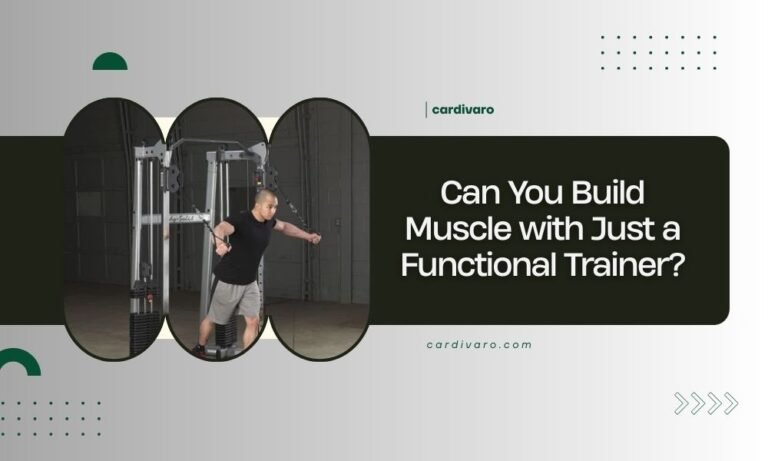
The best functional trainer push up variations include archer push-ups, single-arm cable push-ups, resistance band push-ups, and suspension trainer push-ups that target multiple muscle groups.
These variations use cables, bands, or suspension systems to add instability and resistance, making your push-ups more challenging and effective for building functional strength.
Push-ups are great, but they can get boring fast. When you add functional trainer equipment to the mix, you transform a basic move into a powerhouse exercise that builds real-world strength.
Your functional trainer opens up a world of push-up possibilities. Let me show you the best variations that will keep your workouts fresh and your muscles guessing.
Why Use Functional Trainer Push Up Variations
Regular push-ups work well, but they have limits. Your body adapts quickly, and progress stalls.
Functional trainers solve this problem. They add resistance, instability, and new angles to challenge your muscles differently.
Research shows that unstable surface training improves core activation by up to 30% compared to stable surfaces (Journal of Strength and Conditioning Research). Your functional trainer creates that instability perfectly.
Top Cable-Based Push Up Variations
Single-Arm Cable Push-Up
This variation hits your chest, shoulders, and core hard. You’ll feel the difference immediately.
Set the cable to chest height. Grab the handle with one hand and get into push-up position. Your other hand stays on the floor.
Push up while pulling the cable across your body. This creates a pushing and pulling motion that mimics real-life movements.
Form Tips for Cable Push-Ups
- Keep your hips level throughout the movement
- Start with lighter resistance than you think you need
- Focus on controlled movement, not speed
- Switch arms every set to prevent imbalances
Dual Cable Push-Up
Want to really challenge yourself? Use both cable arms simultaneously.
Set both cables to chest height. Grab a handle in each hand and assume push-up position. Push up while pulling both cables toward your chest.
This variation demands serious core stability. Your abs work overtime to keep you balanced.
Common Cable Push-Up Mistakes
I found that most people use too much resistance too quickly. Start light and build up slowly.
Another mistake is letting your hips sag or pike up. Your body should stay in a straight line from head to heels.
Suspension Trainer Push Up Variations
Many functional trainers come with suspension straps. These create incredible instability that fires up your stabilizer muscles.
Feet-Elevated Suspension Push-Up
Put your feet in the suspension straps and your hands on the floor. This creates an unstable base that makes every rep harder.
The straps move as you push up, forcing your core to work constantly. It’s like doing push-ups on a boat in rough water.
Progression Levels
Start with straps set low (easier). As you get stronger, raise the strap height to increase difficulty.
You can also add knee tucks at the top of each push-up for an extra core challenge.
Hand-Elevated Suspension Push-Up
Flip it around. Put your hands in the straps and feet on the floor.
This variation targets your chest differently and requires more shoulder stability. The straps want to spread apart, so you fight that resistance throughout the movement.
Resistance Band Push Up Variations
If your functional trainer includes resistance bands, you have even more options.
Banded Push-Up with Chest Fly
Loop a resistance band around your back and hold the ends. Do a push-up, then at the top, extend your arms out to the sides in a fly motion.
This combines two exercises into one fluid movement. Your chest gets hit from multiple angles.
Band Selection Tips
Choose a band that allows 12-15 clean reps. Too heavy and your form breaks down. Too light and you won’t feel much benefit.
Archer Push-Up with Band Assistance
Archer push-ups are tough. You shift your weight to one arm while extending the other.
A resistance band can help you learn this movement. Attach it overhead and let it support some of your body weight as you master the form.
Advanced Functional Trainer Push Up Combinations
Push-Up to Row Combo
Why do push-ups and rows separately? Combine them for a time-saving superset.
Do a push-up, then immediately grab the cable handles and perform a row. This works opposing muscle groups back-to-back.
Timing Your Combinations
Rest 30-45 seconds between combination sets. This gives your muscles time to recover while keeping your heart rate up.
Plyometric Cable Push-Ups
Add explosive power to your push-ups. Set the cables to provide assistance on the way up.
Push up explosively, letting the cables help you get airborne. Land softly and repeat.
This builds power that transfers to sports and daily activities.
Programming Your Push Up Variations
| Goal | Sets | Reps | Rest |
|---|---|---|---|
| Strength | 3-4 | 6-8 | 60-90 seconds |
| Muscle Building | 3-4 | 8-12 | 45-60 seconds |
| Endurance | 2-3 | 12-20 | 30-45 seconds |
| Power | 3-5 | 3-5 | 90-120 seconds |
Weekly Progression Strategy
Week 1-2: Master the basic movement patterns with lighter resistance.
Week 3-4: Increase resistance or add complexity (like combining movements).
Week 5-6: Focus on explosive movements or longer time under tension.
Listen to Your Body
Some days you’ll feel strong. Other days, not so much. Adjust your intensity accordingly.
If your form starts breaking down, end the set. Quality beats quantity every time.
Safety Considerations
Proper Warm-Up Protocol
Never jump straight into advanced push-up variations. Your shoulders and wrists need preparation.
Spend 5-10 minutes doing arm circles, wrist rotations, and light bodyweight movements.
Equipment Safety Checks
Always inspect your cables, bands, and attachments before use. A snapped cable mid-rep can cause injury.
Make sure all pins and clips are securely fastened. Double-check everything.
When to Stop
Stop immediately if you feel sharp pain in your shoulders, wrists, or lower back.
Muscle fatigue is normal. Joint pain is not.
Conclusion
Functional trainer push-up variations transform a simple exercise into a powerful strength-building tool. These movements challenge your muscles in new ways while building the kind of strength you actually use in daily life.
Start with basic variations and progress slowly. Your body will thank you for the variety, and your strength gains will surprise you. Pick 2-3 variations that match your current fitness level and rotate them weekly.
Remember, the best exercise is the one you’ll actually do consistently. Find the variations you enjoy and make them part of your regular routine.
What’s the easiest functional trainer push-up variation for beginners?
The band-assisted push-up is perfect for beginners. Loop a resistance band overhead and let it support some of your body weight as you build strength and perfect your form.
How often should I change my push-up variations?
Switch up your variations every 2-3 weeks. This prevents your muscles from adapting while giving you enough time to see progress and master each movement pattern.
Can functional trainer push-ups replace regular push-ups completely?
While functional trainer variations are excellent, regular push-ups still have value. Use both in your routine – functional trainer versions for variety and challenge, regular push-ups for consistency and volume.
What cable height works best for most push-up variations?
Chest height is ideal for most cable push-up variations. This creates the best angle for muscle activation while maintaining proper form throughout the movement.
Are functional trainer push-ups better than regular push-ups?
They’re different, not necessarily better. Functional trainer variations add instability and resistance that challenge your muscles in new ways, but regular push-ups provide consistent, reliable strength building that shouldn’t be ignored.