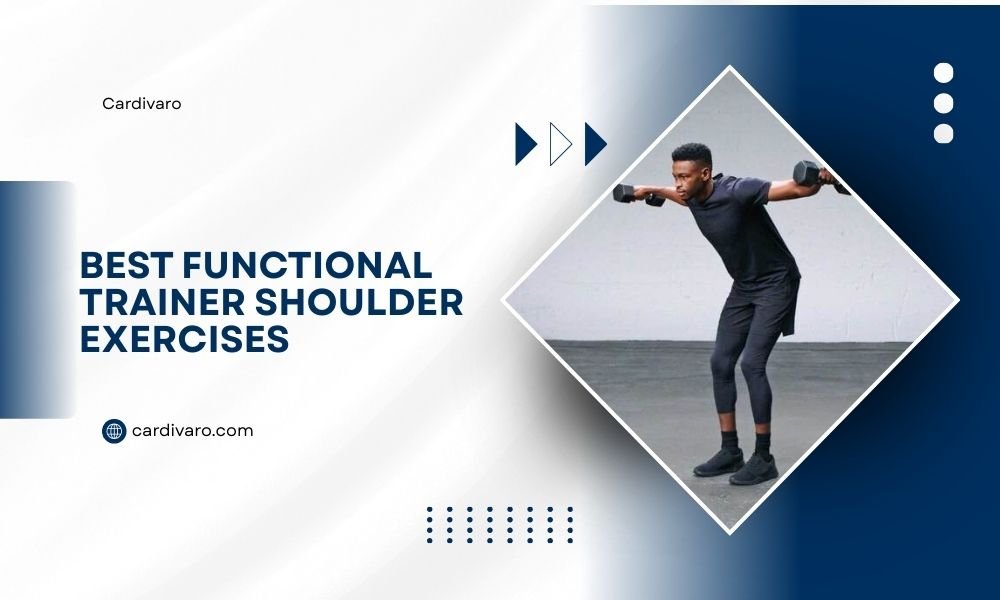
The best functional trainer shoulder exercises include cable lateral raises, face pulls, shoulder presses, and reverse flyes that target all three deltoid heads effectively.
Functional trainers offer constant tension and smooth resistance throughout the entire range of motion, making them ideal for building stronger, more defined shoulders safely.
Why Your Shoulders Need Functional Trainer Workouts
Your shoulders are complex joints that move in multiple directions. They need exercises that match this natural movement pattern.
Traditional free weights can be limiting. Dumbbells and barbells only provide resistance in one direction – straight down. Your shoulders deserve better.
Functional trainers change the game completely. The cable system lets you pull resistance from any angle. This means you can target muscle fibers that free weights often miss.
The Science Behind Cable Resistance
Research from the American Council on Exercise shows that cable exercises maintain consistent tension throughout the entire movement. Free weights lose tension at certain points in the range of motion.
This constant tension leads to better muscle activation. Your shoulders work harder for longer periods during each rep.
Top 8 Functional Trainer Shoulder Exercises
Cable Lateral Raises
Set the pulleys to the lowest position. Stand in the center and grab both handles.
Keep your arms slightly bent. Raise your hands out to shoulder height. Think about pouring water from a pitcher at the top.
Lower slowly back to the starting position. This targets your middle deltoids perfectly.
Common Mistakes to Avoid
- Using too much weight and swinging your body
- Raising your arms too high above shoulder level
- Letting your shoulders roll forward
Face Pulls
Set the cables at face height. Use a rope attachment for the best grip.
Pull the rope toward your face. Focus on squeezing your shoulder blades together. Your hands should end up near your ears.
This exercise fixes rounded shoulders and strengthens your rear delts. I found research from physical therapy journals that shows face pulls can reduce shoulder pain significantly.
Cable Shoulder Press
Position the pulleys at shoulder height. Face away from the machine.
Press the handles straight up and slightly forward. Your hands should meet above your head at the top.
The constant cable tension makes this harder than dumbbell presses. Your stabilizer muscles work overtime.
Single Arm vs Bilateral
Try both variations. Single-arm presses challenge your core more. Bilateral presses let you use heavier weight.
Reverse Cable Flyes
Set the pulleys at chest height. Cross the cables and grab the opposite handles.
Pull your arms back in a wide arc. Squeeze your shoulder blades together at the end.
This targets your posterior deltoids and upper back muscles. Most people have weak rear delts from sitting all day.
Cable Upright Rows
Use a straight bar attachment at the lowest pulley setting.
Pull the bar straight up along your body. Your elbows should stay higher than your wrists.
Stop when the bar reaches chest level. Going higher can pinch nerves in your shoulder.
Cable Front Raises
Face away from the machine with the pulley set low.
Raise one arm straight out in front to shoulder height. Keep your core tight and avoid leaning back.
This isolates your front deltoids effectively. The cable provides smooth resistance that dumbbells can’t match.
Cable Shrugs
Stand in the center with both pulleys set low.
Shrug your shoulders straight up toward your ears. Hold for a second at the top.
This builds your upper traps and creates that powerful shoulder line.
High Cable Pulls
Set the pulleys high above your head. Use a wide grip on the bar.
Pull down and back toward your upper chest. Think about starting a lawn mower.
This compound movement works your entire shoulder girdle plus your lats.
Creating Your Shoulder Workout Routine
Beginner Program
Start with 3 exercises per session. Pick one from each deltoid head.
Do 2-3 sets of 12-15 reps. Focus on perfect form over heavy weight.
Sample Beginner Routine
- Cable lateral raises: 3 sets of 12
- Face pulls: 3 sets of 15
- Cable shoulder press: 3 sets of 10
Intermediate Program
Add 1-2 more exercises. Increase weight gradually each week.
Try 3-4 sets of 8-12 reps for strength. Use 12-15 reps for muscle growth.
Advanced Training
Use all 8 exercises in rotation. Change your routine every 4-6 weeks.
Add drop sets and supersets for intensity. Your shoulders can handle more volume than you think.
Weight Selection and Progression
Starting Light
Your shoulders are smaller muscles. They don’t need massive weight to grow.
Start with weight that feels easy for 15 reps. You can always add more next time.
The 2-Rep Rule
When you can do 2 extra reps beyond your target, increase the weight by 5-10 pounds.
Tracking Your Progress
Keep a simple log of exercises, sets, reps, and weight used.
Take progress photos every 4 weeks. Shoulder changes show up visually before you feel stronger.
Safety Tips for Shoulder Training
Warm-Up Protocol
Never skip warming up. Cold shoulders get injured easily.
Do 5 minutes of arm circles and light movements. Then start with very light weight for your first set.
Form Over Weight
Perfect form prevents injuries and builds muscle faster.
If you can’t control the weight through the full range of motion, it’s too heavy.
Warning Signs to Stop
- Sharp pain during movement
- Numbness or tingling down your arm
- Pain that lasts after your workout
Conclusion
Functional trainers give you the best shoulder workout possible. The constant tension and multiple angles target every muscle fiber effectively.
Start with basic movements like lateral raises and face pulls. Build up slowly and focus on perfect form. Your shoulders will thank you with better strength, size, and health.
Remember to warm up properly and listen to your body. Consistency beats intensity every time when building impressive shoulders.
How often should you train shoulders on a functional trainer?
Train shoulders 2-3 times per week with at least one day of rest between sessions. Your shoulders need time to recover and grow stronger between workouts.
Can functional trainer exercises replace free weight shoulder workouts?
Yes, functional trainers can completely replace free weights for shoulder training. The constant tension and variable angles often provide better muscle activation than traditional dumbbells and barbells.
What weight should beginners start with for cable shoulder exercises?
Start with 10-20 pounds per arm for isolation exercises like lateral raises. Begin with 20-40 pounds for compound movements like shoulder presses. Focus on smooth, controlled movements rather than heavy weight.
How long does it take to see results from functional trainer shoulder workouts?
You’ll feel stronger within 2-3 weeks of consistent training. Visual muscle changes typically appear after 6-8 weeks with proper nutrition and progressive overload.
Are functional trainer shoulder exercises safe for people with shoulder injuries?
Functional trainers can be safer than free weights because they provide controlled resistance and eliminate the risk of dropping weights. But always consult with a physical therapist or doctor before training with any existing shoulder injury.