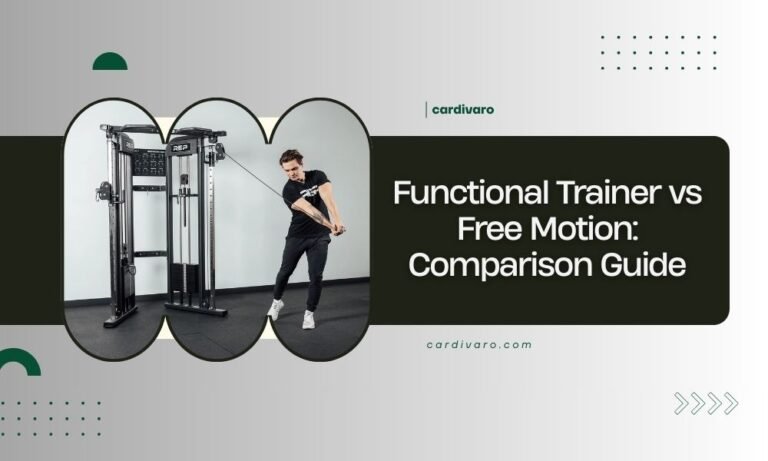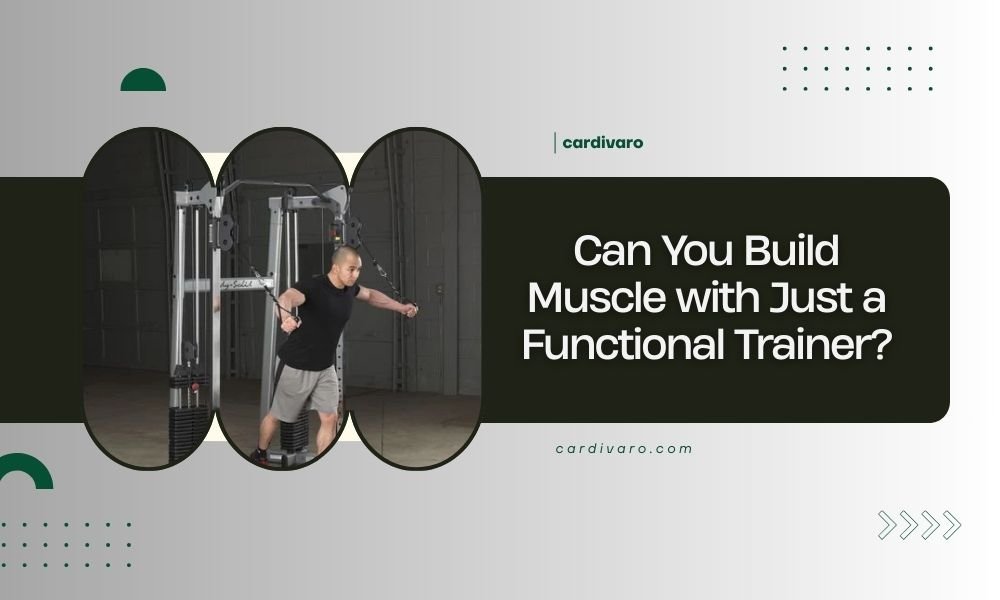
Yes, you can build muscle with just a functional trainer by performing progressive resistance exercises that target all major muscle groups.
A functional trainer provides enough versatility and resistance to support muscle growth when combined with proper programming and progressive overload.
What Makes a Functional Trainer Effective for Muscle Building
A functional trainer offers dual cable systems with adjustable pulleys. This setup lets you work every muscle from multiple angles. You get smooth, consistent resistance throughout each movement.
The key strength lies in its versatility. You can perform compound movements like squats, rows, and presses. You can also isolate specific muscles with targeted exercises.
Progressive Overload Capabilities
Muscle growth requires progressive overload. You need to gradually increase weight, reps, or difficulty over time. Most functional trainers offer weight stacks up to 200 pounds per side.
That gives you 400 pounds of total resistance when both sides work together. For many people, this provides years of progression potential.
Full-Body Training Options
Research from the American Council on Exercise shows that compound movements stimulate multiple muscle groups effectively. A functional trainer excels at these exercises.
You can train your chest, back, shoulders, arms, and legs all with one machine. This makes it perfect for home gym setups where space is limited.
Upper Body Muscle Building with Functional Trainers
Your upper body responds well to cable-based training. The constant tension throughout each rep can actually improve muscle activation compared to free weights in some exercises.
Chest Development Options
Cable chest exercises provide excellent muscle stimulation. You can perform chest flies, cable crossovers, and various pressing movements. The adjustable pulleys let you target upper, middle, and lower chest fibers.
- High cable crossovers for lower chest
- Mid-level cable flies for middle chest
- Low-to-high crossovers for upper chest
- Single-arm cable presses for core stability
Back and Lat Training
Cable rows and pulldowns are staple back exercises. A functional trainer gives you multiple grip positions and angles. This variety helps you target different areas of your back muscles.
You can perform wide-grip lat pulldowns, close-grip rows, and single-arm variations. Each exercise hits your back muscles slightly differently.
Shoulder and Arm Workouts
Shoulder health benefits from cable training because you control the resistance path. Free weights can stress joints in awkward positions. Cables let you move more naturally.
For arms, you get endless bicep and tricep variations. Cable curls, tricep pushdowns, and overhead extensions all work great on functional trainers.
Lower Body Muscle Building Potential
Many people doubt cable machines for leg training. But functional trainers can build impressive lower body strength and size when used correctly.
Squatting Variations
Cable squats provide constant tension that free weight squats don’t offer. You can perform goblet squats, front squats, and even back squats using the cable attachments.
The resistance curve differs from barbells. You get more tension at the top of the movement, which challenges your muscles differently.
Single-Leg Training
Unilateral exercises are where functional trainers really shine. Single-leg squats, lunges, and step-ups all work excellently with cable resistance.
These exercises improve balance, coordination, and muscle imbalances. They also allow you to train each leg independently for better development.
Glute and Hip Development
Cable kickbacks, hip abductions, and Romanian deadlifts target your glutes effectively. The cable provides resistance throughout the entire range of motion.
Many find cable glute exercises more comfortable than barbell hip thrusts or other common glute exercises.
Programming for Muscle Growth
Having good equipment means nothing without proper programming. You need a structured approach to see muscle building results.
Rep Ranges and Sets
Research from the National Strength and Conditioning Association suggests that 6-12 reps work best for muscle growth. You want to reach muscle failure within this range.
Aim for 3-4 sets per exercise. Rest 2-3 minutes between sets to allow full recovery.
Weekly Training Frequency
Train each muscle group 2-3 times per week for optimal growth. You can split this into upper/lower days or full-body sessions.
Full-body workouts work well with functional trainers since you can quickly switch between exercises.
Progressive Overload Strategy
Track your workouts and aim to improve each week. Add weight, reps, or sets gradually. Even small improvements add up over time.
Keep a training log or use a smartphone app to monitor progress.
Limitations to Consider
Functional trainers aren’t perfect for every muscle building goal. You should understand the limitations before committing to cable-only training.
Weight Limitations
Most home functional trainers max out around 200 pounds per side. Advanced lifters may outgrow this resistance for some exercises.
This affects compound movements like squats and deadlifts more than isolation exercises.
Movement Patterns
Free weights teach your body to stabilize loads in three-dimensional space. Cables provide some stability, which can be good or bad depending on your goals.
If you want to compete in powerlifting, you need barbell training. For general muscle building, cables work fine.
Maximizing Results with Functional Trainers
Smart programming and technique make all the difference. Here’s how to get the most muscle building from your functional trainer.
Exercise Selection
Focus on compound movements that work multiple muscles. These give you more bang for your buck than isolation exercises.
Include pushing, pulling, and squatting patterns in every workout. Add isolation work for muscles that need extra attention.
Time Under Tension
Cables excel at maintaining constant tension. Use controlled tempos to maximize this advantage. Take 2-3 seconds on the lowering portion of each rep.
This technique increases muscle fiber recruitment and can boost growth stimulus.
Range of Motion
Use full range of motion on every exercise. Cables allow you to stretch muscles under load, which may enhance growth.
Don’t cut reps short or use partial ranges of motion unless it’s part of your programming strategy.
Nutrition and Recovery Factors
Your equipment is only one piece of the muscle building puzzle. Nutrition and recovery matter just as much as your training.
Protein Requirements
Research from the International Society of Sports Nutrition recommends 1.6-2.2 grams of protein per kilogram of body weight for muscle growth.
Spread this protein across 3-4 meals throughout the day for optimal muscle protein synthesis.
Sleep and Recovery
Muscles grow during rest, not during workouts. Aim for 7-9 hours of quality sleep each night.
Allow at least 48 hours between training the same muscle groups intensely.
Conclusion
A functional trainer can absolutely build muscle when you use it correctly. The key lies in progressive overload, proper programming, and consistent effort. While it may not replace a full commercial gym for advanced lifters, it provides everything most people need for significant muscle growth. Combined with good nutrition and recovery, a functional trainer makes an excellent foundation for home muscle building. The versatility and convenience often lead to better long-term consistency than gym memberships.
Can a functional trainer replace free weights completely?
For most people, yes. A functional trainer provides enough exercise variety and resistance for complete muscle development. Advanced powerlifters or those pursuing maximum strength may want to add free weights, but recreational lifters can build impressive physiques using only cables.
How long does it take to see muscle growth with a functional trainer?
You can expect to see initial strength gains within 2-3 weeks. Visible muscle growth typically appears after 6-8 weeks of consistent training. Significant physique changes usually take 3-6 months of dedicated effort with proper nutrition.
What attachments do I need for muscle building on a functional trainer?
Essential attachments include a lat pulldown bar, cable handles, rope attachment, and ankle straps. Optional additions like a straight bar, V-handle, and tricep rope expand your exercise options but aren’t strictly necessary for muscle growth.
Is cable training safer than free weights for beginners?
Generally, yes. Cables provide a more controlled resistance path and reduce the risk of dropping weights. The guided motion helps beginners learn proper movement patterns while building strength and confidence.
How much space do I need for effective functional trainer workouts?
A minimum of 8×8 feet provides enough room for most exercises. This allows full range of motion for lunges, squats, and overhead movements. More space is better, but you can get effective workouts in compact areas.