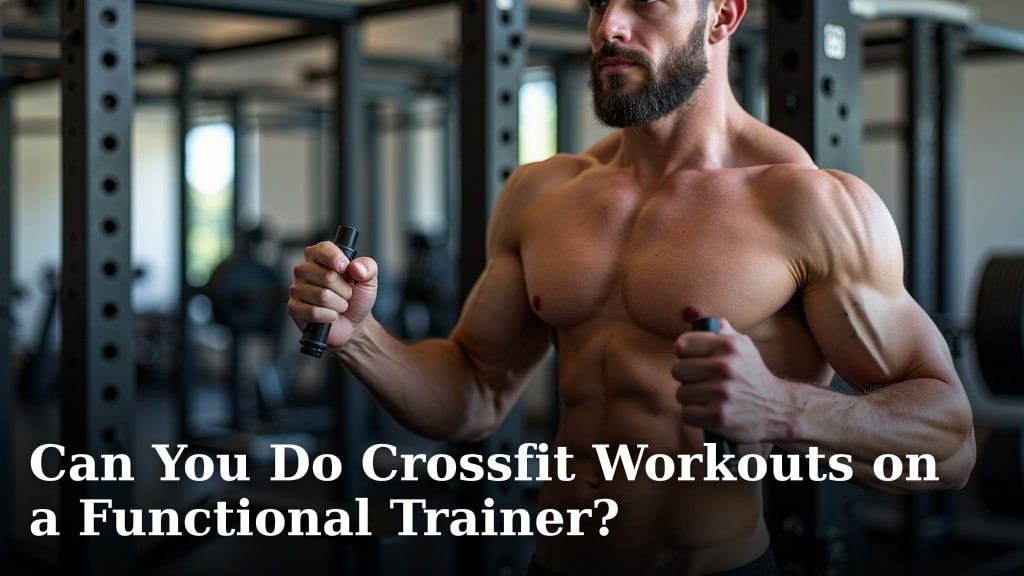
Yes, you can absolutely do CrossFit workouts on a functional trainer, but with some smart adaptations. While a functional trainer might not replace every piece of CrossFit gym equipment, it offers incredible versatility for strength, conditioning, and skill work.
You can simulate many CrossFit movements using cables and adjustable pulleys. This means you can still get a full-body workout that builds explosiveness and endurance. Functional trainers are excellent for mimicking movements you’d do with free weights or barbells, often with less joint impact.
- Functional trainers can substitute for many CrossFit exercises.
- You’ll need to adapt some movements to the machine.
- They offer versatile strength and conditioning options.
- Expect a full-body workout with less joint stress.
- Some movements may require creativity or alternative exercises.
Ready to turn your functional trainer into a CrossFit-friendly machine? Let’s walk through how to make it happen, step by step.
Adapting CrossFit Workouts for Your Functional Trainer
You’re wondering if your functional trainer can truly stand in for CrossFit equipment. The good news is, for many core movements, it absolutely can. You’ll simply need to adjust your approach and think creatively.
Functional trainers excel at providing constant tension. This is different from free weights. It can offer a unique challenge. You’ll discover new ways to build strength and endurance. You can also learn more about how to build muscle with a cable machine to maximize your gains.
Understanding the Functional Trainer’s Capabilities
Your functional trainer uses cables and pulleys. This setup allows for resistance from various angles. You can mimic many natural human movements. This makes it excellent for functional fitness.
Think about exercises you do with dumbbells or barbells. Many of these can be translated to a functional trainer. It’s all about finding the right attachment and pulley height. You can target muscles effectively.
Advantages of Using a Functional Trainer for CrossFit-Style Training
One major benefit is reduced impact on your joints. The cable system provides smooth, controlled resistance. This can be easier on your knees, back, and shoulders. Many people find this less intimidating.
Another plus is safety. If you lose control of a cable, it often just snaps back. This is generally safer than dropping a heavy barbell. It builds confidence, especially when learning new movements.
- Less joint stress compared to heavy free weights.
- Consistent tension throughout the entire movement.
- Greater control over the range of motion.
- Safer for solo workouts, reducing injury risk.
- Versatile for targeting various muscle groups and movement patterns.
Key CrossFit Movements You Can Replicate
Many common CrossFit exercises have functional trainer equivalents. You can perform pushes, pulls, squats, and rotations. It’s about modifying the movement slightly. Your body will still get a great workout.
You can even work on explosive power. Adjust the resistance to be lighter and focus on speed. This mimics plyometric training. It helps build athletic performance.
Lower Body and Core Adaptations
For squats, attach a straight bar or two single handles. Hold them at chest height. You can perform front squats or overhead squats. The resistance pulls you, engaging your core more.
Lunges are also easily done. Hold a single handle in each hand. Or, hold one handle and perform a single-arm lunge. This creates an anti-rotational challenge. Your core works harder to stabilize you.
Deadlifts can be simulated. Set the pulleys low. Use a straight bar attachment. Focus on the hip hinge movement. This helps you build strength in your posterior chain.
We found that many athletes use cable machines for rotational movements (National Strength and Conditioning Association). Try cable rotations or wood chops. These are excellent for core strength and power.
Upper Body and Pushing/Pulling Exercises
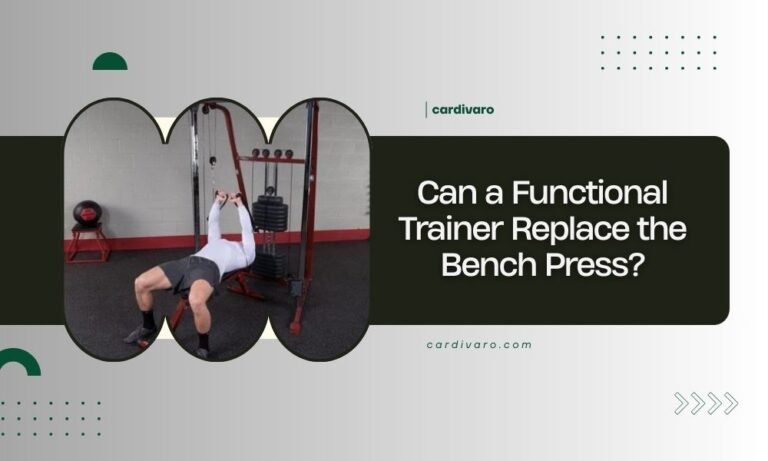
Bench presses? Yes! Lie on a flat bench between the towers. Set the pulleys low. Grab the handles and press upwards. This gives constant tension through the movement. It’s a fantastic alternative.
Overhead presses are also possible. Stand or kneel. Set the pulleys high. Press the handles overhead. You can do this with one arm or two. This works your shoulders and triceps. Our guide to overhead tricep extensions on a functional trainer offers detailed instructions.
Pull-ups are a bit trickier to replicate directly. However, you can do cable pulldowns. Adjust the bench and height. These work the same muscle groups. You can also do face pulls for shoulder health.
Rows are perfect for a functional trainer. Seated cable rows, standing cable rows, and single-arm rows are all effective. These build a strong back. A strong back is vital for many CrossFit movements.
Movements That Require Creative Solutions or Alternatives
Some iconic CrossFit movements are harder to mimic. You might need to get creative. Or, you might substitute with a similar exercise. The goal is to train the same muscle groups or movement patterns.
Olympic lifts, like snatches and clean and jerks, are difficult. The explosive, multi-joint nature with a barbell is unique. You can use lighter resistance for cable pulls. This helps with the ‘pull’ phase. But the full lift is tough.
Gymnastics movements, such as muscle-ups or handstand push-ups, are also challenging. These rely heavily on bodyweight and stability. Your functional trainer won’t fully replace them. You can use it for assistance. For example, cable-assisted dips or push-ups.
Table: CrossFit Movements and Functional Trainer Substitutions
| CrossFit Movement | Functional Trainer Adaptation | Notes |
|---|---|---|
| Barbell Squat (Back/Front) | Cable Squat (Handles/Bar at chest) | Focus on form, constant tension. |
| Deadlift | Cable Pull-Through / Cable Deadlift | Emphasize hip hinge. |
| Bench Press | Cable Chest Press (Lying or Standing) | Smooth, controlled movement. |
| Overhead Press | Cable Shoulder Press (Standing/Kneeling) | Good for single-arm stability. |
| Pull-Up | Cable Lat Pulldown / Cable Row variations | Targets same back muscles. |
| Clean & Jerk / Snatch | Explosive Cable Pulls (lighter weight) | Focus on phases, not full lift. |
| Box Jumps | Explosive Cable Squat Jumps (minimal weight) | Builds power, reduces impact. |
| Kettlebell Swings | Cable Swings (single handle, low pulley) | Focus on hip drive. |
Designing Your CrossFit-Inspired Functional Trainer Workout
You can structure your workouts in many ways. Follow a WOD (Workout of the Day) format. Or, create circuits focusing on different muscle groups. The key is variety and intensity.
Consider EMOM (Every Minute on the Minute) or AMRAP (As Many Rounds As Possible) structures. These translate well to a functional trainer. You can set time limits and rep targets.
Example Workout Structure: EMOM
Set a timer. Perform a specific exercise at the start of each minute. For example, 10 minutes, EMOM:
- Minute 1: 10 Cable Squats
- Minute 2: 8 Cable Chest Presses
- Minute 3: 12 Cable Rows
- Minute 4: 10 Cable Lunges (each leg)
- Minute 5: 15 Cable Wood Chops (alternating sides)
- Repeat from Minute 1 for a second round.
Adjust the reps to fit within 30-40 seconds. This leaves you time to rest. You can easily adapt this to your fitness level. This provides a great full-body challenge.
Safety and Form Considerations
Proper form is always crucial. This is even more important with cables. The constant tension can expose weaknesses. Always start with lighter weights. Master the movement pattern first.
Watch yourself in a mirror if possible. Pay attention to your core engagement. Keep your spine neutral. Don’t rush through repetitions. Quality over quantity, always.
We’ve found that consistent focus on form prevents injury (American Council on Exercise). Don’t compromise your technique for more weight. Your body will thank you.
Choosing the Right Attachments
Your functional trainer likely came with several attachments. These are your tools for versatility. Single handles, a rope attachment, and a straight bar are common.
Sometimes, a V-bar or ankle strap can be helpful. Experiment with different handles. See what feels best for each movement. The right attachment makes a big difference.
Essential Attachments for CrossFit-Style Workouts:
- Single Handles: For presses, rows, lunges, and single-arm movements.
- Straight Bar: Great for squats, deadlifts, bicep curls, tricep pushdowns.
- Rope Attachment: Perfect for face pulls, tricep extensions, and some core work.
- Ankle Straps: Ideal for glute kickbacks, hamstring curls, and leg extensions.
- V-Bar/Close Grip Handle: Good for narrow grip rows or pulldowns.
Progressive Overload and Scaling
Just like with traditional CrossFit, you need to challenge yourself. Progressive overload means gradually increasing the demands on your body. This helps you get stronger and fitter.
With a functional trainer, you can increase the weight. You can also increase reps or sets. Shorten rest times for a greater challenge. Add more complex movements as you get stronger.
If a movement is too difficult, scale it back. Use less weight. Reduce the range of motion. Break it down into simpler components. Build up gradually. Everyone starts somewhere.
The Bottom Line on Functional Trainers and CrossFit
A functional trainer won’t replicate every single CrossFit exercise. But it’s an incredibly powerful tool. It allows you to perform a wide range of movements. You can build strength, endurance, and power.
You can absolutely get a challenging and effective CrossFit-style workout. It’s about smart programming. It’s about adapting the movements. And it’s about consistency. Your functional trainer can be your secret weapon.
Conclusion
You’ve seen how versatile a functional trainer can be for CrossFit-style training. While it won’t perfectly replicate every Olympic lift or gymnastic move, your functional trainer is a powerful tool. You can build significant strength, improve your conditioning, and work on power. It offers a safe, joint-friendly way to push your limits.
By adapting movements and getting creative, you can achieve a fantastic full-body workout. Don’t let the lack of a full CrossFit gym stop you. Embrace the adaptability of your machine. Start incorporating these modified CrossFit movements into your routine today. Your fitness journey is just waiting for these smart adjustments!
Frequently Asked Questions
Can a functional trainer replace a full CrossFit gym membership?
No, a functional trainer cannot fully replace a dedicated CrossFit gym. You’ll miss out on specialized equipment like barbells for Olympic lifting, pull-up rigs, and competitive class environments. However, it’s an excellent tool for getting a significant portion of CrossFit-style conditioning and strength work done at home.
Is a functional trainer good for building explosive power for CrossFit?
Yes, you can use a functional trainer to build explosive power. By setting the resistance lighter and focusing on fast, controlled movements, you can mimic plyometric training. This helps develop the quick twitch muscle fibers essential for CrossFit’s dynamic exercises, though it won’t fully replicate barbell explosiveness.
How do I make functional trainer workouts feel more like a CrossFit WOD?
To simulate a CrossFit WOD, structure your workouts using AMRAP (As Many Rounds As Possible) or EMOM (Every Minute on the Minute) formats. Set a timer and cycle through a series of adapted exercises. This will push your conditioning and muscular endurance, just like a traditional WOD.
Are functional trainers safer than free weights for CrossFit-style training?
For many movements, functional trainers can be safer than free weights, especially when working out alone. The controlled resistance of cables reduces the risk of dropping heavy weights. This makes them great for learning new movement patterns and reducing overall joint impact, which is a big plus.
What are the biggest limitations of using a functional trainer for CrossFit?
The main limitations are the inability to perform true Olympic lifts (snatches, clean and jerks) with a barbell’s free range of motion and the lack of bodyweight gymnastics equipment. You also can’t lift truly maximal loads as easily as with barbells. However, you can still train the muscle groups involved effectively.