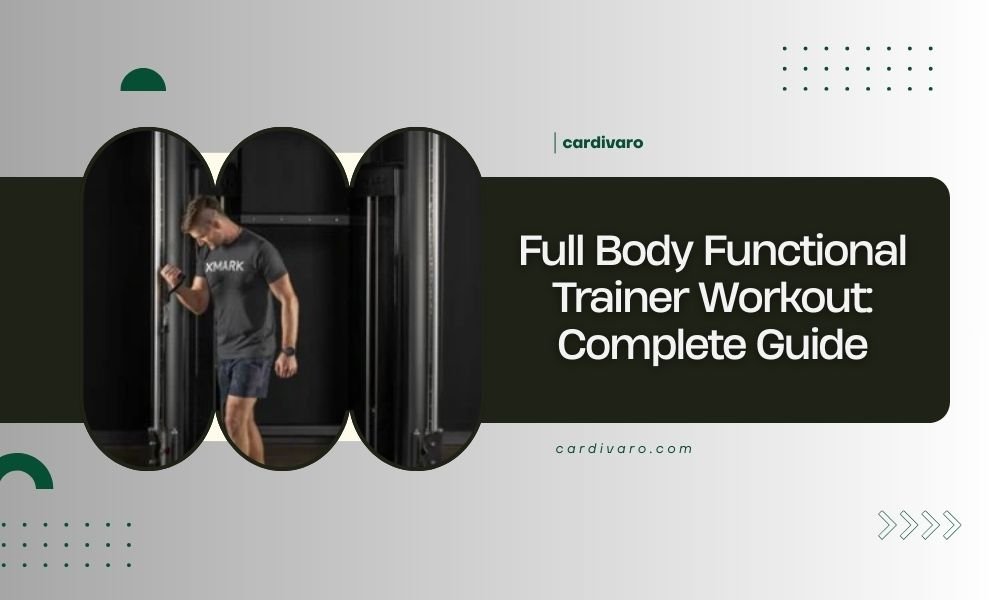
A full body functional trainer workout targets all major muscle groups using cable-based resistance exercises that mimic real-world movements.
You can complete an effective full body functional trainer workout in 30-45 minutes by combining upper body pulls, pushes, core rotations, and lower body movements.
What Makes Functional Trainer Workouts So Effective?
Functional trainers use adjustable cables and pulleys to create smooth, natural movement patterns. Unlike fixed machines, you move in multiple directions just like daily activities.
The constant tension from cables keeps your muscles engaged throughout each rep. This builds strength and stability at the same time.
Key Benefits You’ll Experience
Research shows that cable-based training improves functional strength better than traditional weight machines (American Council on Exercise). Your body learns to work as one connected unit.
- Better balance and coordination
- Stronger core muscles from stabilizing
- Reduced injury risk in daily activities
- More calories burned per workout
- Improved athletic performance
Setting Up Your Functional Trainer
Start with lighter weight than you think you need. Cable exercises feel different from free weights because of the constant tension.
Essential Attachments for Full Body Training
You only need a few basic attachments to work your entire body. Most functional trainers come with these standard pieces.
Must-Have Cable Attachments
- Lat pulldown bar for back exercises
- Single handles for unilateral movements
- Rope attachment for triceps and core
- Ankle straps for lower body work
- Straight bar for rows and presses
Proper Weight Selection
Choose a weight that challenges you for 12-15 reps on your first set. You should feel muscle fatigue by rep 12 but still maintain good form.
Complete Full Body Workout Plan
This workout hits every major muscle group in about 35 minutes. Do 3 sets of 12-15 reps for each exercise with 60 seconds rest between sets.
Upper Body Push Movements
Start with pushing exercises when your muscles are fresh. These work your chest, shoulders, and triceps.
Cable Chest Press
Set the cables at chest height. Step forward and press both handles straight out from your chest. Keep your core tight and don’t lean forward.
Overhead Press
Lower the cables to the bottom position. Press both handles straight up overhead. This targets your shoulders and improves stability.
Upper Body Pull Movements
Pull exercises balance out the pushing movements. They strengthen your back and biceps while improving posture.
Seated Cable Row
Sit facing the machine with cables at chest height. Pull the handles to your ribs while squeezing your shoulder blades together.
Lat Pulldown
Use the lat bar attachment at the high position. Pull down to your upper chest while keeping your torso upright.
Core and Rotation Exercises
Your core works during every functional movement. These exercises specifically target rotation and anti-rotation strength.
Wood Chops
Set one cable at shoulder height. Hold the handle with both hands and rotate across your body. This mimics many sports movements.
Cable Plank
Face away from the machine holding both low cables. Get in plank position and hold while resisting the cable pull.
Lower Body Exercises
Lower body cable exercises improve balance and work muscles differently than traditional squats and deadlifts.
Cable Squats
Hold both low cables and squat down while keeping the tension. The cables help you maintain proper form.
Single Leg Deadlifts
Use one low cable and perform single-leg deadlifts. This challenges your balance while strengthening your glutes and hamstrings.
Workout Structure and Timing
Follow this order to maximize your results and prevent fatigue from affecting form.
| Exercise Type | Sets | Reps | Rest |
|---|---|---|---|
| Push Movements | 3 | 12-15 | 60 seconds |
| Pull Movements | 3 | 12-15 | 60 seconds |
| Core Work | 2 | 15-20 | 45 seconds |
| Lower Body | 3 | 10-12 | 90 seconds |
Progressive Overload Tips
Add weight gradually each week. A 5-10 pound increase keeps you progressing without overwhelming your muscles.
You can also increase reps or add an extra set before jumping to heavier weight.
Common Mistakes to Avoid
I found that most people make the same few errors when starting cable training. Avoid these pitfalls to get better results.
Using Too Much Weight Too Soon
Cables feel different from free weights. Start lighter and focus on smooth, controlled movements first.
Rushing Through Reps
The constant tension of cables works best with slower, deliberate movements. Count 2 seconds up, 2 seconds down.
Ignoring Body Position
Your stance affects every cable exercise. Keep feet shoulder-width apart and maintain good posture throughout.
Safety and Form Guidelines
Cable machines are generally safe, but proper form prevents injury and maximizes results.
Pre-Workout Safety Check
Always inspect cables for fraying or damage before starting. Check that weight stacks move smoothly and pins are secure.
Proper Breathing Technique
Exhale during the working phase of each exercise. Breathe in as you return to the starting position.
Programming Your Weekly Schedule
This full body workout works best 2-3 times per week with at least one rest day between sessions.
Many fitness experts recommend this frequency for building strength while allowing recovery (ACSM Guidelines).
Sample Weekly Schedule
- Monday: Full body functional trainer workout
- Tuesday: Light cardio or rest
- Wednesday: Full body functional trainer workout
- Thursday: Rest or stretching
- Friday: Full body functional trainer workout
- Weekend: Active recovery
Conclusion
A full body functional trainer workout gives you everything you need for real-world strength and fitness. The cable system works your muscles through natural movement patterns while building stability and coordination.
Start with the basic exercises I outlined and focus on proper form over heavy weight. You’ll see improvements in daily activities within just a few weeks of consistent training.
Remember to progress gradually and listen to your body. The functional trainer adapts to any fitness level, making it perfect for long-term strength building.
What’s the best time of day for functional trainer workouts?
Any time that fits your schedule consistently works best. Many people prefer morning workouts for better energy throughout the day, but afternoon sessions can help relieve work stress.
How long before I see results from functional training?
Most people notice improved balance and coordination within 2-3 weeks. Visible muscle changes typically appear after 6-8 weeks of consistent training with proper nutrition.
Can beginners start with this full body routine?
Yes, but start with very light weight and focus on learning proper movement patterns first. Consider doing 2 sets instead of 3 for the first few weeks while your body adapts.
Should I do cardio on the same day as functional training?
Light cardio after your strength workout is fine and can aid recovery. Save intense cardio for separate days to avoid compromising your strength training performance.
What if my gym doesn’t have ankle straps or rope attachments?
You can modify most exercises using just the basic handles. Single-handle exercises work just as well for targeting individual muscle groups and improving balance.