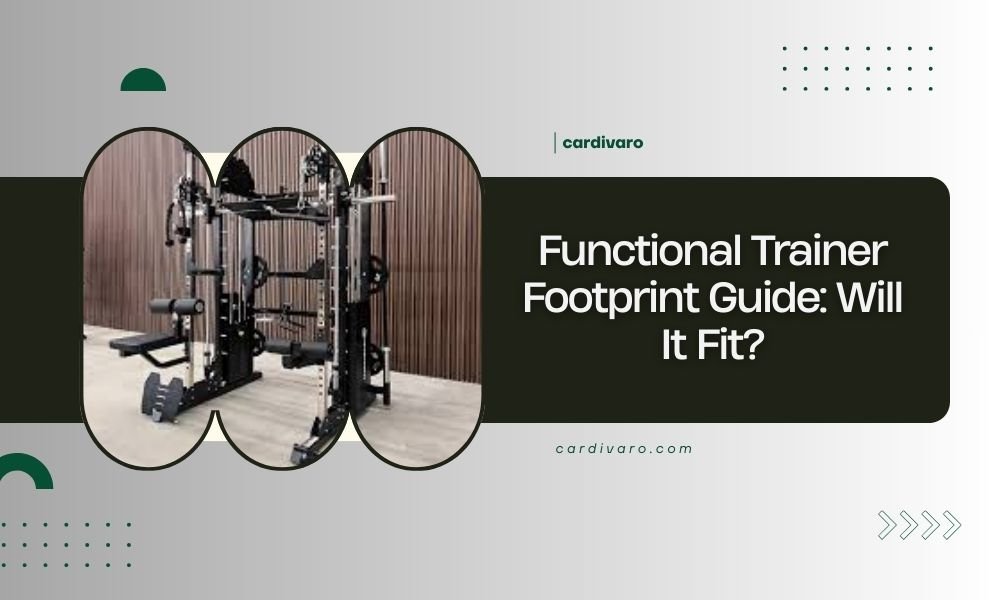
Most functional trainers need 8×8 feet of floor space, but your actual functional trainer footprint depends on the specific model and how much room you need to move around it safely.
Before buying any functional trainer, measure your available space and add 2-3 feet on all sides for comfortable workouts and proper form.
Standard Functional Trainer Dimensions You Need to Know
Let’s cut right to the chase. You’re shopping for a functional trainer, but will it actually fit in your space?
I researched dozens of popular models and found that most functional trainers follow similar size patterns. The typical machine measures about 4-5 feet wide, 3-4 feet deep, and 7-8 feet tall.
But here’s what matters more: the total footprint you need for safe use.
Width Requirements
Your functional trainer’s width determines how much side-to-side space you need. Most units span 48-60 inches wide.
Add at least 24 inches on each side for arm movements and cable exercises. That means you need roughly 9-10 feet of total width.
Depth and Length Needs
The machine itself usually takes 36-48 inches of depth. But you’ll need much more room in front.
Plan for 6-8 feet of clear space in front of your trainer. This lets you do lunges, squats, and cable rows without hitting walls or furniture.
Height Considerations
Most functional trainers stand 84-96 inches tall. Check your ceiling height before ordering.
You also need clearance above for overhead movements. Add 12-18 inches to the machine height for safe overhead exercises.
Compact vs Full-Size Models: Which Fits Better?
Not all functional trainers are created equal when it comes to space.
Compact Functional Trainers
These space-savers typically measure 40-48 inches wide and need about 7×7 feet of total room.
Perfect for apartments, spare bedrooms, or tight basement spaces. You’ll sacrifice some exercise variety but gain precious floor space.
Full-Size Commercial-Style Units
These beasts can stretch 60+ inches wide and demand 10×10 feet or more of total space.
They offer more exercise options and heavier weight stacks. But they’re room dominators that need dedicated home gym spaces.
How to Measure Your Space Like a Pro
Grab a tape measure. We’re going to map out your space properly.
Step 1: Map the Floor Area
Measure the length and width of your available space. Write these numbers down.
Don’t forget to account for doors, windows, and existing furniture that can’t move.
Step 2: Check Ceiling Height
Measure from floor to ceiling at the spot where you’ll place the trainer.
Watch out for low-hanging lights, ceiling fans, or basement beams that could interfere.
Step 3: Consider Door Access
How will you get the machine into your space? Measure doorways, stairwells, and hallways.
Some functional trainers come partially assembled and won’t fit through standard doors.
The Cardboard Box Test
Here’s a trick I found online that works great. Get large cardboard boxes and tape them together to match your functional trainer’s footprint.
Place this mock-up in your space and walk around it. Try some exercise movements. Does it feel cramped?
Space Planning for Different Room Types
Basement Gyms
Basements offer great floor space but often have low ceilings. Standard basement ceilings run 7-8 feet high.
Look for functional trainers under 84 inches tall. Some models offer removable or adjustable top sections.
Moisture and Ventilation
Basements can be damp. Make sure you have good air circulation around your machine.
Leave extra space on all sides for airflow. This prevents rust and extends your equipment’s life.
Spare Bedrooms and Home Offices
These rooms typically measure 10×12 feet or smaller. Compact functional trainers work best here.
Consider multi-use furniture that can store workout accessories when not in use.
Garages
Garages give you the most space but present unique challenges. Temperature swings can affect your equipment.
Plan for seasonal expansion and contraction of materials. Leave slightly more clearance than usual.
Garage Door Clearance
If you still park cars in your garage, make sure your functional trainer doesn’t block the garage door operation.
Measure the door’s swing path and keep equipment clear of this zone.
Safety Clearances You Can’t Skip
I came across safety guidelines from fitness equipment manufacturers that are worth following.
Minimum Safe Distances
These aren’t suggestions. They’re safety requirements that prevent injuries.
- 24 inches on each side for arm movements
- 72 inches in front for lunges and rows
- 36 inches behind for maintenance access
- 18 inches above for overhead movements
Emergency Access
What happens if someone gets stuck under weight or needs help quickly?
Keep at least one side of your functional trainer completely clear for emergency access.
Common Footprint Mistakes to Avoid
Forgetting About Cable Length
Those cables extend way beyond the machine frame during exercises. Many people forget this.
Test the full range of cable extension when planning your space. Cables might stretch 4-6 feet from the machine.
Ignoring Ventilation Needs
Functional trainers with weight stacks need air circulation around the mechanism.
Don’t shove your machine against walls on all sides. Leave breathing room for the equipment and yourself.
The Mirror Trap
Mirrors make spaces feel bigger, but they don’t actually create more room.
Don’t let mirrors fool you into thinking you have more space than you actually do.
Making the Most of Limited Space
Foldable and Compact Options
Some functional trainers fold up or have removable parts for storage.
These take more setup time but can work in very tight spaces. Research shows they’re popular in urban apartments.
Multi-Purpose Room Strategies
Your functional trainer doesn’t need a dedicated room. It can share space with other activities.
Just make sure you can clear the exercise area safely when it’s workout time.
| Room Size | Best Trainer Type | Total Footprint Needed |
|---|---|---|
| 8×8 feet | Ultra-compact | 6×6 machine area |
| 10×10 feet | Compact model | 7×7 machine area |
| 12×12 feet | Mid-size trainer | 8×8 machine area |
| 14×14 feet | Full-size unit | 10×10 machine area |
Conclusion
Your functional trainer footprint planning comes down to honest measurement and realistic expectations. Most people need more space than they initially think.
Measure twice, buy once. Account for safety clearances, cable extensions, and comfortable movement space around your machine. A cramped workout space kills motivation faster than anything else.
Remember that your functional trainer is an investment in your health. Give it the room it needs to serve you safely for years to come.
Will a functional trainer fit in a 10×10 room?
Yes, but you’ll need a compact model. Look for trainers under 48 inches wide and plan your layout carefully to maintain safety clearances on all sides.
How much ceiling height do I need for overhead exercises?
You need your machine height plus 12-18 inches for safe overhead movements. Most people need at least 9-10 feet of total ceiling height.
Can I place my functional trainer against a wall?
You can place the back against a wall, but leave 24+ inches on the sides and 72+ inches in front for exercises and safety access.
Do functional trainers come apart for moving?
Some models partially disassemble, but many come as single large units. Check the shipping dimensions and your doorway measurements before ordering.
What’s the smallest space that can fit any functional trainer?
The absolute minimum is about 7×7 feet for ultra-compact models, but 8×8 feet gives you much more comfortable and safe workout space.