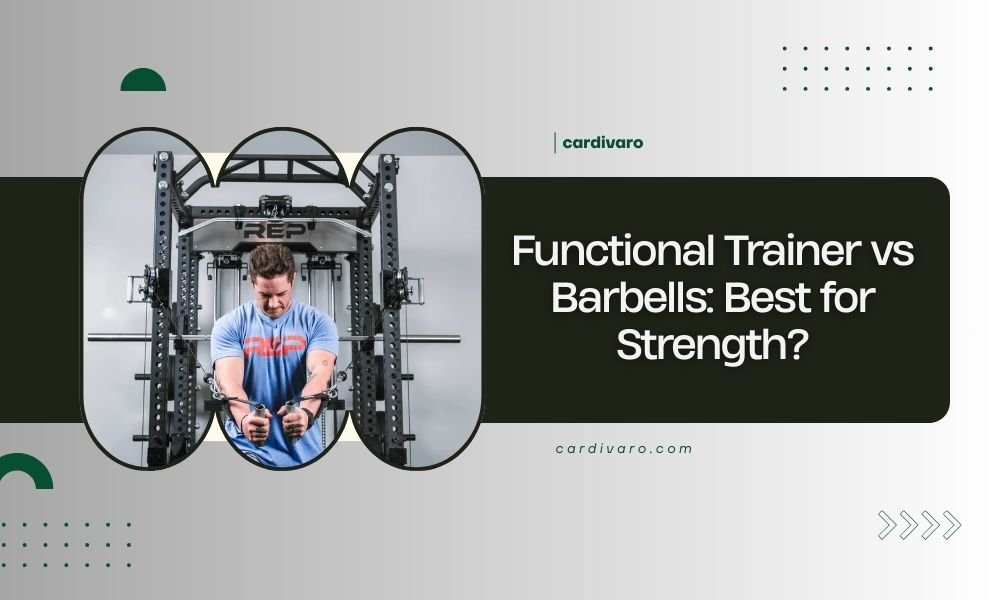
Functional trainers offer versatile cable-based resistance training while barbells provide traditional free-weight strength training, each excelling in different areas of fitness development.
For pure strength gains, barbells typically win due to progressive overload capabilities, but functional trainers excel at movement patterns and injury prevention.
What Makes Each Training Method Unique
You’re standing in your garage gym, looking at two very different pieces of equipment. One’s a sleek functional trainer with cables and pulleys. The other’s a simple barbell with plates.
Both can transform your fitness. But they work in completely different ways.
How Functional Trainers Work
Functional trainers use cable systems with adjustable weight stacks. You can move the cables up, down, or sideways. This creates resistance from any angle.
The cables keep constant tension on your muscles throughout each movement. No matter where you are in the exercise, your muscles stay engaged.
Key Functional Trainer Features
- Dual cable systems with independent weight selection
- Multiple attachment points at different heights
- Weight stacks typically ranging from 150-400 pounds per side
- Variety of handles and attachments
How Barbells Build Strength
Barbells are straightforward. You lift weight against gravity. The resistance comes from one direction – straight down.
Research from the National Strength and Conditioning Association shows barbells allow for the heaviest loads. You can progressively add weight in small increments.
Traditional Barbell Benefits
- Unlimited weight capacity with additional plates
- Compound movements targeting multiple muscle groups
- Simple progression by adding weight
- Time-tested strength building approach
Strength Building Comparison
Let me break down how each method builds strength differently.
| Factor | Functional Trainer | Barbells |
|---|---|---|
| Maximum Load | Limited by weight stack | Unlimited with plates |
| Progressive Overload | Fixed increments | Flexible increments |
| Strength Type | Functional strength | Absolute strength |
| Learning Curve | Beginner friendly | Technique demanding |
Pure Strength Gains
For building maximum strength, barbells have the edge. You can load them with hundreds of pounds. The big three lifts – squat, bench, and deadlift – are unmatched for raw power development.
I found research from the Journal of Strength and Conditioning showing barbell training produces greater strength gains in compound movements compared to cable training.
Why Barbells Win for Max Strength
Your body adapts to the heaviest loads you can handle. Barbells let you progressively increase weight without limits. Start with 135 pounds, work up to 225, then 315.
That progression builds serious strength. Functional trainers max out at their weight stack limit.
Functional Strength Advantages
But strength isn’t just about lifting the heaviest weight possible. Real-world strength involves movement in multiple directions.
Functional trainers excel here. You can train rotational movements, unilateral patterns, and sport-specific motions.
Movement Quality Benefits
Think about daily activities. You don’t just move weight straight up and down. You reach, twist, push, and pull at angles.
Functional trainers prepare your body for these real movements. The constant tension also improves stability and control.
Training Experience Differences
Learning and Safety
Starting with barbells feels intimidating. Proper squat form takes months to master. One wrong move with heavy weight can cause injury.
Functional trainers are more forgiving. The cables guide your movement path. If you fail a rep, you don’t have a barbell crashing down.
Injury Risk Factors
Research from the American College of Sports Medicine suggests cable training has lower injury rates than free weights. The controlled movement patterns reduce stress on joints.
Barbells require perfect form under heavy loads. That’s higher risk but also higher reward.
Workout Variety
Functional trainers offer hundreds of exercise possibilities. Change the attachment, adjust the angle, and you have a new movement.
Barbells are more limited. You have the main lifts and their variations. But those movements are incredibly effective.
Time Efficiency
With functional trainers, you can switch exercises quickly. No loading and unloading plates. Just adjust the pin and grab a different handle.
Barbell training takes more setup time. But compound movements work multiple muscles at once, making workouts efficient.
Who Should Choose What
Choose Barbells If You
- Want to build maximum strength
- Enjoy powerlifting or strength sports
- Have good movement mechanics
- Don’t mind learning proper technique
- Have a training partner for safety
Barbell Success Stories
Every powerlifter, strongman, and Olympic lifter uses barbells as their primary tool. There’s a reason – they work for building incredible strength.
Choose Functional Trainers If You
- Want safer, joint-friendly training
- Prefer workout variety
- Focus on athletic performance
- Have limited space or noise concerns
- Train alone regularly
Functional Training Benefits
Professional athletes often use functional trainers for rehabilitation and performance training. The variable resistance patterns translate well to sports movements.
Cost and Space Considerations
Initial Investment
A quality functional trainer costs $2,000-$5,000. That includes the weight stack and basic attachments.
A barbell setup costs $500-$1,500 initially. But you’ll keep buying plates as you get stronger.
Long-term Costs
Functional trainers have minimal ongoing costs. Maybe new attachments or cable replacements.
Barbell training requires more plates over time. Advanced lifters might spend thousands on weight plates.
Space Requirements
Functional trainers need about 8×8 feet of floor space. They’re tall but don’t require much room around them.
Barbells need space for the bar to move. A full setup with rack requires 8×12 feet minimum.
Making Your Decision
Your Primary Goals Matter Most
Ask yourself: what do you really want from training?
If you dream of deadlifting 400 pounds or competing in powerlifting, barbells are your path. Nothing beats them for absolute strength.
If you want to stay strong, move well, and avoid injuries while staying active for decades, functional trainers might be perfect.
The Hybrid Approach
Many serious lifters use both. Barbells for main strength work. Functional trainers for accessory exercises and movement quality.
This combination gives you the best of both worlds – maximum strength development plus movement variability.
Start Where You Are
Complete beginners might find more success with functional trainers initially. Build movement patterns and confidence first.
Once you have a solid foundation, adding barbell work can take your strength to new levels.
Conclusion
Both functional trainers and barbells build strength, but they do it differently. Barbells win for pure strength gains and progressive overload. Functional trainers excel at movement quality, safety, and exercise variety. Your choice depends on your goals, experience level, and training preferences. Serious strength athletes often benefit from using both tools strategically. Start with your primary goal in mind, then expand your training arsenal over time.
Can you build significant muscle with just a functional trainer?
Yes, functional trainers provide enough resistance for muscle growth through constant tension and exercise variety. While you might not build the same maximum strength as barbells, you can develop impressive muscle mass and functional strength with consistent progressive training.
How long does it take to see strength gains with each method?
Both methods typically show strength improvements within 4-6 weeks of consistent training. Barbell training often produces faster gains in maximum strength, while functional trainers may show quicker improvements in movement quality and muscular endurance.
Which is better for home gym beginners?
Functional trainers are generally better for beginners due to their safety features, guided movement patterns, and learning curve. They’re more forgiving of form mistakes and don’t require a spotter for safe training sessions.
Do professional athletes prefer one over the other?
Most professional athletes use both methods depending on their training phase. During strength phases, they emphasize barbells. For injury prevention, rehabilitation, and sport-specific movements, they rely heavily on functional trainers and cable systems.
Can functional trainers replace barbells completely?
Functional trainers can meet most fitness goals but cannot fully replace barbells for maximum strength development. If your goal is powerlifting or Olympic lifting, barbells are irreplaceable. For general fitness, athletic performance, and functional strength, they can serve as a complete solution.