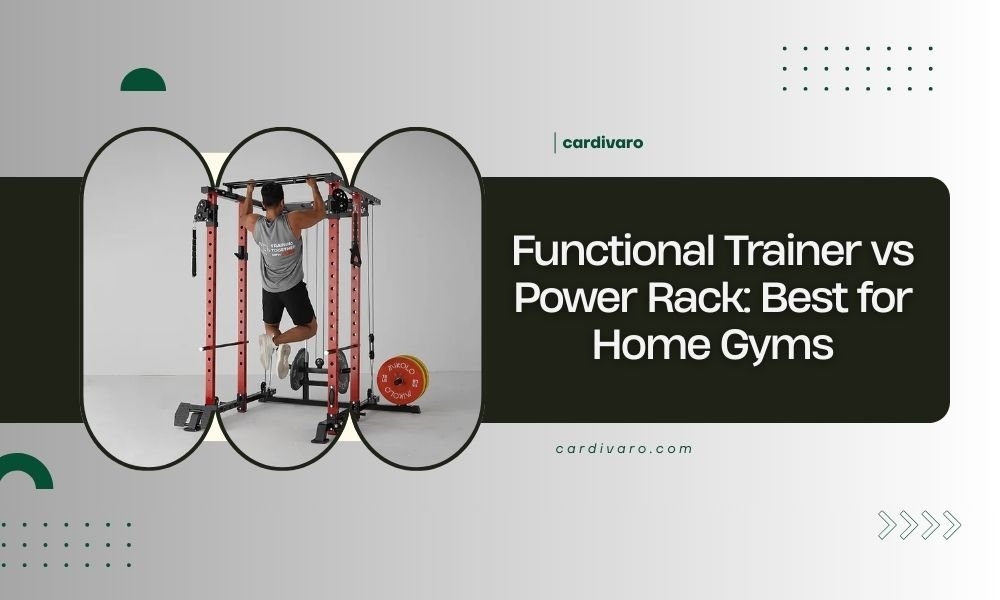
For home gyms, functional trainers offer more exercise variety and smooth cable movements, while power racks provide superior safety for heavy free weight training and cost less.
Your choice between a functional trainer vs power rack depends on your training style, space, and budget – functional trainers work best for cable exercises and rehabilitation, power racks excel for powerlifting and strength building.
What Makes Functional Trainers Different
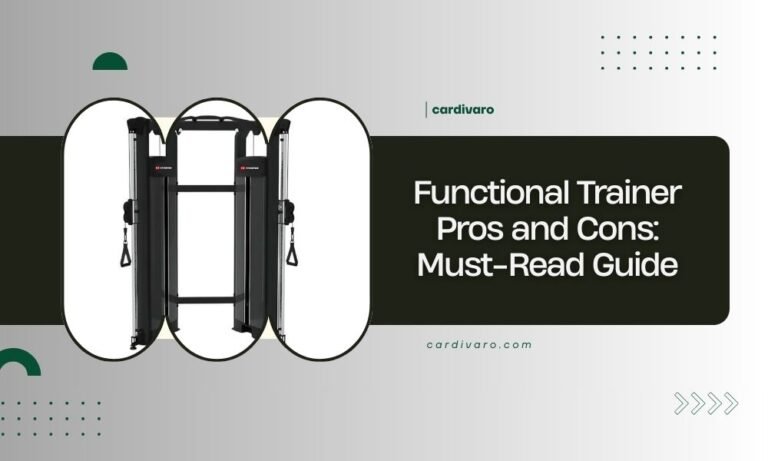
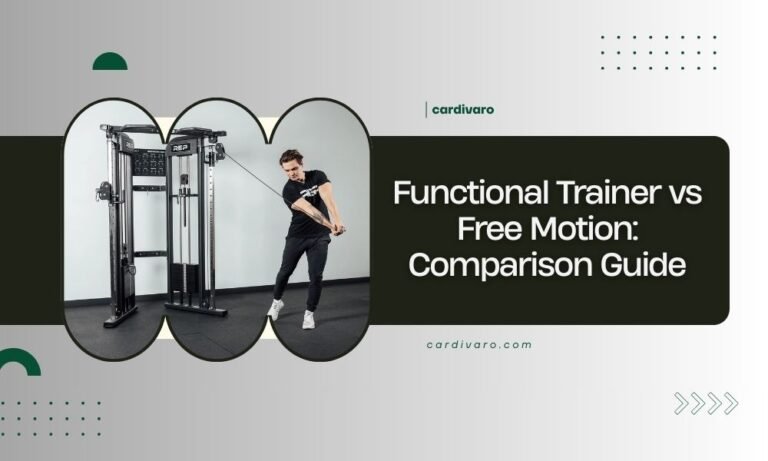
Functional trainers use adjustable cable systems with weight stacks. You can move the cables to different heights and angles. This lets you copy real-world movements like throwing, lifting, and rotating.
The cables provide constant tension during your entire range of motion. Your muscles stay engaged from start to finish. This feels different from free weights where tension changes throughout the lift.
Cable System Advantages
Cable machines offer smooth resistance that protects your joints. The weight stack moves up and down while you control the direction of force. This reduces stress on your knees, shoulders, and back compared to heavy barbells.
You can train from multiple angles with one machine. Want to work your chest? Adjust the cables high, middle, or low. Each position targets different muscle fibers.
Exercise Variety on Functional Trainers
I found that functional trainers can perform over 200 different exercises. You can do chest flies, lat pulldowns, rows, squats, lunges, and rotational movements. The versatility beats most other single pieces of equipment.
Physical therapists often recommend cable exercises for injury recovery. The controlled movement patterns help you rebuild strength safely.
Power Rack Fundamentals
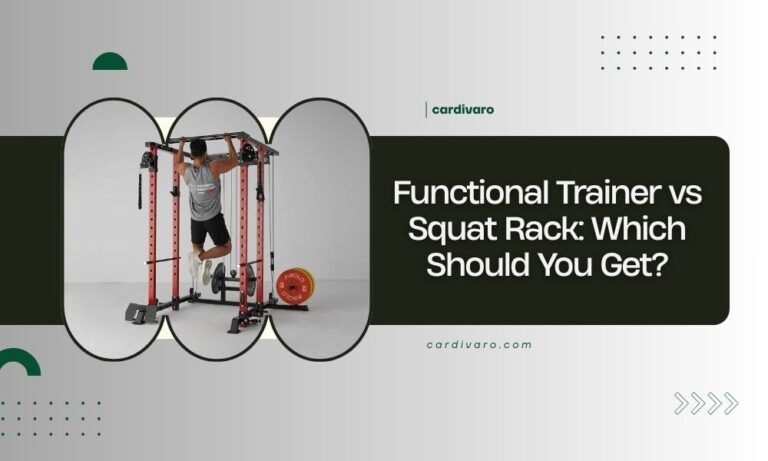
Power racks are steel frame structures with adjustable safety bars. You load barbells with weight plates and lift inside the rack. The safety bars catch the weight if you fail a lift.
These racks focus on the big compound movements: squats, bench press, deadlifts, and overhead press. Powerlifters and strength athletes prefer power racks for heavy training.
Safety Features That Matter
The adjustable safety bars are the main benefit. Set them just below your lowest squat position. If you can’t complete the lift, the bars catch the weight. You don’t need a spotter for solo training.
Quality power racks can handle 500-1000+ pounds of weight. The thick steel construction won’t bend or wobble under heavy loads.
Free Weight Training Benefits
Free weights activate stabilizer muscles that cables don’t challenge. When you squat with a barbell, your core and small balance muscles work hard to keep you stable.
Research from the National Strength and Conditioning Association shows free weight exercises often produce greater strength gains than machine exercises for the same muscle groups.
Space Requirements Comparison
Functional trainers typically need a 8×8 foot area. You need space to move around the machine and extend the cables in all directions. Some compact models fit in 6×6 feet but limit your movement.
Power racks need 8×8 feet minimum, but 10×10 feet works better. You need extra room to load plates, walk around the bar, and have clearance for overhead movements.
Ceiling Height Considerations
Both machines need 8+ foot ceilings. Power racks require more overhead space for Olympic lifting movements. Functional trainers work fine with standard 8-foot ceilings.
Cost Analysis
Power racks start around $300 for basic models. Quality home gym racks cost $800-$2000. You also need a barbell ($100-300) and weight plates ($1-3 per pound).
Functional trainers cost more upfront. Basic models start at $1500. Commercial-quality home units run $3000-$8000. But you don’t need to buy additional weights.
Long-Term Investment Value
Power racks last decades with minimal maintenance. The steel frame rarely breaks. You can always add more weight plates as you get stronger.
Functional trainers have cables and pulleys that wear out. Expect to replace cables every 2-5 years depending on use. Weight stacks are harder to expand than adding plates.
Training Goals Match
| Training Goal | Functional Trainer | Power Rack |
|---|---|---|
| Maximum Strength | Limited | Excellent |
| Muscle Building | Very Good | Excellent |
| Fat Loss | Excellent | Good |
| Rehabilitation | Excellent | Limited |
| Sports Performance | Very Good | Good |
Strength Building Differences
Want to squat 400 pounds? You need a power rack. Most functional trainers max out at 200-300 pounds per side. The cable system can’t match heavy barbell loading.
Functional trainers excel at higher rep training. The smooth cable resistance works great for 12-20 rep sets that build muscle endurance.
User Experience Factors
Functional trainers feel more beginner-friendly. The cables guide your movement path. It’s harder to use poor form compared to free weights.
Power racks intimidate some new lifters. The open design means you control everything – bar path, balance, and safety setup. This requires more skill but builds better coordination.
Learning Curve Reality
I found that most people can use functional trainers effectively within a few sessions. The cable attachments are intuitive and the movements feel natural.
Power racks need weeks or months to master. Proper squat form takes practice. You must learn to set safety bars correctly and understand barbell balance.
Maintenance Requirements
Power racks need minimal upkeep. Wipe down the steel frame occasionally. Check that bolts stay tight. Oil the sleeve bearings if your rack has rotating components.
Functional trainers require regular cable inspection. Look for fraying or kinks in the cables. Keep the weight stack clean and lubricate the guide rods monthly.
Common Repair Issues
Cable replacement is the main functional trainer repair. Cables cost $50-150 depending on length and quality. Most people can replace them with basic tools.
Power racks rarely break. The main issues are bent safety bars from dropped weights or loose bolts from vibration.
Making Your Decision
Choose a functional trainer if you want exercise variety, joint-friendly workouts, or rehabilitation focus. They work well for circuit training and metabolic conditioning.
Pick a power rack if your main goals are strength, powerlifting, or serious muscle building. Nothing beats heavy squats and deadlifts for raw strength development.
Combination Options
Some power racks include cable attachments. These hybrid units cost more but give you both options. The cable systems on combo racks usually have lower weight limits than dedicated functional trainers.
You could also buy both pieces over time. Start with whichever matches your current training style better. Add the other equipment later as your home gym expands.
Conclusion
Both functional trainers and power racks can transform your home workouts, but they serve different purposes. Functional trainers offer unmatched exercise variety and joint-friendly training perfect for general fitness, weight loss, and rehabilitation. Power racks dominate for serious strength training, heavy lifting, and long-term muscle building goals.
Your training experience, available space, and budget will guide the right choice. Beginners often prefer functional trainers for their ease of use and safety. Experienced lifters typically choose power racks for their strength-building potential and lower cost. Either option beats a gym membership over time and gives you the convenience of training at home whenever you want.
Can you build serious muscle with just a functional trainer?
Yes, functional trainers can build significant muscle through high-tension cable exercises, drop sets, and progressive overload. While you can’t load as heavy as barbells, the constant tension and exercise variety make them effective for muscle growth, especially for beginners and intermediate lifters.
Are power racks safe to use alone without a spotter?
Power racks are designed for solo training when you set the safety bars correctly. Position them 2-3 inches below your lowest squat or bench position. This lets you complete full reps but catches failed lifts. Always test the safety height with lighter weights first.
How much weight should I expect to lift on each machine?
Most home functional trainers offer 150-300 pounds per arm, suitable for most exercises. Power racks handle 500-1000+ pounds total, letting you progress to advanced strength levels. Your personal strength will determine which weight capacity you actually need.
Which option works better for older adults or people with joint issues?
Functional trainers generally work better for joint concerns due to their smooth cable resistance and controlled movement patterns. The variable angles let you work around pain points. Power racks can work too, but require more attention to form and may stress joints more with heavy loads.
Do I need special flooring or additional equipment for either option?
Both benefit from rubber flooring to protect your floor and reduce noise. Power racks need a barbell and weight plates, adding $500-1500 to total cost. Functional trainers include everything needed but may benefit from different cable attachments for exercise variety.