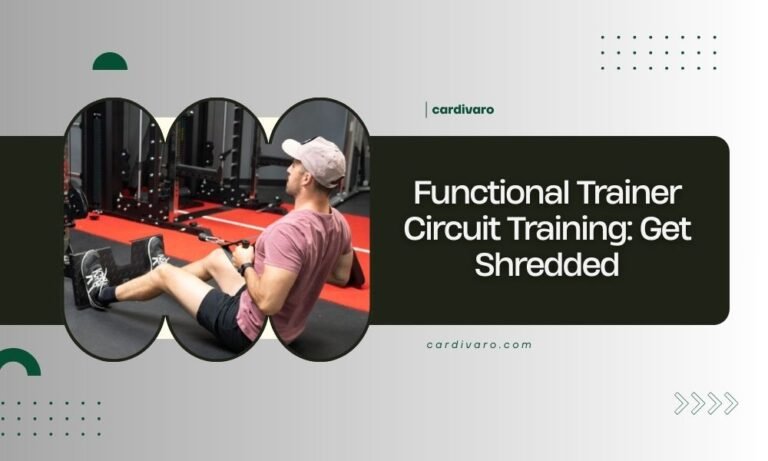
A functional trainer offers cable-based exercises with pulleys and weight stacks, while a squat rack provides a barbell framework for compound movements like squats and deadlifts.
Your choice between functional trainer vs squat rack depends on your training goals: functional trainers excel at isolation work and rehabilitation, while squat racks dominate strength building and powerlifting.
What Is a Functional Trainer?
A functional trainer uses adjustable cable systems with weight stacks. You can move the pulleys up and down to target different muscle groups.
These machines typically have two weight stacks ranging from 150 to 300 pounds each. The cables let you perform smooth, controlled movements in multiple directions.
Key Features of Functional Trainers
- Dual adjustable pulleys
- Weight stacks instead of free weights
- Multiple attachment options
- Compact footprint
- Safety features built in
Popular Functional Trainer Exercises
You can do chest flies, lat pulldowns, tricep extensions, and bicep curls. The cables also work great for functional movements like wood chops and anti-rotation exercises.
What Is a Squat Rack?
A squat rack provides a sturdy frame with adjustable safety bars for barbell exercises. You load Olympic weight plates onto a barbell and perform compound movements.
Most squat racks include pull-up bars, plate storage, and safety catches. They’re built for heavy lifting with proper form.
Types of Squat Racks
Power Racks
Full cages with four posts. They offer maximum safety and versatility. You can add attachments like dip bars and cable systems.
Half Racks
Two-post systems that take up less space. They’re perfect if you have limited room but still want rack functionality.
Squat Stands
Basic uprights that hold your barbell. They’re the most affordable option but offer less safety protection.
Space Requirements Comparison
| Equipment | Width | Depth | Height | Total Space Needed |
|---|---|---|---|---|
| Functional Trainer | 4-5 feet | 3-4 feet | 7-8 feet | 8×8 feet |
| Power Rack | 4 feet | 4 feet | 7-8 feet | 10×12 feet |
| Half Rack | 4 feet | 3 feet | 7-8 feet | 8×10 feet |
Space Winner: Functional Trainer
Functional trainers win on space efficiency. You can work out in a smaller area because the cables don’t extend as far as barbells do.
Exercise Variety Breakdown
Functional Trainer Exercise Options
You get incredible variety with cables. Research from fitness equipment manufacturers shows functional trainers can perform over 100 different exercises.
Upper Body Movements
- Chest press and flies
- Rows and reverse flies
- Shoulder raises and presses
- Bicep and tricep isolation
Lower Body Options
- Leg press variations
- Lunges with resistance
- Hip abduction and adduction
- Calf raises
Squat Rack Exercise Potential
Squat racks excel at compound movements. You can build serious strength with fewer exercise variations.
Primary Movements
- Back and front squats
- Deadlifts and rack pulls
- Bench press (with bench)
- Overhead press
- Barbell rows
Advanced Techniques
You can do pin squats, pause reps, and partial range movements. These techniques help break through strength plateaus.
Strength Building Potential
Progressive Overload Comparison
Squat racks win for pure strength gains. You can load hundreds of pounds on a barbell and progress in small increments.
Functional trainers max out around 300 pounds per side. That’s plenty for most people, but serious powerlifters need more weight.
Muscle Building Research
Studies from exercise science journals show both machines build muscle effectively. The key difference is training style.
Free weights activate more stabilizer muscles (Journal of Strength and Conditioning Research). Cables provide constant tension throughout the movement.
Safety Considerations
Functional Trainer Safety
Cables are inherently safer than free weights. The weight stack guides the resistance, so you can’t drop anything on yourself.
The pulleys also prevent the weight from moving unexpectedly. This makes functional trainers great for beginners.
Squat Rack Safety Features
Good squat racks include safety bars or pins. Set them just below your lowest squat position for protection.
Power racks offer the most safety options. The enclosed design catches the barbell if you fail a rep.
Common Safety Mistakes
- Setting safety bars too low
- Not using collars on barbells
- Loading weights unevenly
- Attempting max lifts without spotters
Cost Analysis
Functional Trainer Pricing
Quality home functional trainers range from $1,500 to $4,000. You’re buying a complete system with built-in weights.
The main ongoing cost is replacement cables and attachments. These wear out every few years with heavy use.
Squat Rack Investment
A solid power rack costs $500 to $2,000. But you’ll need Olympic plates and a barbell too.
A complete setup with 300+ pounds of plates runs $1,200 to $3,000 total. Plates hold their value well if you buy quality iron.
Long-Term Value
Squat racks last decades with minimal maintenance. Functional trainers have more moving parts that can break down.
Who Should Choose a Functional Trainer?
Perfect for These Goals
- Rehabilitation and physical therapy
- General fitness and toning
- Sport-specific training
- Limited space workouts
- Joint-friendly exercise
Ideal User Profiles
You’re recovering from injury or have joint issues. The smooth cable motion reduces stress on your joints compared to free weights.
You want variety in your workouts. Functional trainers prevent boredom with endless exercise combinations.
Who Should Get a Squat Rack?
Best for These Objectives
- Building maximum strength
- Powerlifting and Olympic lifting
- Athletic performance
- Serious muscle building
- Long-term progression
Target User Types
You want to get really strong. Nothing beats barbell training for pure strength development.
You’re already comfortable with free weights. Squat racks reward proper form and consistent progression.
Making Your Final Decision
Ask Yourself These Questions
What’s your main fitness goal? Strength building favors squat racks. General fitness and variety point toward functional trainers.
How much space do you have? Measure twice before buying. Don’t forget ceiling height for overhead movements.
Budget Reality Check
Factor in all costs, not just the main equipment. Functional trainers are more complete out of the box.
The Compromise Option
Some power racks come with cable attachments. You get the best of both worlds, but expect to pay more.
This combo approach works well if you have the budget and space for a larger setup.
Conclusion
Your choice between a functional trainer vs squat rack comes down to your goals and situation. Functional trainers excel at variety, safety, and space efficiency. They’re perfect for general fitness, rehabilitation, and users who want joint-friendly workouts.
Squat racks dominate for strength building and serious training. They offer unlimited progression potential and superior value for powerlifters and athletes. Consider your space, budget, and long-term fitness goals. Both pieces of equipment can transform your home gym when matched to the right user.
Can you build serious muscle with just a functional trainer?
Yes, functional trainers provide enough resistance for muscle building in most people. The constant cable tension actually helps with muscle activation. You might plateau faster than with free weights, but 300+ pounds per side covers most training needs.
Which option is better for beginners?
Functional trainers are more beginner-friendly due to their built-in safety features and guided movement patterns. The cables prevent dangerous form breakdowns that can happen with free weights. Squat racks require more technique mastery upfront.
Do functional trainers break down more often than squat racks?
Yes, functional trainers have cables, pulleys, and weight stacks that can wear out over time. Squat racks are simpler with fewer moving parts. Expect to replace cables every 2-3 years with heavy use, while quality squat racks last decades.
Can you do cardio workouts on these machines?
Functional trainers work great for circuit training and cardio workouts. You can quickly switch between exercises without rest. Squat racks aren’t designed for cardio, though you can do high-rep barbell complexes for conditioning.
Which takes up more actual floor space in a small room?
Despite similar footprints, squat racks need more clearance space for barbell movement. You need room to load plates and move the bar safely. Functional trainers keep the resistance contained within their frame, making them better for tight spaces.