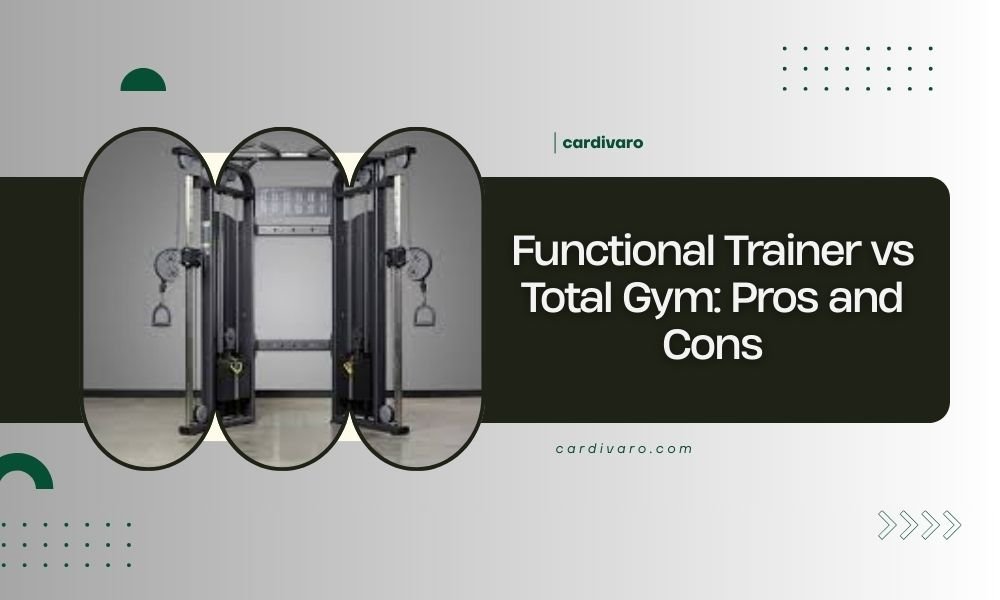
Functional trainers offer cable-based resistance training with adjustable weight stacks, while Total Gym machines use bodyweight and gravity with an inclined bench system.
Your choice between functional trainer vs Total Gym depends on your space, budget, and whether you prefer traditional weights or bodyweight resistance training.
What Makes These Two Machines So Different?
Think of a functional trainer as your gym’s cable machine brought home. It uses actual weights that you pull through cables and pulleys. You can work every muscle group with smooth, controlled movements.
A Total Gym works more like a sliding board. You lie on an inclined bench and use your own body weight for resistance. The steeper the angle, the harder the workout gets.
How Functional Trainers Work
Functional trainers have two weight stacks connected to adjustable cables. You can set the cables high, middle, or low. This lets you copy real-world movements like lifting, pushing, and pulling.
The weight stacks usually range from 10 to 200 pounds per side. That means you can start light and build up to serious strength training.
How Total Gym Systems Work
Total Gym uses a simple but smart design. You adjust the incline level to change how much of your body weight you’re lifting. At the lowest setting, you might lift 20% of your weight. At the steepest, you could lift 70%.
The smooth gliding motion reduces joint stress. Many physical therapy clinics use similar equipment for rehabilitation.
Functional Trainer Pros That Matter
Strength Building Power
Want to build serious muscle? Functional trainers win here. You can load up heavy weights and progressively overload your muscles. I found that most models let you add weight plates for even more resistance.
Exercise Variety
The cable system lets you perform hundreds of exercises. You can do chest flies, lat pulldowns, squats, and even yoga-style stretches. The range of motion feels natural and unrestricted.
Real Movement Patterns
Functional trainers train your body for real-life activities. Lifting groceries, playing sports, or moving furniture all become easier when you train functional movements.
Perfect for Athletes
Sports-specific training works best with cables. You can practice your golf swing, tennis serve, or throwing motion with resistance.
Functional Trainer Cons You Should Know
Size and Space Requirements
These machines are big. Most functional trainers need at least 8 feet by 8 feet of floor space. Add extra room for cable extensions and you’re looking at a serious space commitment.
Price Point Reality
Quality functional trainers start around $1,500 and can reach $5,000 or more. That’s a significant investment compared to other home gym options.
Maintenance Needs
More moving parts mean more things that can break. Cables fray, pulleys wear out, and weight stacks need adjustment. Regular maintenance keeps everything running smooth.
Total Gym Pros That Stand Out
Compact Storage Solution
Most Total Gym models fold up for storage. You can slide them under a bed or stand them against a wall. Perfect for apartments or shared spaces.
Joint-Friendly Workouts
The smooth gliding motion puts less stress on your joints. Research from physical therapy studies shows that incline-based exercises can reduce impact while maintaining muscle activation (American Physical Therapy Association).
Budget-Friendly Options
Basic Total Gym models start around $300. Even premium versions rarely exceed $2,000. That’s accessible for most home fitness budgets.
Quick Setup Time
Unfolding and setting up takes less than two minutes. No weight adjustments or complicated cable positioning needed.
Full-Body Workouts
One machine works your entire body. Upper body, lower body, and core exercises all happen on the same platform. Time-efficient training for busy schedules.
Total Gym Cons to Consider
Limited Resistance Progression
Your body weight sets the maximum resistance. Strong individuals might outgrow the machine’s challenge level quickly. Adding external weight helps but feels awkward.
Exercise Limitations
The incline bench design limits exercise variety. You can’t do standing exercises or many functional movement patterns that cables allow.
Stability Concerns
Some users report wobbling during intense exercises. The sliding mechanism needs regular lubrication to stay smooth.
Side-by-Side Comparison
| Feature | Functional Trainer | Total Gym |
|---|---|---|
| Resistance Type | Weight stacks | Body weight |
| Space Required | 8×8 feet minimum | 6×3 feet when open |
| Price Range | $1,500 – $5,000+ | $300 – $2,000 |
| Exercise Variety | 300+ exercises | 80+ exercises |
| Storage | Permanent setup | Folds for storage |
Which Machine Fits Your Goals?
Choose Functional Trainer If
- You want to build significant muscle mass
- Progressive strength training appeals to you
- You have dedicated gym space
- Sports performance matters
- Budget allows for higher investment
Choose Total Gym If
- Joint health concerns limit heavy lifting
- Storage space is limited
- Budget constraints exist
- General fitness and toning are primary goals
- Quick, convenient workouts matter most
Real User Experience Factors
Learning Curve Differences
Functional trainers require more learning. Cable adjustments, proper form, and exercise selection take time to master. Total Gym’s simpler design means faster workout starts.
Workout Duration
I found that Total Gym workouts tend to be shorter but more frequent. The convenience factor encourages daily use. Functional trainer sessions often run longer but might happen less frequently.
Long-Term Investment Perspective
Think about your fitness journey five years from now. Will your current choice still challenge you? Functional trainers typically offer more growth potential. Total Gym works well for maintenance and general fitness.
Both machines can last decades with proper care. Quality construction matters more than brand names in most cases.
Conclusion
Your decision between functional trainer vs Total Gym comes down to personal priorities. Functional trainers excel at strength building and exercise variety but demand more space and money. Total Gym offers convenience and joint-friendly workouts at a lower cost but with resistance limitations.
Consider your current fitness level, available space, and long-term goals. Both machines can deliver excellent results when used consistently. The best choice is the one you’ll actually use regularly.
Can you build muscle effectively with a Total Gym?
Yes, you can build muscle with Total Gym, especially for beginners and intermediate users. The incline adjustments provide progressive overload, though advanced lifters may need additional resistance methods like weighted vests or resistance bands.
How much space do you really need for each machine?
Functional trainers need about 64 square feet of permanent space plus clearance for cable movements. Total Gym requires 18 square feet when open but can store in a closet or under a bed when folded.
Which machine is better for rehabilitation or injury recovery?
Total Gym typically works better for rehabilitation due to its controlled, low-impact movements and adjustable resistance. Many physical therapy clinics use similar incline-based systems for safe strength rebuilding.
Do these machines require professional assembly?
Most Total Gym models assemble easily with basic tools in 1-2 hours. Functional trainers often benefit from professional assembly due to weight stack calibration and cable tensioning requirements, though handy individuals can handle it.
How do maintenance costs compare between the two?
Total Gym maintenance mainly involves cleaning and occasional lubrication, costing under $50 annually. Functional trainers may need cable replacement, pulley service, and weight stack adjustments, potentially costing $100-200 yearly for heavy use.