
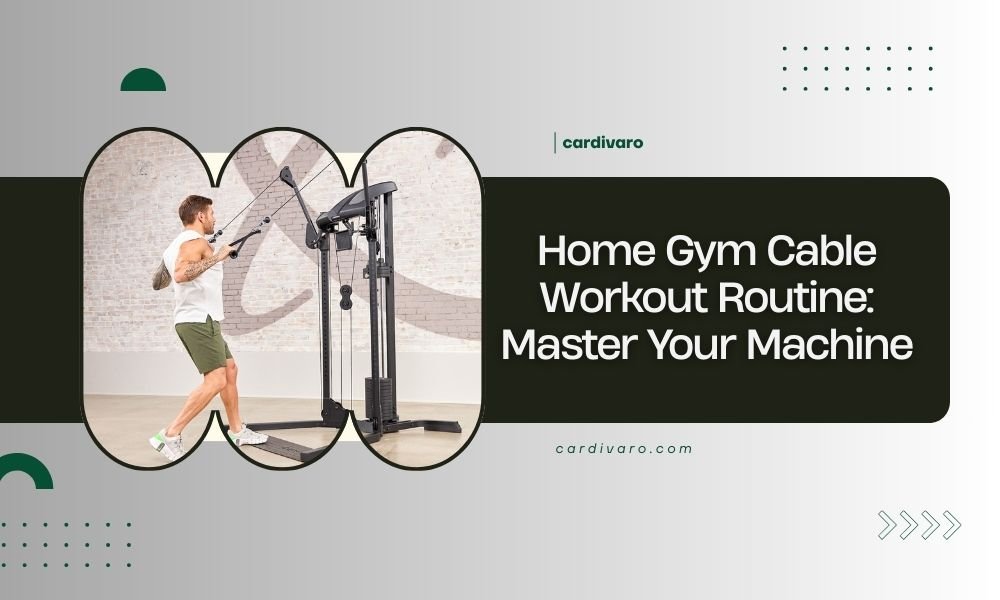
A complete home gym cable workout routine targets all major muscle groups using high-to-low, low-to-high, and horizontal cable angles for maximum effectiveness.
Your cable machine becomes a full-body training powerhouse when you master proper exercise selection, rep ranges, and progressive overload techniques.
Why Cable Machines Beat Free Weights for Home Gyms
Cable machines offer something free weights can’t match: constant tension throughout every rep. When you lift a dumbbell, gravity only fights you in one direction. Cables create resistance from multiple angles.
You get more bang for your buck with cable systems. One machine replaces dozens of individual weights and equipment pieces. Perfect for tight spaces and budgets.
Space-Saving Benefits
Most functional trainers fit in an 8×8 foot space. Compare that to a full free weight setup needing 200+ square feet. You save room and money.
I found that cable machines work well in basements, garages, and spare bedrooms where Olympic barbells won’t fit safely.
Safety Advantages
No risk of dropping weights on your feet or getting pinned under a barbell. The cable system controls the weight path, reducing injury risk significantly.
You can train alone without a spotter. The machine won’t let weights crash down unexpectedly.
Essential Cable Machine Setup
Your workout quality depends on proper machine setup. Get this wrong, and you’ll waste time with poor results.
Adjusting Cable Height
Most exercises use three main positions: high, middle, and low. High pulley works great for lat pulldowns and tricep pushdowns. Low pulley handles rows and bicep curls.
Middle position targets chest flies and functional movements. Switch between heights quickly to maintain workout flow.
Choosing the Right Attachments
You need these basic attachments for a complete routine:
- Straight bar for lat pulldowns and rows
- Rope attachment for triceps and face pulls
- D-handles for single-arm movements
- Ankle straps for leg exercises
- V-bar for close-grip movements
Upper Body Cable Workout Routine
Your upper body responds well to cable training because you can hit muscles from angles impossible with free weights.
Chest Exercises
Cable Chest Press
Set cables at chest height. Grab handles and step forward into a staggered stance. Press forward and together, squeezing your chest at the peak.
Do 3 sets of 10-12 reps. This movement hits your entire chest while engaging your core for stability.
Cable Chest Flyes
Use high pulleys with D-handles. Keep a slight bend in your elbows and bring your hands together in a wide arc motion.
Focus on the stretch at the bottom and squeeze at the top. This isolates your chest better than dumbbell flyes.
Back Exercises
Lat Pulldowns
Sit with the bar above your head. Pull down to your upper chest, squeezing your shoulder blades together. Control the weight back up slowly.
Research shows lat pulldowns activate back muscles similarly to pull-ups (Journal of Sports Science). Great for building pull-up strength.
Seated Cable Rows
Use the low pulley with a V-bar. Sit with your chest up and pull the handle to your lower ribs. Keep your elbows close to your body.
This targets your middle traps and rhomboids. Essential for good posture and shoulder health.
Shoulder Exercises
Cable Lateral Raises
Stand between two low pulleys holding D-handles. Raise your arms out to shoulder height in a controlled motion.
Cables provide constant tension that dumbbells can’t match. You’ll feel the burn throughout the entire range of motion.
Face Pulls
Set the cable at face height with a rope attachment. Pull the rope toward your face, separating the ends near your ears.
This exercise fixes rounded shoulders from desk work. Do it daily if you spend hours at a computer.
Arm Exercises
Cable Bicep Curls
Use the low pulley with a straight bar. Keep your elbows at your sides and curl the weight up, squeezing your biceps.
The constant tension creates better muscle activation than free weight curls.
Tricep Pushdowns
High pulley with rope attachment works best. Keep your elbows pinned to your sides and push down, separating the rope at the bottom.
This isolates your triceps effectively. You’ll feel it in all three heads of the muscle.
Lower Body Cable Training
Don’t skip legs just because you have a cable machine. These exercises build serious lower body strength.
Glute and Hip Exercises
Cable Kickbacks
Attach an ankle strap to the low pulley. Face the machine and kick your leg straight back, squeezing your glutes.
Keep your core tight and don’t arch your back. This targets your glutes better than most free weight exercises.
Cable Squats
Hold handles at shoulder height with the cable behind you. Squat down keeping tension on the cable throughout the movement.
The cable forces you to maintain proper form. Great for beginners learning squat mechanics.
Leg Exercises
Cable Lunges
Step away from the low pulley holding handles. Lunge forward, keeping tension on the cables. The resistance challenges your balance and stability.
Switch legs after completing your reps on one side. This builds functional strength for daily activities.
Full-Body Cable Workout Programming
Smart programming gets results. Random exercises won’t build the physique you want.
Beginner Programming
Start with 2-3 full-body sessions per week. Use these rep ranges and rest periods:
| Exercise Type | Sets | Reps | Rest |
|---|---|---|---|
| Compound movements | 3 | 8-12 | 60-90 seconds |
| Isolation exercises | 2-3 | 10-15 | 45-60 seconds |
Advanced Programming
After 8-12 weeks, split your routine. Try upper/lower splits or push/pull/legs formats.
Advanced users can handle 4-5 training days per week with higher volume and intensity.
Progressive Overload with Cables
You must challenge your muscles to grow stronger. Cable machines make progression simple and measurable.
Adding Weight
Most cable systems use weight stacks. Add 5-10 pounds when you can complete all sets with perfect form.
Small jumps work better than big ones. Consistency beats intensity for long-term gains.
Increasing Volume
Add an extra set before adding weight. Volume drives muscle growth according to recent research (Sports Medicine journal).
Track your total weekly sets per muscle group. Aim for gradual increases over time.
Common Cable Exercise Mistakes
I see these errors constantly in home gyms. Fix them to get better results and avoid injury.
Using Too Much Weight
Heavy weight with poor form builds nothing except bad habits. Start light and focus on feeling the target muscles work.
Your ego might want more weight, but your muscles grow from quality reps, not heavy ones.
Rushing Through Reps
Cables work best with controlled movements. Take 2 seconds up, pause, then 2-3 seconds down.
Slow negatives create more muscle damage, leading to better growth and strength gains.
Cable Machine Maintenance
Your investment lasts longer with proper care. Simple maintenance prevents expensive repairs.
Daily Care
Wipe down cables and handles after each use. Sweat and moisture cause corrosion over time.
Check cables for fraying before each workout. Replace damaged cables immediately for safety.
Weekly Maintenance
Lubricate pulleys and moving parts weekly. Use the lubricant recommended by your machine’s manufacturer.
Tighten loose bolts and connections. Vibration from use gradually loosens hardware.
Conclusion
Your home gym cable workout routine gives you everything needed for total body transformation. Master the basic movements first, then progress systematically with proper programming. Cable machines offer unmatched versatility and safety for home training. Start with 2-3 sessions per week, focus on form over weight, and track your progress consistently. Within 8-12 weeks, you’ll see significant improvements in strength, muscle tone, and overall fitness. Your cable machine investment pays dividends when you commit to smart, consistent training.
How often should I do cable workouts at home?
Start with 2-3 sessions per week, allowing at least one rest day between workouts. Advanced trainees can handle 4-5 sessions weekly using split routines that target different muscle groups on different days.
Can cable machines replace free weights completely?
Yes, cable machines can provide a complete workout for most fitness goals. They offer variable resistance, multiple angles, and constant tension that free weights can’t match. You might miss some stabilization benefits of free weights, but cables excel at muscle isolation and safety.
What’s the minimum space needed for a functional trainer?
Most cable machines need an 8×8 foot area minimum, with 8-9 foot ceiling height. You need extra space to move freely during exercises like lunges and lateral movements. Measure your available space before purchasing equipment.
How do I know if I’m using the right weight on cables?
Choose weight that allows 12-15 good reps for your first set. If you can’t complete 10 reps with proper form, reduce the weight. If you easily do 20+ reps, increase the resistance by 5-10 pounds.
Why do cable exercises feel harder than free weights?
Cables provide constant tension throughout the entire range of motion, while free weights only challenge muscles at certain points. This continuous resistance makes muscles work harder and creates better muscle activation, which is why the same weight feels more challenging on cables.

