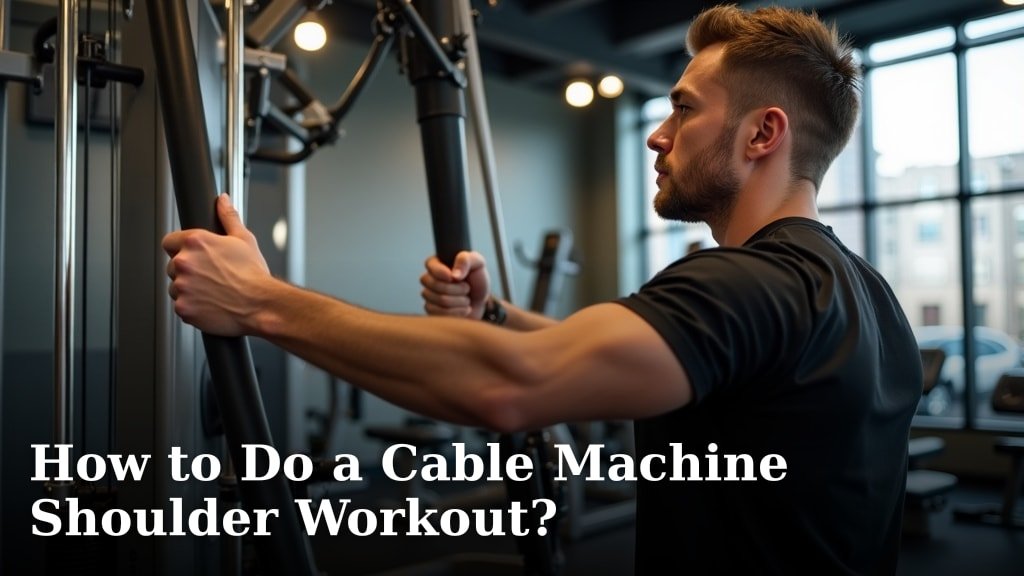
To do a cable machine shoulder workout, you’ll want to focus on exercises like cable front raises, lateral raises, and face pulls. These movements effectively target all heads of your deltoids, helping you build strong, sculpted shoulders using consistent tension from the cable machine.
Many gym-goers find the cable machine offers unique benefits for shoulder training, providing constant resistance throughout the entire range of motion. This can lead to better muscle activation and growth compared to free weights alone. Are you ready to see how cables can transform your shoulder routine?
- Cable machines offer constant tension for shoulder muscles.
- Target all three deltoid heads with specific cable exercises.
- Learn proper form for front raises, lateral raises, and face pulls.
- Understand how to adjust cable height and attachments.
- Incorporate these moves for stronger, more defined shoulders.
Let’s walk through exactly how to set up and perform these exercises, ensuring you get the most out of your cable machine shoulder workout.
Mastering Your Cable Shoulder Workout
You’re ready to dive into the world of cable machine shoulder exercises, and that’s fantastic! The key to a great workout is understanding the “why” behind each movement and how to perform it correctly. We’ll guide you through setting up the machine, choosing the right attachments, and executing each exercise with precision. Our goal is to help you build those strong, well-defined shoulders you’re aiming for.
Setting Up Your Cable Machine for Shoulders
Before you even touch a weight, proper setup is essential. Think of the cable machine as a versatile tool. Adjusting it correctly ensures you target the right muscles and stay safe. It’s not just about grabbing a handle; it’s about optimizing the angle and resistance for your body.
Choosing the Right Attachments
The cable machine comes with several attachments, and each has its purpose. For shoulder exercises, you’ll primarily use a few key ones. We’ve found that different attachments can slightly alter how a movement feels and which muscles are emphasized.
- Single Handle: This is your go-to for most unilateral (one side at a time) shoulder movements like front raises and lateral raises. It allows for a natural range of motion.
- Rope Attachment: Excellent for face pulls, as it allows for external rotation at the end of the movement, which is great for shoulder health.
- Straight Bar (Short): Sometimes used for two-handed front raises, though single handles often offer more flexibility.
Don’t be afraid to experiment with these, but always prioritize comfort and proper form. Your shoulders will thank you.
Adjusting Cable Height
The height of the cable pulley significantly impacts the exercise. A low pulley provides upward resistance, while a high pulley offers downward resistance. For shoulder work, you’ll use a range of heights. For instance, lateral raises typically start with the pulley at the lowest setting.
- Low Pulley: Ideal for movements where you want to lift the weight against gravity, such as front raises or lateral raises.
- Mid-Level Pulley: Useful for exercises like cable face pulls, where you want resistance pulling horizontally.
- High Pulley: Less common for typical shoulder isolation, but can be used for some variations or triceps extensions from overhead.
Always double-check that the pin is securely in place before starting your set. A loose pin can be a safety hazard, and we want you to stay safe.
Essential Cable Shoulder Exercises
Now that your machine is set, let’s talk about the movements. We’ll focus on three core exercises that effectively target all three heads of your deltoids: front, side, and rear. Each one plays a crucial role in building well-rounded shoulders.
Cable Front Raises
This exercise primarily targets your anterior (front) deltoids. Strong front deltoids contribute to pressing movements and overall shoulder aesthetics. Many people do this with dumbbells, but the cable offers consistent tension throughout the lift.
- Setup: Set the cable pulley to the lowest position. Attach a single handle. Stand facing away from the machine, about an arm’s length away.
- Starting Position: Grab the handle with an overhand grip, arm straight down in front of your thigh. Keep a slight bend in your elbow. Your core should be braced.
- Execution: Slowly raise the handle directly in front of you, keeping your arm straight but not locked, until it’s about shoulder height. Focus on squeezing your front delt.
- Return: Control the weight as you slowly lower the handle back to the starting position. Avoid letting the weight simply drop.
Remember to avoid swinging the weight. If you’re using momentum, the weight is too heavy. The goal is muscle engagement, not just moving the weight. We often recommend starting with a lighter weight to master the form. (National Academy of Sports Medicine).
Cable Lateral Raises
Perhaps the most popular cable shoulder exercise, lateral raises are fantastic for building your medial (side) deltoids. These are the muscles that give your shoulders that wide, capped look. The constant tension from the cable machine can be a game-changer here.
- Setup: Set the cable pulley to the lowest position. Attach a single handle. Stand with your side to the machine, about an arm’s length away. The cable should run across your body.
- Starting Position: Grab the handle with the hand furthest from the machine. Your arm should cross your body, with the handle near your opposite thigh. Keep a slight bend in your elbow.
- Execution: Keeping your arm mostly straight but not locked, slowly raise the handle out to your side until your arm is parallel to the floor. Imagine pouring water out of a pitcher at the top.
- Return: Control the weight as you slowly lower the handle back to the starting position. Don’t let the weight pull your arm down.
Many find that leaning slightly away from the machine can help isolate the side deltoid even further. Just a slight lean can make a big difference in how you feel the exercise.
Cable Face Pulls
Face pulls are a powerhouse exercise for your posterior (rear) deltoids and upper back. These muscles are often neglected but are vital for shoulder health and posture. They help counterbalance all the pushing movements you do.
- Setup: Set the cable pulley to shoulder height or slightly above. Attach a rope attachment.
- Starting Position: Stand facing the machine, take a step or two back to create tension. Grab the rope with an overhand grip (palms facing each other), thumbs on the outside of the rope ends. Arms extended.
- Execution: Pull the rope towards your face, aiming to bring your hands to either side of your head. As you pull, externally rotate your shoulders so your thumbs point backward. Squeeze your rear delts and upper back.
- Return: Slowly extend your arms back to the starting position, controlling the weight. Don’t let your shoulders round forward at the end.
Think about driving your elbows back and out, rather than just pulling with your biceps. This cues the right muscles. Research consistently highlights the importance of rear delt work for preventing shoulder injuries (Journal of Shoulder and Elbow Surgery). You can also explore other effective rotator cuff exercises using functional trainers to further enhance shoulder health.
Integrating Cable Work into Your Routine
How do you fit these fantastic exercises into your existing workout plan? It’s simpler than you might think. Cable exercises are versatile and can be used in various ways, whether you’re trying to build muscle, improve endurance, or warm up.
Sample Cable Shoulder Workout Structure
Here’s a straightforward way to incorporate these moves. You can adjust sets and reps based on your fitness goals. For muscle growth, aim for higher reps with good form.
| Exercise | Sets | Reps | Focus |
|---|---|---|---|
| Cable Face Pulls | 3 | 12-15 | Rear Delts, Posture |
| Cable Lateral Raises (each arm) | 3 | 10-12 | Side Delts, Width |
| Cable Front Raises (each arm) | 3 | 10-12 | Front Delts, Definition |
This structure ensures you hit all three heads of the deltoids. Remember, quality over quantity. If you can’t maintain good form, reduce the weight. Your muscles respond best to controlled, challenging movements.
Tips for Maximizing Your Shoulder Gains
We’ve gathered some insights that can help you get the most out of your cable shoulder workouts. These little adjustments can make a big difference in your results and how your shoulders feel.
- Mind-Muscle Connection: Really focus on feeling the muscle you’re working. Don’t just go through the motions. Visualizing the muscle contracting can enhance its activation.
- Controlled Negatives: The lowering phase of an exercise (the eccentric phase) is just as important as the lifting phase. Control the weight on the way down to increase muscle damage and growth.
- Vary Rep Ranges: Don’t always stick to the same rep count. Sometimes go heavier for 8-10 reps, other times lighter for 15-20 reps to challenge your muscles in different ways.
- Proper Breathing: Breathe out during the concentric (lifting) phase and in during the eccentric (lowering) phase. This helps stabilize your core and maintain energy.
- Listen to Your Body: If something hurts, stop. Pushing through sharp pain can lead to injury. Adjust the weight, your form, or choose a different exercise if needed.
- Progressive Overload: To keep growing, you need to continually challenge your muscles. This could mean lifting slightly heavier, doing more reps, or increasing sets over time.
Consistency is your best friend when it comes to any fitness goal. Show up, put in the effort with good form, and you’ll see results. We believe in you!
Conclusion
You now have the knowledge to transform your shoulder workouts using the cable machine. Remember, consistent tension is a unique benefit that cables offer, helping you build strong and defined deltoids. By mastering cable front raises, lateral raises, and face pulls, you’re targeting all three heads of your shoulders effectively.
Focus on proper setup, controlled movements, and listening to your body to prevent injury. Start incorporating these exercises into your routine today, and watch your shoulders develop that well-rounded, sculpted look you desire.
Frequently Asked Questions
Can I do an entire shoulder workout with only a cable machine?
Yes, you absolutely can. Cable machines offer enough versatility and resistance angles to effectively hit all parts of your shoulders. Combine exercises like front raises, lateral raises, face pulls, and even some cable presses for a complete routine.
How heavy should I lift for cable shoulder exercises?
Start with a lighter weight that allows you to maintain perfect form for 10-15 repetitions. The goal is to feel the muscle working, not just move the weight. Gradually increase the resistance as you get stronger, always prioritizing control over ego lifting.
Are cable shoulder exercises better than free weights?
Neither is inherently “better”; they offer different benefits. Cables provide constant tension throughout the entire range of motion, which can lead to different muscle activation and growth. Free weights challenge stability and can often allow for heavier loads. Incorporating both often yields the best results.
How often should I do cable shoulder workouts?
This depends on your overall training split and recovery. For most people, training shoulders 2-3 times per week is effective. Ensure you allow enough time for muscle recovery between sessions, especially if you’re hitting them hard.
Can cable shoulder workouts help with shoulder pain or injury prevention?
Yes, especially exercises like cable face pulls, which strengthen the often-neglected rear deltoids and rotator cuff muscles. Stronger, balanced shoulder muscles can significantly improve posture and reduce the risk of injury, as research has consistently shown.