How to Do Cable Shrugs?
On this page (8 sections)
Cable shrugs are a fantastic way to build stronger traps and improve your upper back development. You can easily do cable shrugs by setting a low pulley, attaching a straight bar, and then shrugging your shoulders straight up towards your ears. This builds great muscle mass in your upper back.
Many gym-goers love cable shrugs because they offer constant tension throughout the entire movement. This means your muscles are working harder for longer. It’s a smart exercise for targeting the trapezius muscles, which are responsible for moving your shoulder blades. Building these muscles can help with posture too.
- Set up a low cable pulley with a straight bar.
- Grip the bar and stand up straight, letting the weight hang in front of you.
- Pull your shoulder blades straight up towards your ears.
- Hold briefly and slowly lower the weight back down.
- Focus on squeezing your traps at the top.
Ready to get those traps working? Let’s walk through exactly how to perform cable shrugs step by step to get the best results safely.
Mastering the Cable Shrug for Stronger Traps
Cable shrugs are a powerful exercise for building your upper back. They target the trapezius muscles effectively. Many people find they offer a great way to add size and strength to their traps. This exercise provides constant tension throughout the movement. That means your muscles are challenged from start to finish.
Let’s get you set up for success. We’ll break down the setup and technique to ensure you’re performing cable shrugs safely and effectively. You’ll be feeling that burn in no time! Our guide to a beginner cable machine workout routine can help you build a solid foundation.
Setting Up Your Cable Shrug Station
Getting your setup right is the first step. A proper setup minimizes risk and maximizes the benefits. You need to make sure the equipment is positioned correctly before you even pick up the weight.
Choosing the Right Cable Attachment
For cable shrugs, a straight bar attachment is generally your best bet. It allows for a natural grip. Some people might prefer a V-bar or rope. However, the straight bar offers the most direct line of pull for targeting the traps.
Adjusting the Pulley Height
This is critical for effective trap engagement. You want to set the pulley to its lowest setting. This ensures the cable pulls upward from directly in front of you. Imagine the cable originating from the floor and going straight up. This low anchor point is key for the upward shrug motion.
Grip Width and Hand Placement
How you grip the bar matters. A grip that’s about shoulder-width apart is usually ideal. Your palms should face your body (a neutral grip). This grip feels natural for most people. It helps isolate the trapezius muscles without involving too many other muscle groups.
Executing the Cable Shrug Movement
Now that you’re set up, let’s talk about the actual movement. Proper form is essential to protect your shoulders and get the most out of the exercise.
Starting Position and Stance
Stand facing the cable machine. The weight stack should be behind you. Grip the straight bar with a shoulder-width, neutral grip. Step back a few paces to create tension on the cable. Your feet should be about hip-width apart. Stand tall with a slight bend in your knees. Keep your core engaged and your chest up. Let the bar hang in front of your thighs. Your arms should be hanging straight down, but not locked out.
The Shrug Motion: Up and Down
This is where the magic happens. You’ll focus on moving your shoulders, not your arms.
1. Initiate the shrug: Exhale as you pull your shoulder blades straight up towards your ears. Think about lifting your shoulders as high as you possibly can. Your arms should remain relatively straight throughout the movement. The power comes from your traps, not your biceps.
2. Peak contraction: At the very top, squeeze your trapezius muscles hard. Hold this top position for a second or two. You should feel a strong contraction in your traps. This is the point where your muscles are working the hardest.
3. Controlled descent: Inhale as you slowly lower the weight back to the starting position. Resist the urge to let the weight drop quickly. A slow, controlled lowering phase is just as important as the upward movement. It helps build muscle endurance. Your traps should feel a good stretch at the bottom.
4. Repeat: Perform the desired number of repetitions. Maintain good form on every single rep.
Common Form Mistakes to Avoid
Even with good intentions, it’s easy to fall into bad habits. Let’s cover what to watch out for.
- Using momentum: Swinging the weight up with your body is a big no-no. This takes the tension off your traps. It can also lead to injury. Keep your body stable and controlled.
- Shrugging forward or backward: The movement should be straight up and down, not in an arc. Imagine lifting straight to the ceiling. Avoid rolling your shoulders.
- Bending your elbows: Your arms are just there to hold the weight. Don’t use your biceps to help lift. Keep them straight but not hyperextended.
- Going too heavy: If you can’t maintain good form, the weight is too heavy. It’s better to lift a lighter weight with perfect form. You’ll get better results and avoid injury.
- Not holding the squeeze: That peak contraction is vital for muscle growth. Make sure you’re actively squeezing your traps at the top.
Variations and Progressions
Once you’ve got the basic cable shrug down, you might want to switch things up. Here are a few ideas.
Unilateral Cable Shrugs (One Arm at a Time)
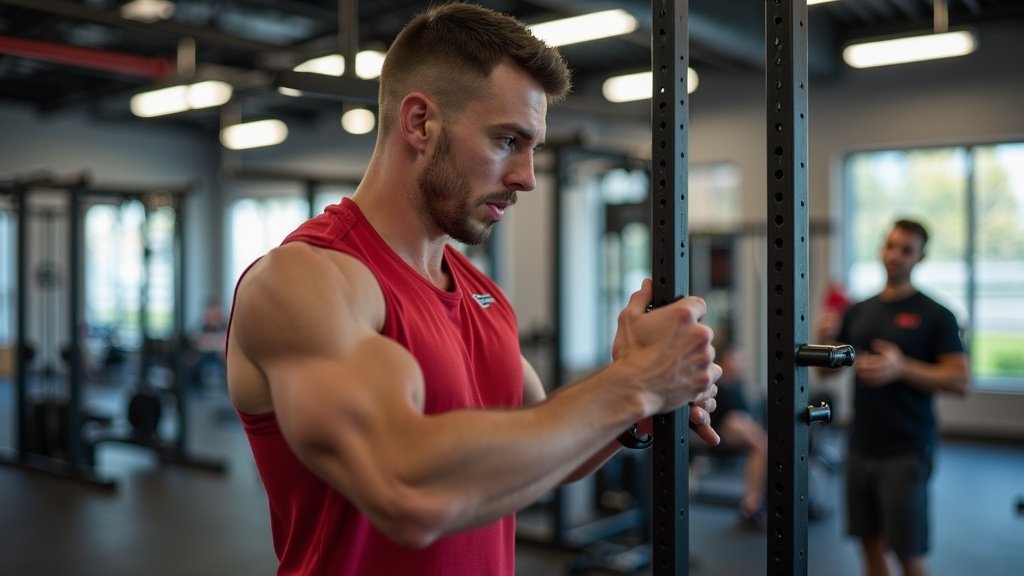
You can also perform cable shrugs one arm at a time. This allows you to focus on each trap individually. It can also help address any muscle imbalances you might have. Simply attach a single handle to the low pulley. Grip the handle with one hand. Perform the shrug motion as described above, but only with one side. Alternate arms or do all your reps on one side before switching.
Using Different Attachments
While a straight bar is common, you can experiment. A rope attachment can offer a slightly different feel and range of motion. Try it and see if you prefer the sensation. Just remember to maintain that straight upward pull.
Benefits of Cable Shrugs
Why bother with cable shrugs? They offer several advantages for your training.
Constant Tension for Muscle Growth
As we mentioned, the cable pulley system provides constant tension. Unlike dumbbells, the weight never truly gets lighter or heavier throughout the movement. This continuous pull is excellent for stimulating muscle hypertrophy. Research indicates that constant tension can be a significant factor in muscle growth (Schoenfeld, 2010).
Improved Posture and Upper Back Strength
Strong trapezius muscles are essential for good posture. They help support your head and shoulders. Cable shrugs can contribute to a more upright posture. This can reduce discomfort from prolonged sitting or slouching. Building these muscles also supports overall upper back health and function. Our guide on corrective exercises can help you improve your posture with functional trainers.
Reduced Shoulder Joint Stress
Compared to some other trap exercises, cable shrugs can be gentler on the shoulder joints. The upward pull from a low pulley allows for a more natural range of motion. Many experts suggest that machine-based exercises can offer a safer alternative for individuals with certain joint concerns. This is because they guide the movement path.
Incorporating Cable Shrugs into Your Routine
Knowing how to do an exercise is one thing; knowing when and how often to do it is another.
Frequency and Sets/Reps
For most people, performing cable shrugs 1-2 times per week is sufficient. Aim for 3-4 sets of 10-15 repetitions. This rep range is generally good for muscle hypertrophy. Listen to your body, and adjust as needed. If you’re doing other heavy pulling exercises, you might need less frequency.
Placement in Your Workout
Cable shrugs can be done towards the end of your upper body workout. They work well after your main compound lifts. This ensures you have enough energy for your heavier exercises first. You can also include them on a dedicated back or shoulder day. Consistency is key!
Checklist for Your Next Cable Shrug Session
Here’s a quick rundown to ensure you nail your next set:
- Pulley set to its lowest position?
- Using a straight bar attachment?
- Grip width is shoulder-width apart?
- Standing tall with a slight knee bend?
- Shoulders moving straight up and down?
- Squeezing traps at the top?
Conclusion
You’ve now learned how to cable shrugs, a powerful tool for building impressive traps. Remember, the key lies in proper setup, controlled movement, and focusing on that peak contraction. By using the low pulley and straight bar, you ensure constant tension for maximum muscle engagement. Don’t let common mistakes like using momentum or poor form hold you back. Start incorporating cable shrugs into your routine 1-2 times a week, focusing on 3-4 sets of 10-15 reps. Your next step? Head to the gym and put these techniques into practice to start building stronger, more defined traps today!
Frequently Asked Questions
How often should I do cable shrugs?
For most people, doing cable shrugs 1-2 times per week is enough to see results. It’s important to give your muscles time to recover and grow between sessions. If you’re already doing a lot of heavy back exercises, you might do them less often.
What is the best weight to use for cable shrugs?
You should use a weight that challenges you to complete 10-15 repetitions with good form. If you can’t maintain a controlled movement or your form breaks down, the weight is too heavy. Prioritize form over lifting heavy.
Can I do cable shrugs if I have shoulder pain?
Cable shrugs can sometimes be easier on the shoulders than other trap exercises. The guided motion of the machine may help. However, if you have existing shoulder pain, it’s always best to consult with a doctor or physical therapist before trying them.
Do cable shrugs help with posture?
Yes, building stronger trapezius muscles through cable shrugs can significantly help improve your posture. Strong traps help support your head and shoulders, which can counteract slouching and promote a more upright stance.
What’s the difference between cable shrugs and dumbbell shrugs?
The main difference is the constant tension provided by the cable machine. With dumbbells, the tension can decrease at the top of the movement. Cables keep your traps working hard throughout the entire range of motion, which can be beneficial for muscle growth.