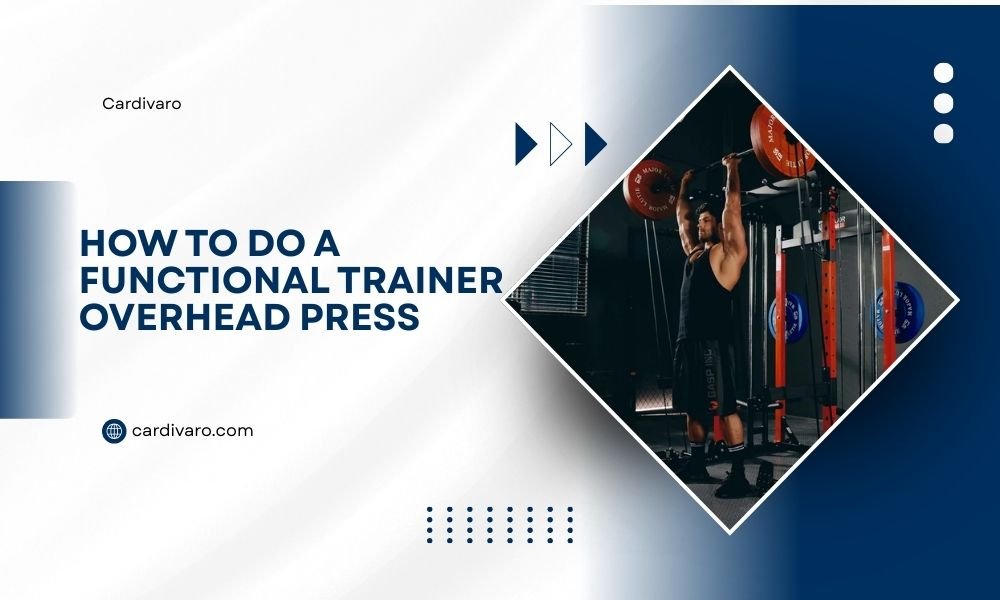
The functional trainer overhead press is performed by setting the pulleys to low position, grabbing handles with palms facing forward, and pressing straight up above your head while keeping your core tight.
Position your feet shoulder-width apart, engage your core muscles, and press the handles upward in a controlled motion until your arms are fully extended overhead.
What Is a Functional Trainer Overhead Press
You’re looking at one of the most effective upper body exercises you can do on a cable machine. The functional trainer overhead press targets your shoulders, triceps, and core all at once.
Think of it as the cable version of a military press. But here’s the cool part – the cables give you constant tension throughout the entire movement. Your muscles work harder than they would with free weights.
Setting Up Your Functional Trainer Machine
Getting your setup right makes all the difference. Let me walk you through each step so you nail it every time.
Adjusting the Pulley Height
Set both pulleys to the lowest position. This gives you the best angle for pressing overhead. If your machine has multiple height settings, go with the bottom ones.
Selecting the Right Weight
Start light. Pick a weight you can press 12-15 times with good form. You can always add more weight later. Most beginners do well starting with 10-20 pounds per side.
Choosing Your Handles
Standard D-handles work great for this exercise. Some people like rope attachments, but I found that handles give you better control and wrist positioning.
Positioning Yourself Correctly
Stand in the center of the machine. Your feet should be about shoulder-width apart. You want equal distance from both pulleys.
Step-by-Step Overhead Press Technique
Now we get to the fun part. Here’s exactly how to perform the movement safely and effectively.
Starting Position
Grab both handles with an overhand grip. Your palms face forward. Bring the handles up to shoulder height. Your elbows should be slightly in front of your body, not flared out to the sides.
Core Engagement
Tighten your abs like someone’s about to tickle you. Keep your back straight but not rigid. You want a slight natural curve in your lower back.
The Press Movement
Press both handles straight up over your head. Move in a controlled motion – no jerky movements. The handles should meet directly above the center of your head.
The Lowering Phase
Lower the handles back to shoulder height slowly. This part is just as important as pressing up. Control the weight on the way down.
Common Mistakes to Avoid
I see these errors all the time in gyms. Don’t worry – they’re easy to fix once you know what to watch for.
Pressing Too Far Forward
Keep the handles moving straight up and down. When you press forward, you put stress on your lower back. Bad news for your spine.
Using Too Much Weight Too Soon
Your ego might want to load up the weight stack. But your shoulders need time to adapt. Build up gradually over weeks, not days.
Arching Your Back
Don’t lean back like you’re doing a limbo dance. This puts dangerous pressure on your lower back. Keep your torso upright throughout the movement.
Holding Your Breath
Breathe out as you press up. Breathe in as you lower the weight. Holding your breath can make you dizzy or mess up your form.
Muscles Worked During the Exercise
This exercise is like getting three workouts in one. Here’s what muscles are doing the heavy lifting.
Primary Muscle Groups
Your deltoids (shoulder muscles) do most of the work. All three parts of your delts get involved – front, middle, and rear portions.
Secondary Muscles
Your triceps help push the weight up. Your core muscles work overtime to keep you stable. Even your upper back muscles chip in to support good posture.
Programming and Sets
How many sets and reps should you do? Research shows that 3-4 sets work well for most people (ACSM).
| Goal | Sets | Reps | Rest |
|---|---|---|---|
| Strength | 3-5 | 3-6 | 2-3 minutes |
| Muscle Growth | 3-4 | 8-12 | 60-90 seconds |
| Endurance | 2-3 | 15-20 | 30-60 seconds |
Progression Tips
Add weight when you can do all your reps with perfect form. Increase by 2.5-5 pounds per side. Small jumps lead to big gains over time.
Safety Considerations
Your safety comes first. Always warm up before heavy lifting. Do some arm circles and light shoulder movements for 5-10 minutes.
When to Stop
Stop if you feel sharp pain in your shoulders or back. Muscle burn is normal. Sharp, shooting pain is not. Listen to your body.
Working Around Injuries
Got shoulder problems? Talk to a doctor or physical therapist first. They can tell you if this exercise is safe for your specific situation.
Variations You Can Try
Once you master the basic movement, these variations keep things interesting.
Single-Arm Press
Press one arm at a time. This challenges your core even more and helps fix strength imbalances between sides.
Seated Version
Sit on a bench between the pulleys. This takes your legs out of the equation and makes your core work harder.
Half-Kneeling Press
Get down on one knee. This position really tests your stability and core strength. Switch knees between sets.
Conclusion
The functional trainer overhead press gives you strong, stable shoulders when done right. Start with light weight and focus on perfect form. Your shoulders will thank you later. Remember to breathe, keep your core tight, and press straight up. With consistent practice, you’ll build impressive upper body strength and stability that carries over to daily activities and other exercises.
Can I do overhead presses if I have shoulder impingement?
You should get clearance from a doctor or physical therapist first. They might suggest modifications like limiting your range of motion or using different angles to work around the problem.
How often should I do functional trainer overhead presses?
Two to three times per week works well for most people. Give your shoulders at least 48 hours of rest between sessions to recover and grow stronger.
What’s the difference between this and a regular barbell overhead press?
The cables provide constant tension throughout the entire movement, while barbells are hardest at the bottom. Cables also allow for more natural movement patterns and are easier on your joints.
Should I press the handles together at the top?
Keep the handles parallel to each other at the top. Pressing them together changes the exercise and can put awkward stress on your shoulder joints.
What if one arm is weaker than the other?
This is totally normal. Use a weight that your weaker arm can handle with good form. The stronger side will adapt, and eventually they’ll balance out with consistent training.