How to Do Straight Arm Cable Pulldowns?
On this page (8 sections)
The straight-arm cable pulldown is a fantastic exercise for your lats and upper back. You can effectively target these muscles by keeping your arms straight and lowering the bar towards your thighs. This movement is excellent for building a wider, more defined back.
This exercise is great for building back thickness and width. It also helps improve your posture by strengthening your upper back muscles. Many gym-goers find it a great way to finish off a back workout. It feels amazing when done right!
- Keep your arms straight.
- Focus on squeezing your shoulder blades.
- Control the weight on the way down.
- Breathe out as you pull.
Ready to learn how to add this powerful exercise to your routine? Let’s walk through exactly how to do straight arm cable pulldowns step by step.
Mastering the Straight Arm Cable Pulldown Technique
You’re looking to sculpt a stronger, more defined back. The straight arm cable pulldown is your new best friend. This exercise targets your lats and rhomboids effectively. It’s a simple movement, but mastering the form is key for results and safety. Let’s get into the nitty-gritty of how to perform it perfectly.
Setting Up for Success
Proper setup is the foundation of any good exercise. It ensures you’re targeting the right muscles and preventing injury. For the straight arm pulldown, this means selecting the right equipment and positioning your body correctly.
Choosing Your Attachment and Weight
You’ll need a cable machine for this exercise. Most gyms have them. A straight bar attachment is ideal. Some people prefer a rope, but we’ll focus on the bar for now. Regarding weight, start light. You want to focus on form, not just brute force. You should be able to control the movement throughout its entire range. A weight that allows you to complete 10-15 repetitions with good form is a great starting point. As you get stronger, you can gradually increase the load.
Finding Your Stance
Stand facing the cable machine. For more on straight bar attachments, see this guide. The pulley should be set at a high position. This means the attachment should be above your head. You’ll want to stand a comfortable distance away from the machine. Aim for about 2-3 feet. This allows for a full range of motion without overstretching. Your feet should be about shoulder-width apart. Keep your knees slightly bent. This provides stability and prevents your lower back from taking unnecessary strain.
Grip and Posture
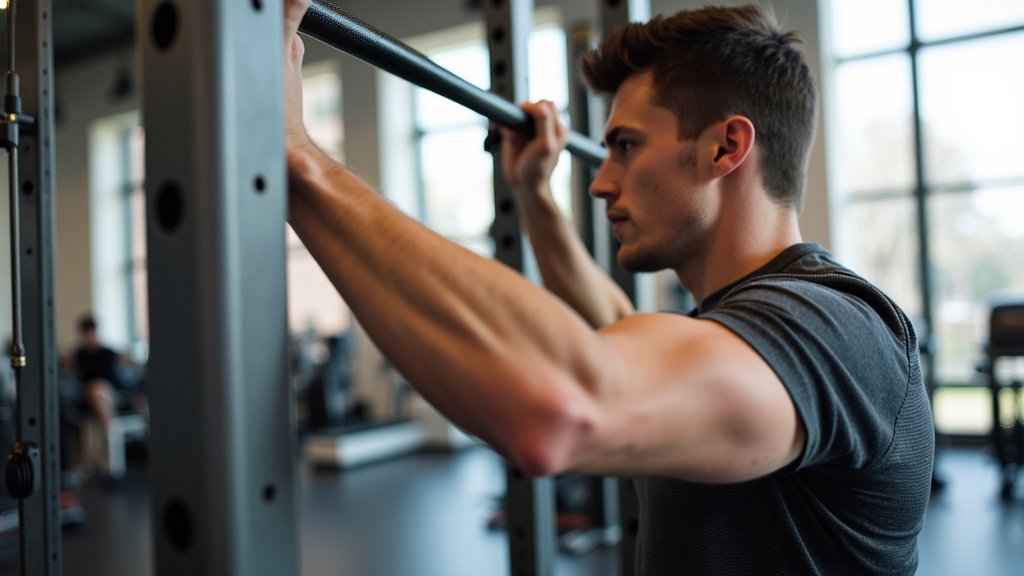
Grab the straight bar with an overhand grip. Your hands should be roughly shoulder-width apart. Some people prefer a slightly narrower or wider grip. Find what feels best for your shoulders. Keep your arms mostly straight. There should be a slight bend in your elbows to protect the joint. Think of it as a soft bend, not a deep knee bend. Engage your core. This helps stabilize your torso throughout the movement. Keep your chest up and shoulders pulled back. Imagine you’re trying to tuck your shoulder blades into your back pockets.
Executing the Straight Arm Pulldown
Now that you’re set up, let’s move through the exercise itself. Remember, the key here is controlled movement and muscle activation. It’s not about just yanking the weight down.
The Downward Phase (Concentric)
This is where you actually pull the bar down. Begin by initiating the movement from your lats. Think about pulling the bar down towards your thighs. Your arms should remain mostly straight throughout this motion. The primary movement should come from your shoulder blades squeezing together. Your elbows will naturally bend slightly more as you pull down. It’s not a bicep curl. Avoid using momentum. Keep the movement controlled. Lower the bar until it’s just past your hips. For a similar upper back exercise, learn how to do face pulls on a cable machine.
The Squeeze and Pause
At the bottom of the movement, focus on a strong squeeze of your back muscles. Really drive your shoulder blades together. You should feel a good contraction in your lats. Hold this position for a brief moment, perhaps a second. This maximizes muscle engagement. It’s like wringing out a sponge – get every last bit of contraction.
The Upward Phase (Eccentric)
This is the return to the starting position. Control the weight as you let the bar rise back up. Don’t just let it snap back. Resist the pull of gravity. Let your shoulder blades slightly separate. Your arms should return to that slight elbow bend. Maintain tension in your lats. The upward phase is just as important as the downward phase for building muscle. You want to feel a stretch in your lats at the top. Make sure you don’t let the weight pull your shoulders forward.
Breathing Pattern
A consistent breathing pattern helps with performance and stability. Exhale as you pull the bar down. This is during the concentric phase when you’re exerting the most effort. Inhale as you control the bar on its way back up. This is the eccentric phase. Proper breathing can help you generate more power and stay focused.
Common Mistakes to Avoid
Even with the best intentions, it’s easy to fall into some common traps. Being aware of these can help you correct your form and get the most out of the exercise.
Bending Your Arms Too Much
This is perhaps the most common mistake. If you bend your elbows significantly, you turn it into a row variation. The goal is to keep the arms straight and steady. The movement should come from the shoulder joint and the scapula. Think of your arms as levers. They shouldn’t be doing the primary lifting.
Using Too Much Weight
We touched on this during setup. If the weight is too heavy, you’ll compensate. You might swing your body or bend your arms excessively. This not only reduces the effectiveness for your lats but also increases the risk of injury. It’s better to use a lighter weight and focus on mind-muscle connection. You want to feel your lats working, not just your ego lifting heavy.
Rounding Your Back
Your back should remain in a neutral, slightly arched position throughout the exercise. Rounding your lower back can put undue stress on your spine. Keep your core engaged to maintain a stable torso. Imagine bracing yourself as if you were about to be lightly punched in the stomach. This will help protect your spine.
Letting Momentum Take Over
Jerking the weight or swinging your body is a sign you’re using too much weight or not controlling the movement. For more on single arm cable pulldowns, see this guide. The straight arm pulldown is a controlled isolation exercise. Focus on smooth, deliberate motions. If you find yourself swinging, reduce the weight immediately. Focus on the squeeze at the bottom and the controlled stretch at the top.
Variations and Progressions
Once you’ve got the basic straight arm pulldown down, you might wonder how to keep progressing. For more on straight arm pulldown form, see this guide. There are ways to make it more challenging or slightly alter the stimulus.
Unilateral (Single-Arm) Pulldowns
Performing the exercise with one arm at a time can be very effective. It allows you to focus more intensely on each side. You can also use a rope attachment for this. This variation can help address any muscle imbalances you might have between your left and right sides. Stand with one foot slightly forward for better stability.
Using a Rope Attachment
A rope attachment offers a slightly different feel. It allows for a more natural range of motion at the bottom. You can sometimes get a better squeeze by turning your palms inward at the end of the movement. This can hit the muscles from a slightly different angle. Experiment to see which you prefer.
Increasing Reps or Sets
The simplest way to progress is to do more. Gradually increase the number of repetitions per set. You can also add an extra set. For example, if you’re doing 3 sets of 10, try for 3 sets of 12. Once you can comfortably hit 15 reps, you might consider increasing the weight slightly.
Checklist for Perfect Form
Keep this handy next time you hit the gym. A quick check can make a world of difference!
High pulley setting? Check.
Feet shoulder-width apart, knees slightly bent? Check.
Arms mostly straight with a slight elbow bend? Check.
Core engaged, chest up, shoulders back? Check.
Pull with your lats, squeeze shoulder blades? Check.
Control the weight down and up? Check.
Conclusion
You’ve now got the knowledge to master the straight arm cable pulldown. Remember, it’s all about controlled movements and feeling your back muscles work. Focus on keeping your arms straight, squeezing those shoulder blades, and controlling the weight through every phase of the lift. By avoiding common mistakes like bending your elbows too much or using momentum, you’ll maximize your gains and stay safe. Now, head to the gym and put these techniques into practice. Your wider, more defined back awaits!
Frequently Asked Questions
How many reps and sets should I do for straight arm cable pulldowns?
For building muscle and strength, aim for 3-4 sets of 10-15 repetitions. Focus on quality over quantity. If you’re new to the exercise, start with fewer sets and gradually increase as you feel stronger.
Can I do straight arm cable pulldowns if I have shoulder pain?
If you experience shoulder pain, proceed with caution. It’s best to start with very light weight or a resistance band. Ensure your arms have a slight bend and avoid letting the weight pull your shoulders forward. Consult a physical therapist if pain persists.
What’s the difference between straight arm pulldowns and lat pulldowns?
Straight arm pulldowns primarily isolate your lats and upper back with minimal elbow bend, focusing on scapular retraction. Traditional lat pulldowns involve bending your elbows more significantly and allow for a greater range of motion, engaging your biceps more.
Why am I not feeling this in my back, but my arms instead?
This usually means you’re bending your elbows too much or using your biceps to pull the weight. Focus on initiating the movement from your shoulder blades and keeping your arms relatively straight. Think about pulling your elbows down and back, not just lifting the weight.
Can I use a straight arm pulldown machine if my gym doesn’t have a cable machine?
While a dedicated machine can be useful, you can effectively replicate the movement with resistance bands attached to a high anchor point. The principle remains the same: keeping your arms straight and pulling downwards from your upper back.