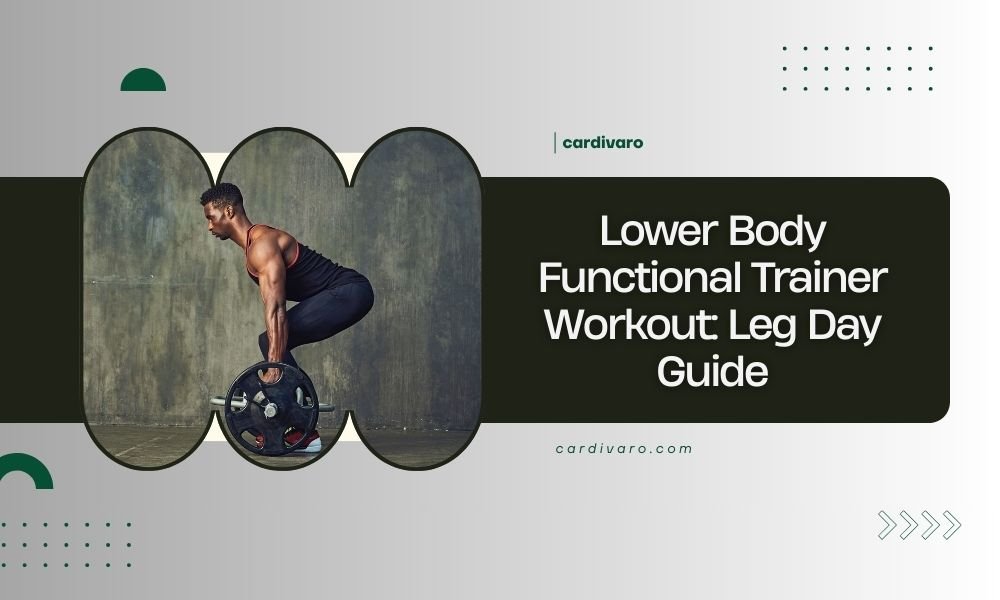
A lower body functional trainer workout targets your legs, glutes, and hips using cable resistance to build strength and improve daily movement patterns.
This comprehensive leg day guide covers 12 effective exercises that work all major muscle groups in your lower body while enhancing balance and coordination.
What Makes Functional Trainer Workouts Different
Functional trainers use cables and pulleys to create smooth, controlled resistance. Unlike free weights, cables maintain constant tension throughout each movement. This means your muscles work harder during both the lifting and lowering phases.
The adjustable height settings let you target muscles from multiple angles. You can position cables low for squats, mid-level for lunges, or high for unique pulling movements. This variety keeps your workouts fresh and challenges your body in new ways.
Benefits of Cable-Based Lower Body Training
Cable machines offer several advantages over traditional weights. The smooth resistance reduces joint stress while maintaining muscle tension. You also get better control over the weight, which helps prevent injury.
Research shows that functional training improves real-world movement patterns (NIH). When you train with cables, you’re teaching your body to move better during daily activities like climbing stairs or lifting objects.
Essential Setup and Safety Tips
Proper Machine Adjustment
Start by checking the cable height for each exercise. Most movements require the cable positioned at ankle, knee, or hip level. Take a moment to adjust before you begin.
Set the weight stack to a manageable load. You can always increase resistance as you get stronger. Starting too heavy often leads to poor form and potential injury.
Safety Checklist Before You Start
- Check that all pins are securely locked in place
- Test the cable attachment by giving it a gentle tug
- Clear the area around the machine of any obstacles
- Have a water bottle nearby to stay hydrated
- Wear proper athletic shoes with good grip
Complete Lower Body Workout Routine
This workout targets every major muscle group in your lower body. Plan to spend 30-45 minutes completing all exercises. Rest 60-90 seconds between sets to allow proper recovery.
Warm-Up Movements
Never skip your warm-up. Cold muscles are more prone to injury and perform poorly. Spend 5-10 minutes preparing your body for the work ahead.
Dynamic Leg Swings
Hold the functional trainer frame for support. Swing one leg forward and backward 10 times. Then swing it side to side 10 times. Repeat with the other leg. This movement loosens your hip joints and activates your core.
Bodyweight Squats
Perform 15 slow, controlled bodyweight squats. Focus on proper form rather than speed. This primes your muscles for the weighted exercises coming next.
Primary Exercises
Cable Squats
Set the cable to low position and attach a rope or handle. Hold it at chest level and step back until you feel tension. Squat down as if sitting in a chair, keeping your chest up and knees behind your toes.
The cable provides counterbalance, making it easier to maintain proper form. Perform 3 sets of 12-15 repetitions. This exercise builds your quadriceps, glutes, and core strength.
Single-Leg Romanian Deadlifts
This exercise challenges your balance while strengthening your hamstrings and glutes. Set the cable to low position and use a single handle attachment.
Stand on one foot while holding the handle with the opposite hand. Hinge at your hip, extending your free leg behind you. Keep your back straight and lower the weight slowly. Return to starting position and repeat for 10 reps per side.
Lateral Lunges
Position the cable at chest height and hold the handle with both hands. Step to one side, pushing your hips back and bending the stepping leg. Your other leg stays straight.
This movement targets your inner thighs and glutes while improving hip mobility. Complete 12 lunges on each side for 3 sets.
Cable Step-Ups
You’ll need a sturdy box or platform for this exercise. Set the cable to low position and hold handles in each hand. Step up onto the box with one foot, driving through your heel.
Step down slowly and repeat. This functional movement mimics climbing stairs and builds unilateral leg strength. Perform 10 step-ups per leg.
Glute Kickbacks
Attach an ankle strap to the low cable and secure it around your foot. Face the machine and hold the frame for support. Kick your leg straight back, squeezing your glute at the top.
Keep your core tight and avoid arching your back. This isolation exercise directly targets your glutes. Complete 15 reps per leg for 2 sets.
Cable Calf Raises
Set up with the cable at low position and stand on a platform or step. Hold the handle and rise up onto your toes, squeezing your calves at the top.
Lower slowly to feel a stretch in your calves. The cable provides consistent resistance throughout the movement. Aim for 20 repetitions across 2 sets.
Advanced Exercise Variations
Bulgarian Split Squats
Place your rear foot on a bench behind you. Hold the cable handle at chest level and perform single-leg squats. This advanced variation demands excellent balance and leg strength.
The cable helps stabilize your upper body while your legs do the work. Start with 8 reps per leg and build up gradually.
Cable Curtsy Lunges
This unique movement pattern targets your glutes from a different angle. Hold the cable handle and step one leg behind and across your body, like performing a curtsy.
Lower into a lunge position and return to standing. The crossing motion activates smaller stabilizer muscles that regular lunges miss.
Programming Your Workouts
Weekly Schedule Options
Beginners should start with 2 lower body sessions per week. Allow at least 48 hours between workouts for muscle recovery. More experienced users can handle 3 sessions weekly.
Listen to your body and adjust frequency based on how you feel. Muscle soreness is normal, but joint pain indicates you need more rest.
Progressive Overload Strategies
| Week | Sets | Reps | Rest Period |
|---|---|---|---|
| 1-2 | 2 | 10-12 | 90 seconds |
| 3-4 | 3 | 12-15 | 75 seconds |
| 5-6 | 3 | 15-18 | 60 seconds |
Gradually increase weight when you can complete all reps with perfect form. Small increases of 5-10 pounds work best for most exercises.
Common Mistakes to Avoid
Using Too Much Weight Too Soon
Many people grab heavy weights on their first attempt. This leads to poor form and increases injury risk. Start light and focus on movement quality over quantity.
Your muscles need time to adapt to new movement patterns. Rushing the process often results in setbacks rather than progress.
Neglecting Unilateral Training
Single-leg exercises reveal strength imbalances between your left and right sides. Include at least 2-3 unilateral movements in every lower body workout.
Working one leg at a time also improves balance and coordination. These skills transfer directly to sports and daily activities.
Conclusion
Functional trainer workouts offer an excellent way to build lower body strength while improving movement quality. The constant cable tension challenges your muscles differently than free weights, leading to better overall development.
Start with the basic exercises and progress gradually. Focus on form over weight, and don’t rush the process. Your legs will get stronger, and you’ll move better in daily life.
Remember to warm up properly and listen to your body. Consistency beats intensity when building long-term strength and fitness.
How often should I do lower body functional trainer workouts?
Start with 2 sessions per week, allowing 48-72 hours between workouts. Advanced users can train 3 times weekly, but always prioritize recovery over frequency.
Can functional trainer exercises replace traditional squats and deadlifts?
Cable exercises provide excellent muscle activation and are easier on joints, but they typically allow less total weight than barbell movements. Use them as your primary training or as supplements to free weight exercises.
What weight should I start with on the functional trainer?
Begin with 20-40% of your body weight for most exercises. You should be able to complete all reps with perfect form while feeling challenged on the last few repetitions.
Are functional trainer workouts suitable for beginners?
Yes, the guided cable path makes these exercises safer for new users compared to free weights. The adjustable resistance also allows for very gradual progression as strength improves.
How long should a complete lower body functional trainer workout take?
Plan for 30-45 minutes including warm-up and cool-down. This allows adequate time to complete 6-8 exercises with proper rest periods between sets.