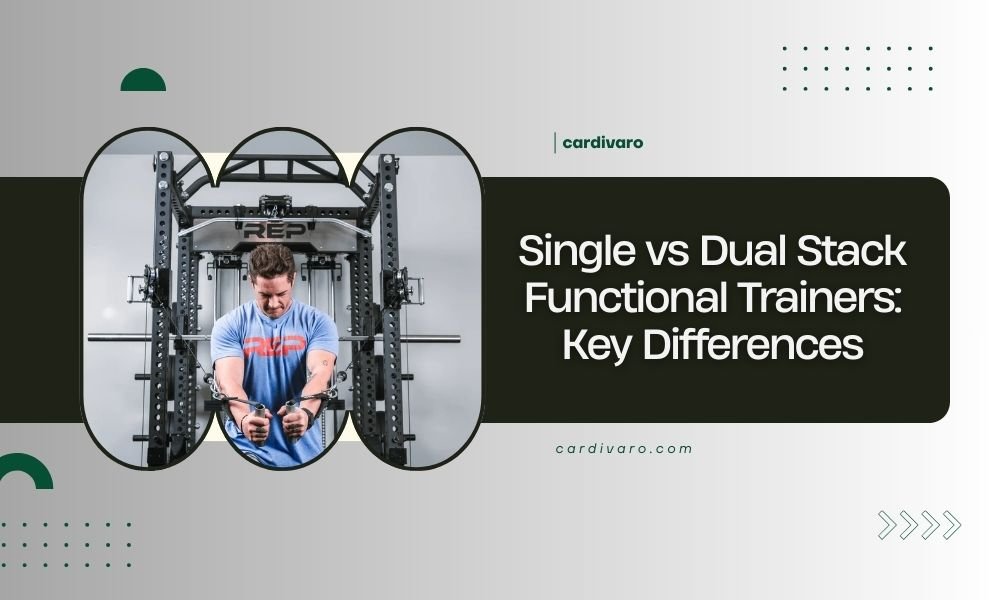
Single stack functional trainers use one weight stack with pulleys to create resistance, while dual stack trainers feature two separate weight stacks for independent arm movement.
The main difference between single vs dual stack functional trainers lies in exercise variety and workout intensity – dual stack machines offer more training options but cost significantly more.
What Are Single Stack Functional Trainers?
Single stack functional trainers are cable machines built around one central weight stack. You adjust resistance by moving a pin up or down the weight stack.
Think of it like having one engine powering your entire workout. When you pull on one cable, it affects the other side too. This shared resistance system keeps things simple but limits some exercise options.
How Single Stack Systems Work
The weight stack connects to both cable arms through a pulley system. When you grab one handle, you’re working against the full weight you selected.
If you try to use both arms at once, the resistance splits between them. This creates an interesting challenge but can feel awkward for some exercises.
Weight Distribution in Single Stack Machines
Let’s say you set the weight at 100 pounds. Using one arm gives you the full 100 pounds of resistance. Using both arms together splits that weight, giving you roughly 50 pounds per arm.
This math works fine for some exercises but gets tricky when you want different resistance levels for each arm.
Understanding Dual Stack Functional Trainers
Dual stack functional trainers have two separate weight stacks – one for each side. You can set different weights on each stack and work both arms independently.
It’s like having two single-arm cable machines standing side by side. Your left arm can work against 80 pounds while your right arm handles 60 pounds.
Independent Resistance Benefits
Each arm works against its own weight stack. No sharing, no splitting, no compromise. You get exactly the resistance you set for each side.
This independence opens up way more exercise possibilities. You can do true bilateral training, work on muscle imbalances, and perform exercises that just don’t work well on single stack machines.
Bilateral Training Advantages
Most people have strength differences between their left and right sides. Dual stack trainers let you address these imbalances directly.
You can set your weaker side to lighter weight while challenging your stronger side appropriately. Over time, this helps balance out your strength development.
Key Performance Differences
The performance gap between single and dual stack trainers shows up most clearly during your workouts. Here’s where you’ll notice the biggest differences.
Exercise Variety Comparison
Single stack machines handle basic movements well. Lat pulldowns, cable rows, chest flies, and tricep pushdowns all work great.
Dual stack machines do everything single stack machines do, plus exercises that require independent arm movement. Think alternating chest presses, single-arm rows while the other arm stabilizes, and complex functional movement patterns.
Functional Movement Patterns
Real-life movements rarely use both arms identically. When you lift a box, climb stairs, or play sports, each arm often does something different.
Dual stack trainers let you train these real-world movement patterns. Single stack machines keep you more locked into symmetrical exercises.
Workout Intensity Options
Single stack trainers work best for moderate-intensity workouts. The shared resistance system makes it harder to push to your absolute limits safely.
Dual stack systems let you go heavier and train more intensely. Each arm can work at its own maximum capacity without affecting the other side.
Space and Installation Requirements
Both trainer types need similar floor space – roughly 8 feet by 6 feet for comfortable use. The real difference comes in weight and complexity.
Single Stack Space Efficiency
Single stack machines are more compact in design. One weight stack takes up less room than two, making these units slightly more space-efficient.
They’re also easier to position in your home gym since you only need to consider one weight stack’s location.
Installation Simplicity
Moving and setting up a single stack trainer is straightforward. Fewer parts mean fewer things to assemble and adjust.
Most people can handle single stack assembly with basic tools and a friend to help move the weight stack.
Dual Stack Space Considerations
Dual stack machines need more careful planning. Two weight stacks mean more weight distribution across your floor.
You’ll want to make sure your floor can handle the extra weight and that you have clear access to both sides for weight adjustments.
Cost Analysis and Value
Price differences between single and dual stack trainers can be significant. Let me break down what you’re paying for.
| Feature | Single Stack | Dual Stack |
|---|---|---|
| Average Price Range | $1,200 – $3,500 | $2,800 – $8,000 |
| Weight Stacks | 1 (150-200 lbs) | 2 (150-200 lbs each) |
| Exercise Options | 50-80 exercises | 100+ exercises |
| Maintenance Complexity | Lower | Higher |
Long-term Investment Value
Single stack trainers offer excellent value for beginners and casual fitness enthusiasts. You get a solid workout machine without breaking the bank.
Dual stack trainers make more sense if you’re serious about strength training or have multiple family members with different fitness levels.
Maintenance and Repair Costs
More parts mean more potential maintenance issues. Dual stack systems have twice the cables, pulleys, and weight stacks to maintain.
From what I’ve read in equipment reviews, single stack machines tend to have fewer mechanical problems over time.
Who Should Choose Single Stack?
Single stack functional trainers work best for specific types of users and situations.
Best for Beginners
If you’re new to strength training, single stack machines offer plenty of challenge without overwhelming complexity. You can learn proper form and build strength effectively.
The simpler design means less confusion about weight settings and exercise setup.
Budget-Conscious Buyers
When money is tight, single stack trainers give you the most bang for your buck. You still get a full-body workout machine at a much lower price point.
Limited Space Situations
Apartments, small home gyms, or shared spaces often work better with single stack machines. They’re typically more compact and easier to fit into tight spaces.
Who Should Choose Dual Stack?
Dual stack systems shine in specific circumstances and for certain types of users.
Serious Athletes and Lifters
If you’re training for sports, bodybuilding, or just love pushing your limits, dual stack machines offer the variety and intensity you need.
The ability to train each side independently becomes really valuable as you advance in your fitness journey.
Multiple User Households
Families with different strength levels benefit from dual stack flexibility. Dad can set one side heavy while mom uses lighter resistance on the other side.
This flexibility makes dual stack trainers great for shared home gyms.
Rehabilitation and Therapy
Physical therapy and injury recovery often require different resistance levels for each side of the body. Dual stack systems excel in these situations.
Many experts recommend independent resistance training for addressing muscle imbalances that contribute to injuries.
Making Your Decision
Your choice between single and dual stack functional trainers should match your goals, budget, and space situation.
Questions to Ask Yourself
- How much can you realistically spend?
- Who will use this machine regularly?
- What are your main fitness goals?
- How much space do you have available?
- Do you need to address strength imbalances?
Future-Proofing Your Purchase
Think about where you’ll be in two years. Will you outgrow a single stack machine? Or will dual stack complexity go unused?
It’s better to buy something you’ll use consistently than to overspend on features you don’t need.
Conclusion
Single stack functional trainers offer simplicity, affordability, and solid workout options for most home gym users. They’re perfect if you want effective strength training without complexity or high costs.
Dual stack systems provide superior exercise variety, independent resistance, and training flexibility at a higher price point. Choose dual stack if you’re serious about strength training, have multiple users, or need to address muscle imbalances.
Both options will give you great workouts. Your decision comes down to matching the machine’s capabilities with your specific needs, space, and budget. Don’t overthink it – either choice beats not having a functional trainer at all.
What’s the main advantage of dual stack over single stack functional trainers?
The main advantage is independent resistance control. Each arm can work against different weight levels, allowing for better muscle balance training, higher exercise variety, and the ability to accommodate multiple users with different strength levels on the same machine.
Can you do the same exercises on both single and dual stack trainers?
You can do most basic exercises on both types, but dual stack trainers offer significantly more exercise options. Single stack machines work great for symmetrical movements like lat pulldowns and chest flies, while dual stack systems also handle alternating movements, unilateral training, and complex functional patterns that require independent arm movement.
Which type requires less maintenance over time?
Single stack functional trainers typically require less maintenance since they have fewer moving parts, cables, and pulleys. With only one weight stack and simpler pulley systems, there are fewer components that can wear out or need adjustment compared to dual stack systems.
How much space difference is there between single and dual stack trainers?
The floor space requirement is similar for both – about 8 by 6 feet for comfortable use. However, dual stack machines are usually wider and heavier due to having two weight stacks. The main difference is in weight distribution and the need for access to both sides for weight adjustments.
Is the price difference between single and dual stack trainers worth it?
The price difference is worth it if you’re a serious lifter, have multiple users with different strength levels, or need to address muscle imbalances. For casual fitness enthusiasts or beginners, single stack trainers provide excellent value and sufficient exercise variety at a much lower cost.