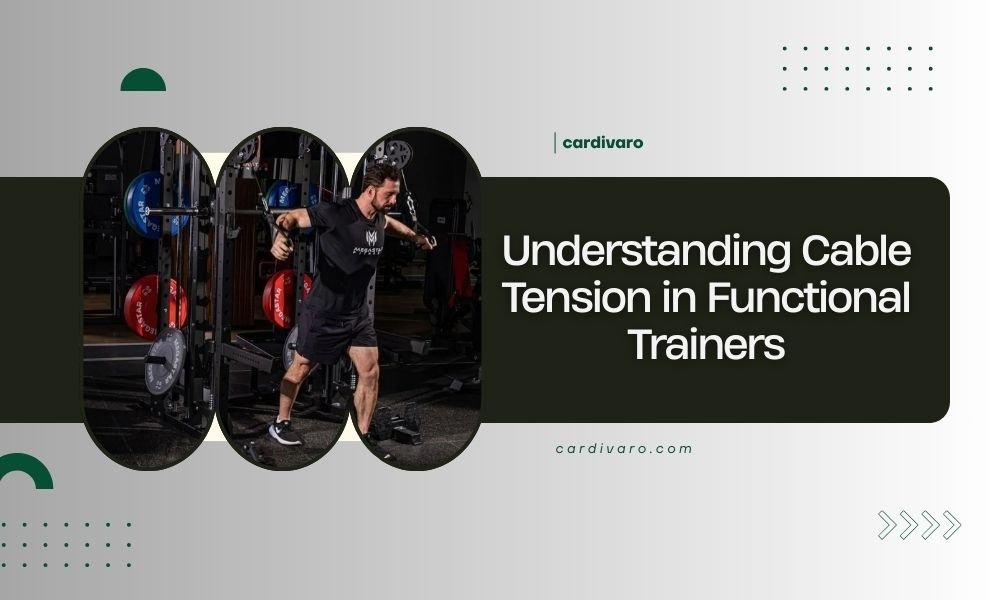
Cable tension in functional trainers is the resistance level created by weight stacks, pulleys, and cables working together to provide smooth, adjustable resistance for your workouts.
Understanding cable tension helps you choose the right resistance, maintain proper form, and get better results from your home gym functional trainer.
What Is Cable Tension in Functional Trainers
Think of cable tension like the grip strength of a handshake. Too loose, and you won’t feel much resistance. Too tight, and you can’t move properly.
Cable tension comes from weight stacks connected to cables through a pulley system. When you pull the handle, you’re working against gravity pulling those weight plates down.
How Cable Systems Create Resistance
Your functional trainer uses a simple but smart setup. Weight plates sit on a stack. A cable runs over pulleys and connects to your handle.
When you select 50 pounds on the weight stack, that’s how much you’re lifting against gravity. The pulleys make the movement smooth and change the direction of resistance.
The Role of Pulleys in Tension Control
Pulleys do more than just redirect cables. They can also change the amount of tension you feel.
Some functional trainers use compound pulley systems. These can reduce or increase the actual weight you feel compared to what’s selected on the stack.
Single Pulley Systems
With a single pulley, what you see is what you get. Select 30 pounds, and you lift 30 pounds of resistance.
Compound Pulley Systems
Compound systems use multiple pulleys. They might make 60 pounds on the stack feel like 30 pounds at the handle. This lets manufacturers use smaller weight stacks while still providing good resistance.
Factors That Affect Cable Tension
Several things change how cable tension feels during your workout. Understanding these helps you get consistent results.
Weight Stack Selection
This one’s obvious, but it’s your main control. Most functional trainers let you adjust in 10 or 20-pound increments.
Some machines offer 5-pound micro-adjustments with magnetic add-on weights. These help you progress gradually.
Cable Angle and Position
Here’s something many people miss. The angle of the cable changes how the resistance feels.
When the cable pulls straight down, you work against full gravity. When it pulls at an angle, the effective resistance changes throughout your range of motion.
High Pulley Positions
High pulleys work great for lat pulldowns and overhead pressing movements. The resistance feels strongest when your arms are extended.
Mid Pulley Positions
Mid-level pulleys excel for rowing and chest exercises. They provide more consistent tension through your full range of motion.
Low Pulley Positions
Low pulleys target your legs and provide upward resistance. They’re perfect for squats, rows, and upright pulling movements.
Range of Motion Impact
Cable tension isn’t always the same throughout your movement. At some points, you’ll feel more resistance than others.
This happens because of leverage changes in your body and the cable angle. It’s normal and actually beneficial for muscle development.
Adjusting Cable Tension for Different Exercises
Different exercises need different tension approaches. You wouldn’t use the same weight for bicep curls as you would for squats.
Upper Body Exercises
Upper body movements usually need less absolute weight but more control. Start lighter than you think you need.
- Chest exercises: 40-70% of your bench press weight
- Back exercises: Similar to your rowing weight
- Shoulder exercises: Start with 20-30% less than dumbbell weights
- Arm exercises: Use the lightest settings to start
Lower Body Exercises
Your legs are stronger, so they can handle more resistance. But cable exercises feel different than free weights.
- Squats: Start with 50-60% of your barbell squat
- Lunges: Use 30-40% of your squat weight
- Leg extensions: Match your machine leg extension weight
Core and Stability Work
Core exercises on cables focus more on control than heavy weight. Less is more here.
The constant tension from cables makes even light weights challenging for your core muscles.
Common Cable Tension Problems and Solutions
I’ve researched the most common issues people face with functional trainer cable tension. Here are the problems and fixes.
Inconsistent Resistance
If your cable tension feels uneven, check for worn cables or sticky pulleys. Regular maintenance prevents this issue.
Signs of Cable Wear
- Frayed or kinked cables
- Sticky or jerky movement
- Unusual noises during use
- Uneven resistance through range of motion
Too Much or Too Little Tension
This usually comes from wrong weight selection or misunderstanding your machine’s pulley system.
Check your manual to understand if your machine has a 1:1 or 2:1 pulley ratio. This affects how much weight you actually lift.
Cable Stretching Over Time
Cables stretch with use. This makes the tension feel lighter even with the same weight selected.
Most quality functional trainers use steel cables that resist stretching. But even these need eventual replacement.
Safety Considerations for Cable Tension
Working with cable tension means working with significant forces. Smart safety habits protect you from injury.
Proper Weight Selection
Always start lighter than you think you need. Cable exercises feel different than free weights, even when the numbers match.
You can always add weight. You can’t un-strain a muscle you pushed too hard.
Controlled Movements
Don’t let the weight stack slam down between reps. This damages your machine and reduces the training effect.
Control both the lifting and lowering phases of every movement. This maximizes your results and protects the equipment.
Maintaining Optimal Cable Tension
Your functional trainer needs regular care to maintain proper cable tension and smooth operation.
Regular Inspection
Check your cables monthly for signs of wear. Look for fraying, kinks, or flat spots that could lead to failure.
Inspect pulleys for smooth rotation and proper alignment. Misaligned pulleys cause uneven cable wear.
Lubrication Schedule
Most functional trainers need quarterly lubrication of moving parts. Use the lubricant recommended by your manufacturer.
Clean pulleys remove dust and debris that can cause jerky movement and uneven tension.
| Maintenance Task | Frequency | Tools Needed |
|---|---|---|
| Cable inspection | Monthly | Visual check only |
| Pulley lubrication | Quarterly | Manufacturer lubricant |
| Weight stack alignment | Every 6 months | Allen wrench set |
| Cable replacement | As needed | Professional service |
Conclusion
Understanding cable tension transforms your functional trainer from a confusing machine into a precise fitness tool. You now know how weight stacks, pulleys, and cables work together to create smooth, adjustable resistance.
Remember to start with lighter weights than you expect, maintain your equipment regularly, and focus on controlled movements. With this knowledge, you’ll get better workouts and keep your functional trainer running smoothly for years.
How often should I adjust cable tension during workouts?
Adjust cable tension between different exercises, not between sets of the same exercise. Each muscle group and movement pattern needs its own appropriate resistance level for best results.
Why does cable tension feel different than free weights?
Cable systems provide constant tension throughout your range of motion, while free weights vary based on gravity and leverage. This makes cables feel more challenging in stretched positions and easier at peak contraction points.
Can I damage my functional trainer by using too much cable tension?
Using maximum weight settings won’t damage a quality functional trainer, but jerky movements and letting weights slam can. Always use controlled motions regardless of the weight selected.
What’s the difference between 1:1 and 2:1 cable ratios?
A 1:1 ratio means you lift exactly the weight shown on the stack. A 2:1 ratio uses compound pulleys, so 100 pounds on the stack feels like 50 pounds at the handle, but allows for smoother movement.
How do I know when my cables need replacement?
Replace cables when you see fraying, flat spots, kinks, or if they feel sticky during movement. Most quality cables last 3-5 years with regular home use, but heavy use or poor maintenance can shorten this lifespan.