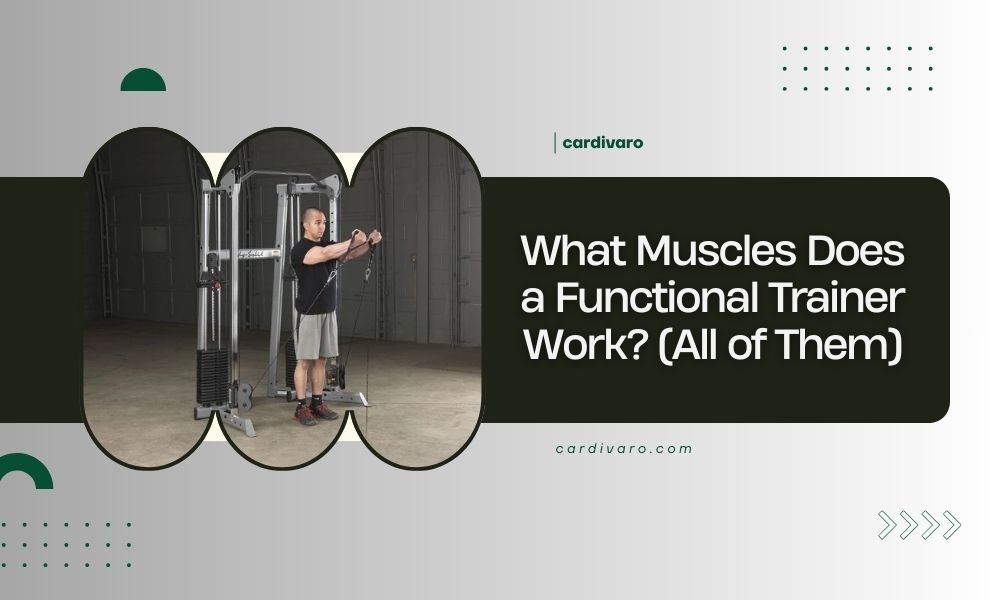
A functional trainer works every major muscle group in your body through cable-based resistance exercises that allow 360-degree movement patterns.
The beauty of functional trainers lies in their ability to target multiple muscles simultaneously while mimicking real-world movements your body actually uses daily.
Upper Body Muscles Targeted by Functional Trainers
Your upper body gets a complete workout with functional trainers. The cable system lets you pull, push, and rotate in ways that hit muscles from different angles.
Chest Muscles (Pectorals)
Cable chest presses and flyes work your pecs differently than traditional weights. You get constant tension throughout the entire movement.
The adjustable cable heights mean you can target your upper, middle, and lower chest sections. Try high-to-low cable flyes for your lower pecs, or low-to-high for upper chest development.
Back Muscles (Latissimus Dorsi and Rhomboids)
Your lats and rhomboids love functional trainer workouts. Cable rows, lat pulldowns, and reverse flyes build a strong, wide back.
The smooth cable motion lets you really focus on squeezing your shoulder blades together. This helps fix that hunched-over posture many of us get from sitting all day.
Shoulder Muscles (Deltoids)
All three deltoid heads get attention on a functional trainer. Front raises target your anterior delts. Lateral raises hit the middle section. Rear delt flyes work the back of your shoulders.
The cable system gives you more control than dumbbells. You can adjust the resistance curve to match your strength throughout the movement.
Arm Muscles (Biceps and Triceps)
Cable curls and tricep pushdowns are staples on functional trainers. The constant tension keeps your muscles working harder than free weights.
You can also do hammer curls, overhead extensions, and rope pushdowns. The variety keeps your arm workouts fresh and challenging.
Lower Body Muscles Worked
Don’t think functional trainers are just for upper body work. Your legs and glutes get serious attention too.
Quadriceps (Front Thigh Muscles)
Cable squats and lunges hit your quads hard. The resistance comes from a different angle than traditional squats, which challenges your muscles in new ways.
Single-leg exercises like Bulgarian split squats work each leg independently. This helps fix muscle imbalances between your left and right sides.
Hamstrings (Back Thigh Muscles)
Cable Romanian deadlifts and leg curls target your hamstrings effectively. The smooth resistance helps you feel the muscle stretch and contract.
Many people have weak hamstrings compared to their quads. Functional trainers let you focus on building that back-thigh strength safely.
Glutes (Butt Muscles)
Your glutes are powerhouses, and functional trainers wake them up. Cable kickbacks, squats, and lateral walks get those muscles firing.
Research shows that strong glutes help prevent lower back pain and improve athletic performance (American Council on Exercise). The cable resistance makes your glutes work through their full range of motion.
Calves
Cable calf raises give you a different feel than traditional calf exercises. You can adjust the angle and resistance to target both your gastrocnemius and soleus muscles.
Core Muscles Activation
Here’s where functional trainers really shine. Almost every exercise engages your core muscles as stabilizers.
Abdominal Muscles
Cable crunches and wood chops directly target your abs. But even exercises like chest presses force your core to work as you maintain proper posture.
The unstable nature of cable resistance means your deep core muscles stay active throughout your workout. It’s like getting bonus ab work with every exercise.
Obliques (Side Abs)
Rotational movements on functional trainers are perfect for your obliques. Wood chops, Russian twists, and side bends all hit these important muscles.
Strong obliques help with everyday movements like reaching across your body or twisting to look behind you while driving.
Lower Back (Erector Spinae)
Your lower back muscles work constantly during functional trainer exercises. They keep your spine stable while you perform movements in different planes.
This constant engagement helps build endurance in these muscles. That translates to better posture and less back pain in daily life.
Full-Body Movement Patterns
The real magic happens when you combine muscle groups into functional movement patterns.
Push Movements
Chest presses, shoulder presses, and tricep extensions all fall into this category. These movements work multiple muscles together, just like pushing a heavy door or moving furniture.
Pull Movements
Rows, pulldowns, and reverse flyes train your pulling muscles. This helps balance out all the pushing we do in modern life.
Horizontal Pulling
Cable rows work your lats, rhomboids, and rear delts together. This movement pattern helps counteract forward head posture.
Vertical Pulling
Lat pulldowns and high pulls target your back muscles from a different angle. This builds width in your upper body.
Rotational Movements
Wood chops and anti-rotation exercises train your body to create and resist rotational forces. This is huge for sports performance and injury prevention.
Stabilizer Muscles
Functional trainers excel at working your stabilizer muscles. These small but important muscles keep your joints stable during movement.
Free weights work stabilizers too, but cables provide a unique challenge. The resistance can come from any angle, forcing different stabilizer muscles to kick in.
Deep Core Stabilizers
Muscles like your transverse abdominis work overtime during cable exercises. These deep muscles create internal pressure to protect your spine.
Shoulder Stabilizers
Your rotator cuff muscles get a workout with every upper body cable exercise. Strong rotator cuffs help prevent shoulder injuries.
Muscle Engagement Benefits
Why does hitting all these muscles matter? Your body works as a connected system, not isolated parts.
When you train multiple muscles together, you build coordination and strength that transfers to real-life activities. Carrying groceries, playing with kids, or playing sports all require multiple muscles working together.
Studies suggest that functional training improves balance, coordination, and reduces injury risk compared to single-muscle exercises (Journal of Sports Science and Medicine).
Conclusion
Functional trainers truly work your entire body. From your smallest stabilizer muscles to your largest power producers, every muscle gets attention. The cable system provides smooth, adjustable resistance that challenges your muscles through full ranges of motion. Whether you want to build strength, improve daily function, or prevent injuries, functional trainers deliver a complete muscle workout that traditional machines can’t match.
Can functional trainers replace free weights completely?
While functional trainers work all your muscles effectively, combining them with some free weight exercises gives you the most complete training program. Free weights offer different stability challenges that complement cable work.
How often should I use a functional trainer for full-body workouts?
Most people see great results training 3-4 times per week on a functional trainer. This gives your muscles time to recover while maintaining consistent progress. Listen to your body and adjust frequency based on your recovery.
Do functional trainers work small stabilizer muscles better than other equipment?
Yes, the cable system forces stabilizer muscles to work throughout entire movements. Unlike machines with fixed paths, cables require constant micro-adjustments that engage these important support muscles.
Can beginners safely work all muscle groups on a functional trainer?
Absolutely. Functional trainers are actually safer for beginners than free weights because the cables provide controlled resistance. Start with lighter weights and focus on proper form before progressing to heavier loads.
Which muscles get worked most during typical functional trainer sessions?
Your core muscles get the most consistent workout since they stabilize your body during almost every exercise. Beyond that, it depends on your exercise selection, but most people find their back and shoulder muscles respond particularly well to cable training.