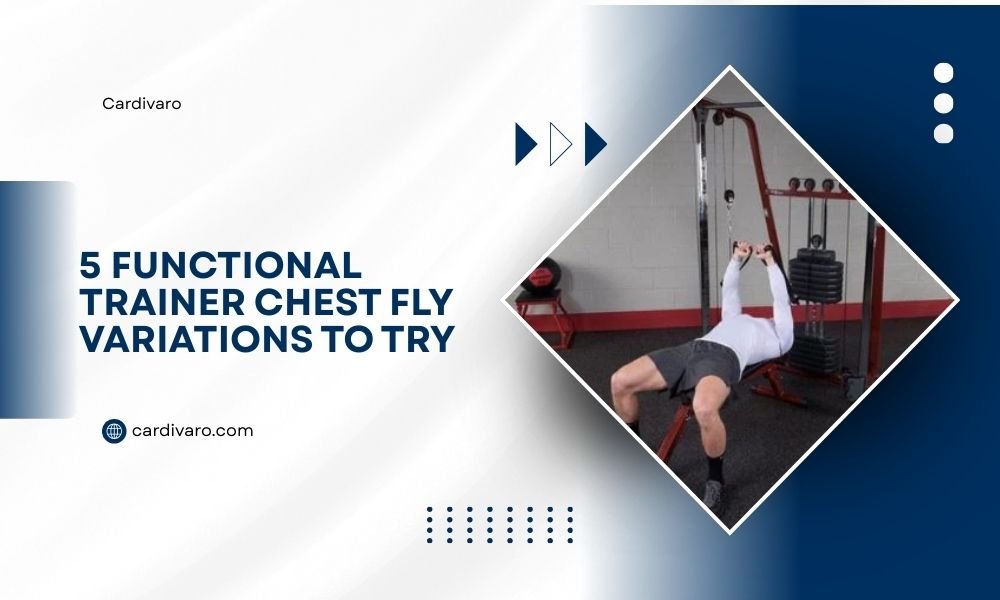
Functional trainer chest fly variations target your pectoral muscles from multiple angles, helping you build strength and definition more effectively than standard flies alone.
These five chest fly variations on a functional trainer will challenge your muscles differently and prevent workout plateaus while improving your overall chest development.
Why Functional Trainer Chest Flies Work So Well
Your chest muscles respond best when you hit them from different positions. Think of it like painting a wall – you need multiple brush strokes from various angles to get complete coverage.
Functional trainers give you that flexibility. The cables move smoothly through your entire range of motion. Plus, you get constant tension on your muscles, which research shows can boost muscle growth (Journal of Strength and Conditioning Research).
Benefits Over Traditional Dumbbell Flies
Dumbbells lose tension at the top of each rep. Cables keep working your muscles the whole time. You also get better control and can adjust resistance instantly.
Variation 1: Standard Standing Chest Fly
Start here if you’re new to cable flies. This builds your foundation and teaches proper form.
Setup and Starting Position
Set both cables at chest height. Grab the handles and step forward until you feel light tension. Keep one foot slightly ahead of the other for balance.
Movement Execution
Pull your hands together in a wide arc. Imagine you’re hugging a giant tree. Keep a slight bend in your elbows throughout the movement.
Common Mistakes to Avoid
- Don’t let your elbows collapse inward
- Avoid using your back muscles to help
- Keep your core tight to prevent arching
Variation 2: Incline Chest Fly
This targets your upper chest fibers. Many people struggle to develop this area, so this variation fills that gap.
Cable Height Adjustment
Set the cables at the lowest position on the machine. You’ll be pulling up and together, which mimics an incline bench angle.
Body Positioning Tips
Lean forward slightly from your hips. This helps align your body with the cable path and targets the right muscle fibers.
Why Your Upper Chest Matters
A well-developed upper chest creates that full, rounded look. It also helps with pressing movements and overall shoulder health.
Variation 3: Decline Chest Fly
Now we’re hitting the lower portion of your pecs. This creates better overall chest development.
Cable Setup for Decline Angle
Position cables at the highest setting. You’ll pull down and together, creating that decline bench effect.
Proper Form Cues
Keep your chest up and shoulders back. Don’t let the weight pull you forward. Control the negative portion of each rep.
Lower Chest Development Benefits
Strong lower pecs improve your bench press and create better muscle balance. They also help define the bottom edge of your chest.
Variation 4: Single-Arm Chest Fly
Unilateral training catches muscle imbalances early. Plus, your core works harder to stabilize your body.
Why Single-Arm Training Matters
Most people have a stronger side. Working one arm at a time ensures both sides develop equally.
Stance and Stability
Stand perpendicular to the machine. Plant your feet wide and keep your non-working hand on your hip for balance.
Core Engagement Tips
Resist rotation through your torso. This turns the exercise into a chest and core combo movement.
Variation 5: Seated Chest Fly
Sitting removes your legs from the equation. Your chest muscles have to do all the work with no help from lower body momentum.
Bench Setup Requirements
Use a bench with back support set at 90 degrees. Position it so the cables align with your chest when seated.
Isolation Benefits
This variation really isolates your pecs. You can’t cheat with your legs or lean into the movement.
When to Use Seated Flies
Try these at the end of your workout when you want pure muscle isolation. They work great for drop sets too.
Programming Your Chest Fly Variations
You don’t need to do all five variations in one workout. That would be overkill and might hurt your recovery.
Weekly Programming Strategy
Pick 2-3 variations per week. Rotate them every few weeks to keep challenging your muscles differently.
| Week | Primary Variation | Secondary Variation | Sets x Reps |
|---|---|---|---|
| 1-2 | Standard Standing | Incline | 3×12-15 |
| 3-4 | Decline | Single-Arm | 3×10-12 |
| 5-6 | Seated | Standard Standing | 4×8-10 |
Rep Ranges That Work Best
Higher reps work well for flies since they’re an isolation exercise. Aim for 10-15 reps per set for most variations.
Safety Tips and Form Reminders
Chest flies put your shoulders in a stretched position. Start light and focus on control over heavy weight.
Shoulder Health Considerations
If you feel any pinching in your shoulders, reduce the range of motion. Don’t force the stretch at the bottom.
Warning Signs to Watch For
- Sharp pain in your shoulders
- Numbness in your arms
- Unable to control the weight on the way down
Conclusion
These five functional trainer chest fly variations give you everything you need for complete chest development. Start with the standard standing fly to master the movement pattern. Then add incline and decline angles to hit different muscle fibers. Single-arm flies help fix imbalances, while seated flies provide pure isolation.
Remember to rotate these variations every few weeks. Your muscles adapt quickly, so changing angles and positions keeps them growing. Focus on smooth, controlled movements over heavy weight. Your chest will thank you with better size, strength, and definition.
What weight should I start with for functional trainer chest flies?
Start with 10-20% of your body weight per side and focus on perfect form. You can always add weight once you master the movement pattern and feel the right muscles working.
How often can I do chest fly variations each week?
Two to three times per week works well for most people. Give your chest muscles at least 48 hours of rest between sessions to recover and grow properly.
Can I replace regular bench press with these fly variations?
No, flies are isolation exercises while bench press is a compound movement. Use flies to supplement your pressing exercises, not replace them completely.
Which chest fly variation is best for beginners?
Start with the standard standing chest fly at chest height. It’s the most stable position and easiest to learn proper form before moving to more challenging angles.
Should I feel the stretch in my chest during the negative portion?
Yes, you should feel a gentle stretch in your chest muscles as you control the weight back to starting position. Stop the movement if you feel any shoulder discomfort or pinching.