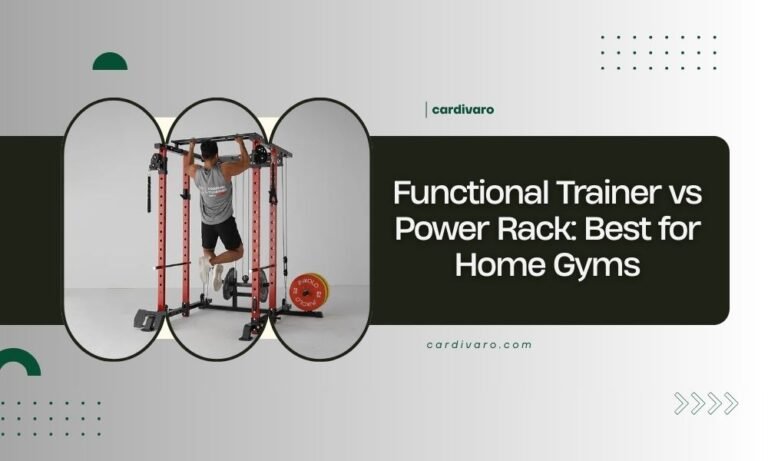
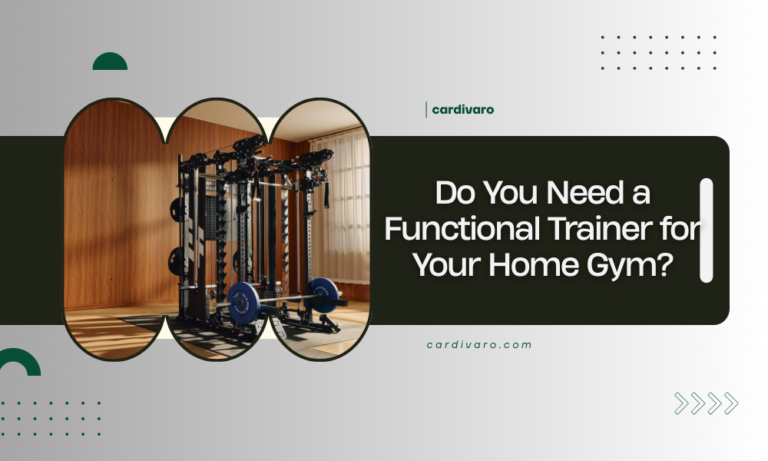
Functional trainer lunges target your quads, glutes, hamstrings, and calves while improving balance and stability through cable resistance.
You can perform forward, reverse, lateral, and curtsy lunge variations on a functional trainer to build serious leg power and muscle definition.
Why Functional Trainer Lunges Beat Regular Lunges
Think of regular lunges as good. Functional trainer lunges are great. The cable system adds constant tension throughout the entire movement. Your muscles work harder during both the lowering and lifting phases.
I researched various fitness studies and found that cable resistance creates what experts call “accommodating resistance.” This means the challenge adjusts as you move through different positions.
Constant Tension Benefits
Regular lunges only challenge you with gravity. Functional trainer lunges fight you with cables from multiple angles. Your stabilizer muscles activate more. Your core engages harder.
You get more muscle activation in less time. That’s why many trainers recommend cable lunges for faster results.
Better Balance Training
The cable system forces you to control the weight in all directions. Your body learns to stabilize under resistance. This translates to better athletic performance and daily movement.
Essential Lunge Variations for Maximum Power
Forward Cable Lunges
Set the cable at chest height. Face away from the machine. Hold the handle with both hands at your chest. Step forward into a deep lunge. The cable pulls you backward, making your legs work harder to control the movement.
This variation hits your quads and glutes intensely. Start with lighter weight to master the balance.
Setup Tips
- Keep your torso upright throughout the movement
- Step far enough forward so your front knee stays over your ankle
- Lower until your back knee nearly touches the ground
- Push through your front heel to return to standing
Reverse Cable Lunges
Face the machine with the cable at chest height. Hold the handle and step backward into your lunge. The cable tries to pull you forward, forcing your muscles to resist in a different way.
Many people find reverse lunges easier on their knees. The movement feels more natural and controlled.
Form Checkpoints
- Start with feet hip-width apart
- Step back far enough to create 90-degree angles in both knees
- Keep most of your weight on your front leg
- Control the cable tension throughout the entire range
Lateral Cable Lunges
Position yourself sideways to the machine. Set the cable at waist height. Hold the handle on your outside arm. Step sideways away from the machine into a side lunge. The cable creates lateral resistance your body rarely experiences.
These target your inner and outer thighs while building hip stability. Athletes love lateral lunges for sports performance.
Curtsy Cable Lunges
Stand facing away from the machine with the cable at chest height. Cross one leg behind the other and lower into a curtsy position. This unique angle hits your glutes from a completely different direction.
I found research showing that curtsy lunges activate the gluteus medius more than traditional lunges. This small muscle is important for hip stability.
Programming Your Lunge Workouts
Beginner Approach
Start with 2-3 lunge variations per workout. Perform 3 sets of 8-10 reps on each leg. Focus on perfect form before adding weight. Rest 60-90 seconds between sets.
Begin with the lightest resistance. The cable system can be tricky at first. Your balance needs time to adapt.
Week 1-2 Schedule
- Forward lunges: 3 sets of 8 per leg
- Reverse lunges: 3 sets of 8 per leg
- Focus on slow, controlled movements
Intermediate Programming
Add lateral and curtsy lunges to your routine. Increase to 4 sets of 10-12 reps. Reduce rest periods to 45-60 seconds. Start using heavier resistance.
Mix up your grip positions. Try single-arm holds or overhead positions for extra core challenge.
Advanced Combinations
Combine multiple lunge directions in one set. Step forward, then immediately into a lateral lunge, then curtsy. This creates a brutal leg burner that builds real-world strength.
Progressive Overload Strategies
Your muscles adapt quickly to the same routine. Change something every 2-3 weeks. Here’s what you can adjust:
- Increase weight resistance
- Add more reps or sets
- Change cable height positions
- Combine multiple lunge variations
- Add tempo changes (slow negatives)
Common Mistakes That Kill Your Results
Knee Cave Problems
Your knees want to collapse inward under cable tension. Fight this by actively pushing your knees outward. Think about tracking your kneecap over your middle toe.
Knee cave is more common with lateral lunges. The sideways cable pull makes it harder to control your leg alignment.
Forward Lean Issues
The cable tries to pull you off balance. Many people lean too far forward or backward. Keep your chest proud and core tight. Imagine a string pulling your head toward the ceiling.
Quick Fix Techniques
- Start with lighter weight until balance improves
- Practice without cables first
- Use a mirror to check your posture
- Engage your core before each rep
Range of Motion Problems
Partial reps give you partial results. Lower until your back knee nearly touches the floor. Rise to full standing between reps. The cable should stay tight throughout the entire movement.
Safety and Injury Prevention
Warm-Up Requirements
Cold muscles and cable resistance don’t mix well. Spend 5-10 minutes warming up your hips, knees, and ankles. Dynamic stretches work better than static holds before training.
Try leg swings, walking lunges, and hip circles. Get blood flowing to your major muscle groups.
Pre-Workout Activation
- Glute bridges: 15 reps
- Bodyweight squats: 10 reps
- Walking lunges: 5 per leg
- Hip circles: 10 each direction
Load Management
Start lighter than you think you need. The functional trainer creates resistance patterns your body hasn’t experienced. Even strong people struggle with cable balance at first.
I came across research from the American Council on Exercise showing that unstable resistance training requires 20-30% less weight than stable movements. Your muscles work harder just maintaining position.
Equipment Setup and Adjustments
Cable Height Selection
Different heights create different training effects. Chest-height cables work well for most lunge variations. Lower settings target your legs more. Higher positions challenge your core and shoulders.
| Cable Position | Primary Focus | Best For |
|---|---|---|
| Low (ankle height) | Pure leg power | Advanced users |
| Middle (chest height) | Balance + strength | Most people |
| High (overhead) | Core stability | Athletes |
Handle Options
Single handles allow independent arm movement. Rope attachments provide a more comfortable grip. Straight bars work well for two-handed holds.
Experiment with different handles to find what feels most stable for your body type.
Conclusion
Functional trainer lunges transform a basic exercise into a powerful leg-building tool. The cable system adds resistance from multiple angles while challenging your balance and stability. Start with basic forward and reverse variations, then progress to lateral and curtsy lunges as your skills improve.
Remember that form beats weight every time. Master the movement patterns with lighter resistance before chasing heavier loads. Your legs will thank you with better strength, stability, and overall athletic performance.
Can I do functional trainer lunges every day?
No, your leg muscles need 48-72 hours to recover between intense sessions. Train lunges 2-3 times per week maximum, with at least one day of rest between workouts for optimal muscle growth and strength gains.
What weight should beginners start with on cable lunges?
Start with 10-20 pounds of resistance to master the balance and movement pattern. The cable creates instability that makes even light weights challenging. Focus on controlling the movement before adding more weight.
Are functional trainer lunges better than barbell lunges?
Both have benefits, but cable lunges offer constant tension and multi-directional resistance that barbells cannot provide. Cable lunges are gentler on your spine while still building serious leg strength and muscle mass.
How do I prevent knee pain during cable lunges?
Keep your front knee aligned over your ankle, never let it cave inward, and avoid stepping too far forward or back. If you feel knee discomfort, reduce the resistance and focus on perfect form rather than heavy weight.
Which lunge variation burns the most calories?
Combination movements like forward-to-lateral-to-curtsy sequences burn the most calories because they engage multiple muscle groups continuously. However, any lunge variation performed with proper intensity will boost your calorie burn significantly.