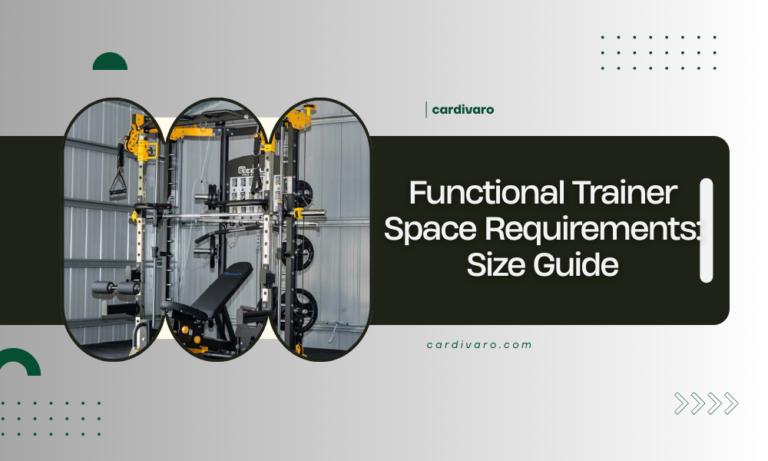
To build a home gym around a functional trainer, you should focus on adding versatile, space-saving equipment that complements the trainer’s capabilities. Start with your functional trainer, then strategically add pieces like an adjustable bench, resistance bands, and free weights to maximize your workout options within your space. You can create a full-body workout station even in a smaller area.
A functional trainer is a fantastic centerpiece because it offers hundreds of exercise variations, hitting almost every muscle group. We found that pairing it with just a few key accessories is enough to build a complete and effective home gym. Think smart about your space and your fitness goals.
- Functional trainers are great for home gyms.
- Add an adjustable bench for more exercises.
- Resistance bands and free weights expand your options.
- Plan your gym around what you want to achieve.
- You can create a complete gym in a small area.
Ready to customize your fitness setup? Let’s walk through exactly how to build a home gym around a functional trainer, step by step.
Building Out Your Home Gym Around a Functional Trainer
Creating your ideal home gym starts with understanding how to pair your functional trainer with other pieces of equipment. The goal is to maximize your workout potential and make the most of your space.
Understanding the Functional Trainer’s Core Benefits
Before adding more gear, let’s briefly look at why a functional trainer is such a smart starting point. It’s incredibly versatile, offering both isolation and compound movements. You can target every major muscle group with a wide variety of exercises.
Versatility and Space Efficiency
Think of your functional trainer as a multi-tool for fitness. You can perform pull-downs, rows, presses, squats, and even rotational movements all from one machine. This makes it a fantastic space-saver compared to needing separate machines for each exercise (American Council on Exercise).
Its dual-pulley system helps you work opposing muscle groups easily. Many models have a small footprint, fitting well into garages, basements, or even a dedicated corner of a spare room. This means you get a lot of exercise options without needing a huge gym area.
Essential Companion Equipment for Your Setup
Once you have your functional trainer, what’s next? You want to add pieces that open up even more exercises and workout types. These additions should fill any gaps in your functional trainer’s capabilities.
The Adjustable Weight Bench: Your First Go-To Addition
An adjustable weight bench is arguably the most important accessory for your functional trainer. It immediately expands your exercise library significantly. You can use it for flat, incline, and decline presses with the cables.
Beyond cable exercises, it’s perfect for dumbbell work and core exercises. Look for a bench that’s sturdy, easy to adjust, and has some wheels for portability. We found that a good bench drastically increases the value of your functional trainer.
Resistance Bands: Flexible and Portable Power
Don’t underestimate the power of resistance bands. They are incredibly affordable, take up almost no space, and add another layer of resistance to your workouts. They work well for warm-ups, cool-downs, and stretching.
You can use them to assist with pull-ups, add resistance to squats, or perform various upper body exercises. They are also fantastic for physical therapy and mobility work (Journal of Sports Science & Medicine). We often suggest a set with varying resistance levels.
Free Weights: Dumbbells and Kettlebells
While your functional trainer uses cables, free weights bring a different kind of challenge. Dumbbells and kettlebells require more stability and engage different muscle groups. They are a classic and trusted way to build strength and muscle.
A set of adjustable dumbbells can save a lot of space compared to individual weights. Kettlebells are fantastic for dynamic movements, cardio, and building explosive power. You don’t need a massive set; just a few pairs will go a long way when paired with your functional trainer.
Optimizing Your Space and Layout
How you arrange your equipment makes a big difference in how enjoyable and efficient your workouts are. Think about flow and safety. You want enough room to move freely around each piece.
Placement of Your Functional Trainer
Your functional trainer should be the focal point. Place it against a wall if possible, or in a corner to save space. Ensure you have enough clear area in front, to the sides, and above the machine for full range of motion. You don’t want to bump into walls or other equipment.
Consider electrical outlets if your model has an electronic console. Also, think about light. Natural light is great, but good overhead lighting is essential for safety. Good air circulation also makes workouts more comfortable.
Storage Solutions for Small Accessories
Small items like resistance bands, extra handles, skipping ropes, and even lighter dumbbells can quickly create clutter. Invest in smart storage. Wall-mounted racks, shelving units, or even a simple storage bin can keep your gym tidy.
A tidy gym is a safe gym. It also makes it easier to find what you need during a workout, keeping your momentum going. Good organization reduces the chances of tripping hazards, which is always important when weights are involved.
Recommended Add-Ons for Enhanced Workouts
Once you have the basics, you might want to add a few more items. These aren’t essential but can definitely make your home gym even better and more complete.
Pull-Up Bar: Upper Body Powerhouse
If your functional trainer doesn’t have an integrated pull-up bar, consider adding one. A wall-mounted bar or even a doorway pull-up bar can offer an excellent way to work your back, biceps, and core. Pull-ups are a fundamental compound exercise.
They are a staple for developing upper body strength and can be made easier with resistance bands or harder with added weight. It’s a simple, cost-effective addition that delivers huge benefits for your fitness routines.
Cardio Equipment: Complementing Strength Training
While your functional trainer focuses on strength, adding a piece of cardio equipment creates a truly full-body gym. A jump rope is a great, space-saving option for a quick cardio burst. A rowing machine is another excellent choice; it works almost every muscle group and provides an intense cardio workout without high impact (Harvard Health Publishing).
If space allows, a spin bike or treadmill could also be options. The key is to choose something you’ll actually use and that fits comfortably. Remember, a balanced fitness program includes both strength and cardiovascular training.
Your Home Gym Checklist
To help you stay on track, here’s a quick checklist of items to consider for your home gym setup. Pick and choose what works best for your goals and space.
- Functional Trainer: The centerpiece of your gym.
- Adjustable Bench: For presses, rows, and more.
- Resistance Bands: For warm-ups, assistance, and added resistance.
- Dumbbells/Kettlebells: For free weight strength and dynamic movements.
- Pull-Up Bar: If not integrated into your functional trainer.
- Storage Solutions: Keep your space tidy and safe.
| Equipment Type | Primary Benefit | Key Space Consideration | Best For |
|---|---|---|---|
| Functional Trainer | Full-body resistance training | Requires clear space around unit | Versatility and compound movements |
| Adjustable Bench | Expands exercise library (presses, rows) | Needs room to recline and move | Supporting free weight & cable exercises |
| Resistance Bands | Added resistance, mobility, assistance | Minimal (easy to store) | Warm-ups, flexibility, progressive overload |
| Dumbbells/Kettlebells | Strength, stability, dynamic training | Small dedicated storage area | Targeted muscle building & explosive power |
| Pull-Up Bar | Upper body strength, back/biceps | Doorway or wall space | Fundamental bodyweight exercises |
Conclusion
Building your home gym around a functional trainer puts a powerful, adaptable fitness hub right at your fingertips. You’ve seen how pairing it with essential items like an adjustable bench, resistance bands, and free weights can create a comprehensive workout space without demanding excessive room. We found that a thoughtful layout and smart storage also play huge roles in making your gym enjoyable and efficient.
Remember, your home gym is a personal sanctuary for health. Choose equipment that aligns with your goals and fits your lifestyle. Start with the core pieces, then gradually add accessories to enhance your routines. You now have the knowledge to create a functional, effective, and motivating home gym environment.
Frequently Asked Questions
Is a functional trainer truly enough for a full-body workout?
Yes, a functional trainer is highly versatile and lets you perform exercises for every major muscle group. Its adjustable cables allow for a wide range of movements, from presses and rows to squats and rotational core work. Adding even one accessory, like an adjustable bench, further expands these possibilities.
How much space do I really need for a home gym with a functional trainer?
Most functional trainers have a relatively small footprint, but you’ll need clear space around the machine for movement. We recommend at least an 8×8 foot area for comfortable use, allowing you to extend arms and legs without obstruction. Consider the height of your ceiling as well for overhead exercises or pull-up bar attachments.
Can I build muscle effectively with just a functional trainer?
Absolutely. Functional trainers provide constant tension throughout the exercise movement, which is excellent for building muscle and endurance. You can progressively increase the resistance over time as you get stronger. Pairing it with free weights like dumbbells will add another dimension to your strength training.
What’s one common mistake people make when setting up a functional trainer gym?
A common mistake is neglecting proper spacing and organization. Users often position the trainer too close to walls or other equipment, limiting their range of motion and creating safety hazards. Planning your layout and investing in simple storage solutions can prevent clutter and ensure a smooth workout experience.
Should I prioritize cardio equipment over more strength accessories for my home gym?
It depends on your personal fitness goals, but a balanced approach is usually best. Your functional trainer provides excellent strength training. Adding a space-efficient cardio option like a jump rope or a rowing machine can complete your fitness routine. We found that a good balance enhances overall health and workout variety.