
To convert a garage into a home gym, you should start by clearing out the space and deep cleaning it. Next, focus on installing proper flooring, like rubber mats, to protect both your equipment and the garage floor. Finally, consider adding a fresh coat of paint and some mirrors to create an inspiring workout environment.
Creating your own dedicated fitness zone at home is a smart way to stay active and avoid gym memberships. Many people find that transforming their garage offers the ideal space for a personalized gym. It allows for a customized workout experience, right at your fingertips.
TL;DR:
- Clear and clean your garage space.
- Install suitable gym flooring.
- Choose your essential fitness equipment.
- Consider climate control and lighting.
- Add personal touches like mirrors or paint.
Ready to build the home gym of your dreams? Let’s walk through exactly how to convert a garage into a home gym, step by step.
Planning Your Ultimate Garage Gym Transformation
Converting your garage into a home gym is an exciting project. It’s about more than just moving equipment; it’s about creating a dedicated space for your health goals. A little planning goes a long way here.
Assessing Your Garage Space and Needs
Before you lift a single weight, take a good look at your garage. How much space do you truly have? Consider both the footprint and the vertical clearance. Will you be doing overhead presses or jumping? Measure everything carefully. Think about how many vehicles you typically park in the garage, too. Will one car still fit, or is this a complete gym takeover?
Clearing Out and Decluttering
The first step is always the hardest: decluttering. Garages often become storage units for everything we don’t know what to do with. You’ll need to remove tools, holiday decorations, old furniture, and anything else that’s accumulated over time. This is your chance to donate, sell, or properly store items elsewhere. A clean slate is essential for envisioning your new gym.
Deep Cleaning and Preparation
Once empty, give your garage a thorough cleaning. Sweep out all the dust, dirt, and debris. Power wash the floor if possible, or scrub it well with a strong cleaner. You want a fresh, hygienic foundation for your workouts. Check for any leaks, cracks, or structural issues that need addressing before you move on to aesthetics or equipment.
Establishing Your Gym’s Foundation: Flooring
The right flooring is absolutely critical for a home gym. It protects your existing garage floor from heavy weights and safeguards your joints during exercise. You don’t want to drop a dumbbell on bare concrete!
Here are some popular options for gym flooring:
- Rubber Mats/Tiles: These are the most common choice. They offer excellent shock absorption, are durable, and easy to clean. They come in interlocking tiles or large rolls. Thickness varies, with thicker mats providing more protection for heavy lifting.
- Foam Tiles: A more budget-friendly option, good for lighter workouts, yoga, or bodyweight exercises. They don’t offer the same level of protection for heavy weights as rubber.
- Artificial Turf: Great for sled pushes, sprints, and functional training. It adds a professional look and feel.
- Plywood Subfloor: If your garage floor is uneven or you want to elevate the area, a plywood subfloor can create a level base before adding your final flooring layer.
When selecting, consider your primary workout style. If you plan on a lot of Olympic lifting, thicker rubber mats (1/2 inch or more) are a must. For cardio and lighter weights, thinner options might suffice.
Creating a Comfortable and Functional Environment
A great home gym isn’t just about the equipment; it’s about the atmosphere. You want a space that feels inviting and motivates you to work out. Think about how you feel in your favorite commercial gym. What elements make it appealing?
Addressing Climate Control and Ventilation
Garages can get very hot in summer and very cold in winter. This can make working out uncomfortable, if not unsafe. You’ll want to plan for climate control.
- Fans: Good air circulation is key, especially during intense workouts. Consider a large industrial fan or a ceiling fan.
- Portable AC Unit: For warmer climates, a portable air conditioner can make a huge difference.
- Heater: A safe, electric space heater can warm up the space during colder months. Ensure it’s not a fire hazard near any flammable materials.
- Insulation: If your garage isn’t insulated, consider adding it to the walls and ceiling. This will make heating and cooling much more efficient.
- Windows/Vents: If possible, add windows or vents for natural airflow and light. Cross-ventilation is excellent.
Lighting Up Your Workout Zone
Dull, dim lighting can really kill your motivation. Bright, even lighting is much better for a workout space. Standard garage bulbs often aren’t enough. Consider upgrading to LED shop lights or fluorescent fixtures. You want to see what you’re doing clearly, especially when handling weights.
Adding Aesthetics: Paint, Mirrors, and Motivation
This is where your gym really starts to take shape and feel like *your* space.
- Paint: A fresh coat of paint can dramatically transform the feel of your garage. Light colors can make the space feel larger and brighter. Some people prefer darker, more intense colors for a focused workout vibe.
- Mirrors: Mirrors are functional and motivational. They allow you to check your form, preventing injuries and ensuring you’re targeting the right muscles. They also make the space feel bigger. Large, frameless mirrors are popular for gyms. Secure them properly to the wall.
- Motivational Decor: Add posters, whiteboards for tracking progress, or a sound system. A good sound system is crucial for many people’s workouts. Set up a TV if you plan to follow online classes or watch sports while you train.
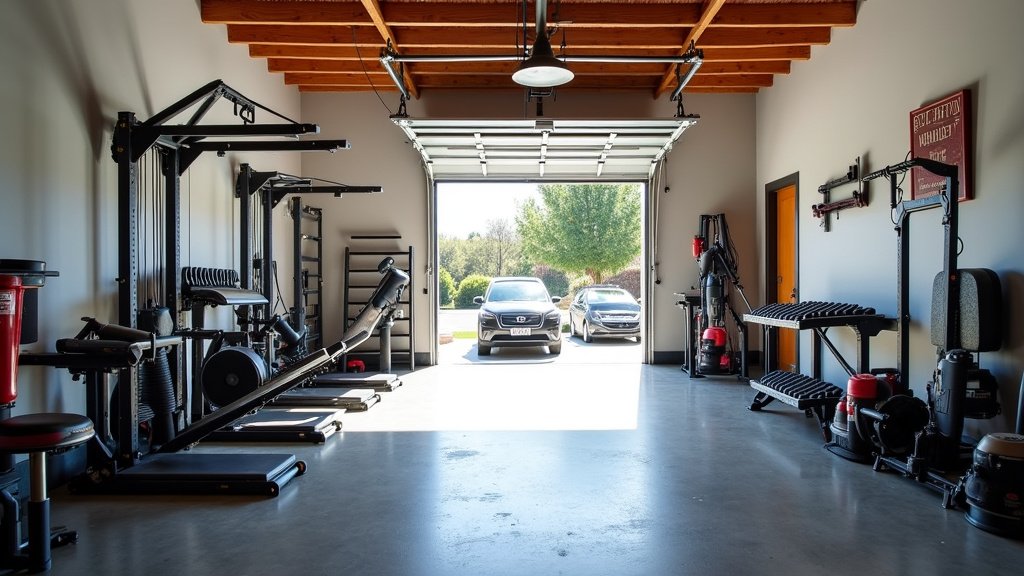
Choosing and Arranging Your Essential Equipment
Now for the fun part: selecting your gear! What you choose depends entirely on your fitness goals and budget. Remember, you don’t need everything at once.
Selecting Your Core Equipment
Start with the basics that support your main fitness goals. Many experts say that versatile equipment is the best investment. Here’s a basic checklist:
- Adjustable Dumbbells or a Dumbbell Set
- Barbell and Weight Plates (if you lift heavy)
- Weight Bench (adjustable is best)
- Pull-up Bar (door frame, wall-mounted, or power rack)
- Resistance Bands
- Jump Rope
- Kettlebells
- Yoga Mat / Exercise Mat
If cardio is a priority, consider a treadmill, elliptical, or stationary bike. These can be significant investments, so research models that fit your budget and space.
Smart Equipment Layout and Storage
Once you have your equipment, think about how you’ll arrange it. You want enough room to move freely without bumping into anything. Plan for walkways and clear zones for different exercises.
Consider these tips for layout and storage:
- Wall-Mounted Storage: Use shelves, hooks, and racks to keep smaller items off the floor. This maximizes space and prevents tripping hazards.
- Vertical Storage: Power racks and squat racks are excellent for vertical storage of barbells and plates.
- Dedicated Zones: Create distinct areas for lifting, cardio, stretching, and bodyweight exercises.
- Safety First: Ensure heavy equipment is stable and won’t tip over. Keep an emergency clear path to exits.
For example, you might place your power rack against one wall, your cardio machine in a corner, and leave the center of the room open for dynamic movements or mat work. Good organization helps maintain a clean, safe, and motivating workout space (National Safety Council).
| Workout Focus | Recommended Core Equipment | Space Considerations |
|---|---|---|
| Strength Training | Barbell, plates, adjustable bench, dumbbells, power rack | Requires good ceiling height for overhead lifts; needs dedicated “lifting zone.” |
| Cardio & Endurance | Treadmill, elliptical, stationary bike, jump rope, rowing machine | Can be bulky; check dimensions carefully; needs power outlet. |
| Functional & Bodyweight | Kettlebells, resistance bands, pull-up bar, exercise mat, plyo box | More flexible with space; can use open floor area effectively. |
| Yoga & Stretching | Yoga mat, foam roller, yoga blocks, resistance bands | Needs clear, calm space; can be combined with other zones. |
Checklist for Your Garage Gym Project
To keep your project on track, here’s a quick checklist to review as you convert your garage:
- Garage Cleared & Cleaned: Is the space truly empty and spotless?
- Flooring Installed: Is your chosen protective flooring securely in place?
- Climate Control Addressed: Do you have a plan for heating, cooling, and ventilation?
- Lighting Upgraded: Is the gym bright and well-lit for all workouts?
- Equipment Selected: Do you have your essential pieces of gear ready?
- Layout Planned: Have you decided where everything will go for safety and flow?
Conclusion
Transforming your garage into a home gym is a rewarding project that puts your fitness goals within reach. By carefully planning your space, selecting the right flooring, and creating a comfortable atmosphere, you’re setting yourself up for success. Remember to choose equipment that aligns with your workouts and arrange it for both safety and motivation. You’re not just building a gym; you’re investing in your health and creating a personalized sanctuary for self-improvement. Take these steps, and you’ll soon be enjoying your custom workout haven.
Frequently Asked Questions
How much does it typically cost to convert a garage into a home gym?
The cost varies widely based on your choices. You can spend anywhere from a few hundred dollars for basic mats and resistance bands to several thousand for premium equipment, insulation, and advanced climate control systems. Set a budget upfront to guide your decisions.
Do I need a permit to convert my garage into a gym?
Generally, converting a garage into a gym doesn’t require a permit if you’re not making structural changes or altering plumbing/electrical systems significantly. However, it’s always wise to check with your local city or county building department to be sure and avoid potential issues.
Can I still park my car in the garage after converting part of it into a gym?
Yes, many people convert only a portion of their garage while still using the other half for parking. Careful space assessment and equipment layout are key. Choose wall-mounted or foldable equipment to maximize your usable area for both purposes.
How do I deal with pests or moisture in a garage gym?
Pest control and moisture management are important. Seal any cracks or gaps in walls and around doors to deter pests. For moisture, consider a dehumidifier, especially in humid climates, and ensure any leaks are repaired before installing flooring or equipment.
What’s the best way to clean and maintain my garage gym floor?
Regularly sweep or vacuum your gym floor to remove dust and debris. For rubber mats, a damp mop with a mild, non-abrasive cleaner works well. Avoid harsh chemicals that can degrade rubber. Always allow the floor to dry completely to prevent mold or mildew growth.