When deciding if a gym membership or a home functional trainer is better value, it truly depends on your individual needs and lifestyle. For some, the variety and community of a gym offer more, while others find greater value in the convenience and privacy of a home setup. The best choice often comes down to your budget, available space, and how you prefer to exercise.
We found that both options have their strong points, making the “better value” label a personal one. A gym provides access to many machines and classes, while a home functional trainer gives you consistent, at-your-fingertips workouts. Consider how much you’ll actually use either option, as that’s where the real value is created.
- Gyms offer variety and social interaction.
- Home trainers provide convenience and privacy.
- Cost varies greatly between both options.
- Space availability at home matters for trainers.
- Your personal workout style is key to value.
Let’s dive into a direct comparison to help you weigh the pros and cons of each, ensuring you pick the best fit for your fitness journey.
Gym Membership vs. Home Functional Trainer: Making Your Choice
Deciding between a gym and a home functional trainer boils down to what fits your life best. We’ll explore the advantages and disadvantages of each, helping you see where your money and time will be best spent. Think about your daily routine and what motivates you to exercise.
Understanding the Costs: What Will You Really Pay?
The price tag is often the first thing we look at. But it’s not just the sticker price; it’s the long-term investment. Both gyms and home trainers have upfront costs and ongoing expenses. Let’s break them down for a clearer picture.
Gym Membership Expenses
When you join a gym, you typically face a few different fees. There’s often an enrollment fee, which can be a one-time charge. Then come the monthly dues, which vary widely. Some gyms also have an annual maintenance fee.
- Enrollment fees: Can range from $0 to $200.
- Monthly dues: Anywhere from $10 for basic gyms to $100+ for premium clubs.
- Annual fees: Often $30 to $60, charged once a year.
- Add-ons: Personal training, special classes, or locker rentals can add up.
Consider how long you plan to be a member. A $50/month gym membership adds up to $600 a year, plus any initial fees. Over five years, that’s $3,000 or more. For some, this cost is totally justified by the benefits.
Home Functional Trainer Investment
A home functional trainer is a single purchase, but it’s a bigger one upfront. These machines can range from several hundred to several thousand dollars. Think of it as investing in your own personal gym system.
- Entry-level models: Around $500 – $1,500.
- Mid-range models: Typically $1,500 – $3,000.
- High-end models: Can exceed $3,000, offering more features and durability.
- Accessories: You might want a mat, resistance bands, or a bench, adding $100-$300.
Once you buy it, your ongoing costs are minimal. Maybe some new attachments every now and then, but no monthly dues. If you keep it for five years, that initial $2,000 investment averages out to $400 a year. Suddenly, that initial cost doesn’t seem so bad, does it? Plus, it’s yours to keep.
Workout Environment: Where Do You Feel Best?
Your environment plays a huge role in your motivation. Are you someone who thrives in a bustling atmosphere, or do you prefer quiet solitude? This is a key factor in deciding value.
Gym Atmosphere and Community
Gyms offer a dynamic environment. There’s background music, other people working out, and often staff available. This can be fantastic for motivation. Seeing others push themselves can inspire you to do the same.
- Social interaction: You can meet new people, find workout buddies, or simply enjoy being around others.
- Group classes: Many gyms offer spinning, yoga, Zumba, and more. This can be a fun way to stay active.
- Expert advice: Personal trainers are often on staff if you need guidance (though usually for an extra fee).
Some people love the energy of a gym. It feels like a dedicated space for fitness. However, it can also be crowded, and you might have to wait for equipment. Is sharing equipment something you’re okay with?
Home Functional Trainer: Convenience and Privacy
Working out at home means you set the rules. No waiting for machines, no need to worry about what you’re wearing, and no commute. It’s all on your schedule, in your own space.
- Ultimate convenience: Roll out of bed and start your workout. No travel time.
- Privacy: Work out without feeling self-conscious. It’s just you and your equipment.
- Customization: Play your own music, watch your own shows, or workout in silence.
- Always available: Your gym is open 24/7, even on holidays.
The downside? You need discipline. There’s no one else to push you. And if your space is small, it might feel a bit cramped. But for many, the sheer ease of access makes a home setup incredibly valuable.
Equipment Variety and Exercise Options
What kind of workouts do you enjoy? This will heavily influence which option offers better value for your specific needs.
Gym Equipment Spectrum
Gyms are like an amusement park for fitness. They have rows of cardio machines, a wide array of weight machines, free weights, and often dedicated areas for stretching or functional training. You can try almost anything.
- Cardio: Treadmills, ellipticals, bikes, stair climbers, rowers.
- Strength: Dumbbells, barbells, plate-loaded machines, cable machines.
- Specialized gear: Battle ropes, plyo boxes, TRX, sometimes even pools or saunas.
This variety means you can constantly change your routine, which can prevent boredom and challenge different muscle groups. You can experiment without buying anything new.
Home Functional Trainer Capabilities
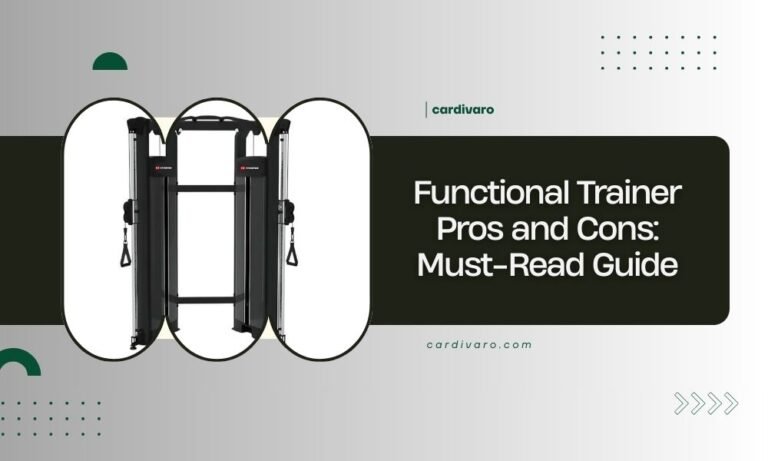
A functional trainer, while often a single unit, is surprisingly versatile. These machines use cables and pulleys, allowing you to perform a huge range of exercises that mimic natural body movements. Think of it as a compact gym in one piece of equipment.
- Full-body workouts: Target every major muscle group effectively.
- Resistance training: Adjustable weight stacks or resistance levels to progress.
- Functional movements: Great for improving daily movements, balance, and stability.
- Core strength: Many exercises engage your core.
While you might not have a treadmill, you can often replicate many gym exercises. We’ve seen people get incredibly fit with just a functional trainer and some basic accessories. The key is knowing how to use it effectively, perhaps with online guidance or a few sessions with a trainer initially.
Considering Your Space and Time
Your home environment and your daily schedule are practical considerations that can’t be ignored.
Space Requirements for Home Equipment
This is a big one. A functional trainer isn’t a small item. You’ll need dedicated space for it, plus room to move around it safely. Measure your intended area carefully. Some models are more compact than others, but generally, you’ll need a space that’s at least 7×7 feet, if not more, depending on the model and how much you want to move.
Do you have a spare room, a corner of the garage, or a dedicated basement area? If you’re short on space, even a compact functional trainer might feel overwhelming. That’s when a gym membership might make more sense, as the space constraint is someone else’s problem.
Time Commitment and Consistency
Think about how much time you actually have. Commuting to a gym can add 15-30 minutes each way. That’s often an hour lost just in travel and changing. For busy individuals, this time sink can be a deal-breaker. A home functional trainer eliminates this entirely.
Research consistently shows that convenience greatly impacts consistency (National Institutes of Health). If it’s easier to do, you’re more likely to do it. Waking up and being able to work out in minutes often leads to more regular exercise. How valuable is saving an hour of your day, several times a week? For many, it’s priceless.
Making Your Personal Value Checklist
To help you decide, ask yourself these questions. The answers will point you toward your best value.
| Factor | Gym Membership Value | Home Trainer Value |
|---|---|---|
| Upfront Cost | Lower (enrollment) | Higher (equipment purchase) |
| Ongoing Cost | Higher (monthly/annual fees) | Lower (minimal) |
| Convenience | Lower (travel, specific hours) | Higher (24/7, no travel) |
| Equipment Variety | Very High (many machines) | High (versatile functional movements) |
| Social Aspect | High (community, classes) | Low (private) |
| Privacy | Low (public space) | High (personal space) |
| Space Needed | None at home | Significant at home |
| Self-Motivation | Less critical (group push) | More critical (personal drive) |
Now, here’s a quick checklist to help you tally your priorities:
- Do I enjoy working out with other people around?
- Is having a wide range of different machines essential for my routine?
- Do I have enough space at home for a dedicated workout area?
- How much value do I place on saving travel time to and from a gym?
- Am I disciplined enough to work out consistently without external motivation?
- What’s my long-term budget look like for fitness expenses?
By considering these points, you can start to see which option aligns better with your unique situation and preferences. There’s no single “better” choice, only the one that’s better for you.

Conclusion
Ultimately, the “better value” between a gym membership and a home functional trainer is deeply personal. It comes down to your budget, daily schedule, and how you prefer to exercise. We found that if you thrive on variety and social interaction, a gym might offer more. But if convenience, privacy, and long-term cost savings are your priority, a home functional trainer could be your ideal solution.
Consider your honest workout habits and home environment. Don’t just pick the cheaper option upfront. Think about which setup will genuinely keep you motivated and consistent for years to come. That’s where you’ll find your true fitness value.
Frequently Asked Questions
Is a home functional trainer enough for a complete workout?
Yes, absolutely. A quality functional trainer allows for a full-body workout targeting all major muscle groups. You can perform strength training, improve flexibility, and enhance functional movements for daily life. Many people achieve excellent results using just this one versatile piece of equipment.
How much space do I really need for a home functional trainer?
While compact models exist, you generally need a dedicated area of at least 7×7 feet. This provides enough room for the machine itself and safe movement during exercises. Measure your intended space carefully, also considering the height of your ceiling if you plan overhead movements.
Can I save money long-term with a home functional trainer?
Often, yes. While the initial purchase cost of a functional trainer is higher than a gym enrollment fee, you eliminate ongoing monthly dues. Over several years, the total cost of ownership for a home functional trainer can be significantly lower than continuous gym memberships, making it a smart long-term investment.
What if I get bored with just a functional trainer at home?
The key is variety within the functional trainer’s capabilities. You can find countless exercise routines online, use different attachments, and adjust resistance for new challenges. Adding a few inexpensive accessories like resistance bands or a yoga mat can also expand your workout options significantly.
How important is self-motivation for a home gym setup?
Self-motivation is very important for a home gym. Without the external cues of a gym environment or class schedule, you rely on your own discipline. However, the convenience of a home setup often makes it easier to stick to a routine once you’ve established the habit.