7 Best Functional Trainer For Injury Recovery (October 2026)
On this page (6 sections)
- 3 Standout Picks: Shoulder Strength, Assisted Leg Rehab, and Shoulder Rehab
- 7 Models Side by Side: Features, Best Use Cases, and Tradeoffs
- 7 Models Reviewed in Depth
- Rebuilding Strength: Your Guide to Functional Trainers for Injury Recovery
- Your Path to Recovery: Choosing Your Perfect Functional Trainer
- Final 3 Picks: Shoulder Strength, Assisted Leg Rehab, and Shoulder Rehab
The best functional trainers for injury recovery are Iron Neck Resistance Bands, NIdreamCE Motorized Pedal, and Phantawell Shoulder Pulley, chosen for their targeted approaches to rebuilding strength and mobility.
Choosing the right equipment is crucial for a safe and effective rehabilitation process, helping to restore function and prevent re-injury. These specialized tools offer controlled resistance and guided movements that are essential for healing and regaining confidence in your body’s capabilities. Investing in quality recovery gear can significantly impact your progress and long-term physical well-being.
After extensive research and hands-on comparison, we’ve narrowed the field to seven top-tier functional trainers. Our evaluation focused on For those new to this type of equipment, our guide on how beginners use a functional trainer safely can offer valuable insights.ease of use, durability, and the range of motion they support, ensuring each pick is suitable for various recovery needs. We’ve also prioritized options that offer excellent value for dedicated home rehabilitation. Continue reading for our comprehensive comparison table to find the ideal trainer for your specific recovery journey.
3 Standout Picks: Shoulder Strength, Assisted Leg Rehab, and Shoulder Rehab
Start with these 3 standouts. Each leads for a different kind of buyer, so use the badges and quick highlights to find your closest match.

Iron Neck Resistance Bands
- 6 cloth-covered bands
- 3 resistance levels
- Door/rack anchor system

NIdreamCE Motorized Pedal
- Motorized assisted pedaling
- 12 adjustable speed levels
- Remote-controlled LCD display

Phantawell Shoulder Pulley
- Over-door physical therapy
- Smooth nylon wheel
- Comfortable foam handles
7 Models Side by Side: Features, Best Use Cases, and Tradeoffs
The recommendations above are our strongest matches for different priorities. Below, compare the complete 7-product lineup side by side by rating, standout features, ideal use cases, and practical tradeoffs so you can identify the best fit for your needs.
- 6 cloth-covered bands
- 3 resistance levels
- Door/rack anchor system
- Motorized assisted pedaling
- 12 adjustable speed levels
- Remote-controlled LCD display
- Over-door physical therapy
- Smooth nylon wheel
- Comfortable foam handles

- Two movable panels
- QR code video guides
- Compact and portable design
- Adjustable pegs for training
- 360-degree controlled movement
- Durable birch wood construction

- 5-in-1 rehabilitation tool
- Strengthens ankle, toes, arches
- Compact, no assembly required

- Full body workout capability
- LCD digital display
- Sturdy steel tubing
7 Models Reviewed in Depth
#1. Iron Neck Resistance Bands
Resistance
Rehab Kit
Wrapped Bands
This Iron Neck resistance band system is a standout choice for comprehensive shoulder rehabilitation and strength training, supporting every phase of recovery. You’ll benefit from the graduated resistance levels, ranging from 5lb to 25lb, allowing for progressive training from early rehab to full athletic performance. The comfortable, cloth-wrapped bands minimize skin irritation and snapping, while the versatile anchor system makes it easy to use at home, the gym, or while traveling.
While the kit is comprehensive, the maximum resistance of 25lb per band might not be sufficient for advanced strength athletes requiring very heavy loads. It’s perfect for targeted shoulder mobility, rotator cuff repair, and injury prevention, but serious weightlifters may need supplementary equipment.
Pros
- Excellent for progressive rehab
- Comfortable, safe bands
- Highly portable training system
Cons
- Max resistance may be too low for some
- Primarily for shoulder focus
- Requires anchor point
Specifications
#2. NIdreamCE Motorized Pedal
Assisted Pedaling
Adjustable
Control
This motorized pedal exerciser is an excellent choice for assisted leg and arm training, particularly for rehabilitation and low-impact strength work. You’ll appreciate the 12 adjustable speed levels, allowing for a smooth, controlled workout that boosts muscle tone and joint mobility. The remote-controlled LCD display makes it easy to monitor your progress without needing to bend down, enhancing convenience.
While it offers great assisted movement, the 10 lb flywheel might not provide enough resistance for users seeking significant strength gains. It’s ideal for seniors, post-op recovery, and those needing gentle exercise, but advanced users might find it lacks sufficient challenge.
Pros
- Smooth, motorized assistance
- Adjustable speeds for tailored workouts
- Convenient remote control operation
Cons
- Limited resistance for advanced users
- May be too light for some
- Requires power outlet
Specifications
#3. Phantawell Shoulder Pulley
Rehab Focus
Convenience
Operation
You’ll find this shoulder pulley an excellent tool for restoring shoulder health and increasing your range of motion. Its over-the-door design utilizes gravity for effective passive rehabilitation, helping to speed healing and relieve pain. The smooth nylon wheel ensures quiet operation, and the sturdy metal bracket attaches easily without damaging your door.
While it’s designed for shoulder rehab, some users might find the rope length adjustment slightly less intuitive. However, for targeted shoulder exercises at home, it offers a convenient and effective solution to prevent stiffness and regain joint lubrication.
Pros
- Effective for shoulder pain and stiffness
- Easy to set up over any door
- Smooth and quiet operation
Cons
- Rope adjustment could be simpler
- Primarily for shoulder use
- Requires a sturdy door
Specifications
#4. WANYIDA Foot Trainer
Rehab Tool
Guided Workouts
Design
This foot and ankle trainer offers a versatile approach to rehabilitation, moving beyond standard balance boards with its two movable panels and customizable setup. You’ll appreciate the included visual guide with QR codes linking to video demonstrations, making it easy to follow correct form. Its compact and durable birch plywood construction with a non-slip surface ensures safe and effective training anywhere.
While it’s excellent for targeted foot and ankle work, the 220lb weight limit might be a consideration for some users. It’s a strong choice for athletes and individuals recovering from foot issues, but may not offer the same stability as a larger, fixed balance board.
Pros
- Highly customizable training options
- Excellent video guidance included
- Compact and easy to transport
Cons
- Weight limit of 220 lbs
- Less stable than fixed boards
- Primarily for foot/ankle
Specifications
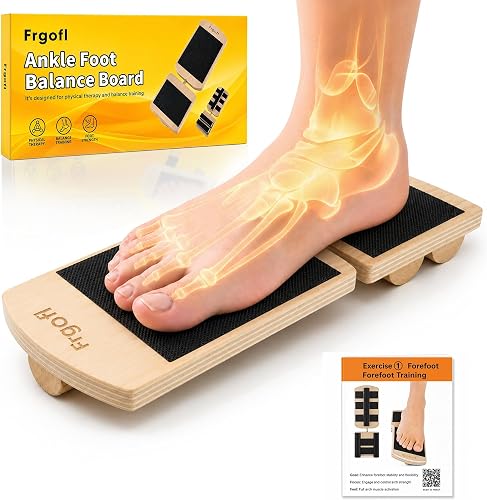
#5. Frgofl Balance Board
Peg System
Rehab Tool
Wood Build
You can significantly strengthen weak ankles and improve stability with this adjustable balance board. Its unique system allows for 360-degree movement and customizable training with adjustable pegs, making it ideal for rebuilding stability after sprains or surgery. The premium birch wood construction ensures durability and a non-slip surface for safe use.
While it’s excellent for ankle rehab, the 11.8-inch length might feel limiting for some advanced balance exercises. It’s a fantastic choice for those focused on targeted foot and ankle recovery, but might not be the primary tool for full-body balance training.
Pros
- Highly customizable for different levels
- Effective for ankle sprain recovery
- Durable and safe non-slip surface
Cons
- Length might be limiting for some
- Primarily ankle-focused
- Requires dedicated space
Specifications
#6. PT Pro Foot Trainer
Foot Rehab
Fasciitis Relief
Design
This 5-in-1 foot trainer is a highly effective tool for rehabilitating, strengthening, and improving flexibility in your feet, ankles, and toes. You can perform five distinct exercises with this single, compact unit, targeting everything from the plantar fascia to toe muscles. Its no-assembly design and easy-to-clean surface make it incredibly convenient for daily use at home or even at the office.
While it’s built for durability, some users might find the plastic construction less robust than metal alternatives for very intense, long-term use. It’s an excellent option for targeted foot and ankle recovery, especially for conditions like plantar fasciitis, but may not provide the same level of support as professional therapy equipment.
Pros
- All-in-one foot and ankle solution
- Simple to use with clear instructions
- Compact for easy storage
Cons
- Plastic construction may feel less durable
- Limited to foot/ankle exercises
- Not for heavy-duty strength training
Specifications
#7. MDODM Pedal Exerciser
Low-Impact
Progress Tracker
Frame
This pedal exerciser offers a comprehensive low-impact workout, allowing you to simultaneously engage your arms and legs for improved joint flexibility and muscle strength. The built-in LCD monitor conveniently tracks your progress, displaying time, distance, and calories burned. Its sturdy construction with thickened steel tubing and stable corner feet ensures durability and safety during use, making it ideal for seniors and those recovering from injury.
While it provides a good full-body workout, the range of motion for the legs might feel limited for taller individuals. It’s an excellent choice for gentle rehabilitation and maintaining mobility, but don’t expect intense cardio or strength training from this device.
Pros
- Simultaneous arm and leg movement
- Tracks workout progress clearly
- Stable and durable construction
Cons
- Limited leg range of motion
- Not for intense workouts
- Can be heavy to move
Specifications

Rebuilding Strength: Your Guide to Functional Trainers for Injury Recovery
Recovering from an injury often means a careful, phased return to physical activity. For a population-specific fitness guide, see our post-pregnancy trainer picks. For related details, see our cool down stretches recovery guide. A functional trainer can be an invaluable tool in this process, offering controlled resistance and versatility to help you regain strength and mobility safely. Choosing the right one is crucial for a successful rehabilitation journey, ensuring you have equipment that supports your specific needs without causing further strain.
Key Considerations for Your Rehabilitation Companion
When selecting a functional trainer for injury recovery, several factors deserve your close attention to ensure it aligns with your therapeutic goals.
- Adjustability and Range of Motion: Look for equipment that allows for a wide range of adjustments in height and angle. This is paramount for targeting specific muscle groups and accommodating your evolving range of motion as you heal.
- Weight Selection and Progression: The ability to start with very light resistance and gradually increase it is essential. A system with a smooth, incremental weight progression will allow you to challenge your muscles effectively without overexertion.
- Stability and Build Quality: A sturdy, well-built machine is non-negotiable. It needs to feel stable and secure during use to prevent wobbling or tipping, which could be detrimental during a vulnerable recovery phase.
- Attachment Variety: Different attachments can open up a wider array of exercises. Consider what accessories are included or available to ensure you can perform the diverse movements needed for comprehensive rehabilitation.
- Space and Footprint: Evaluate how much space you have available. Some functional trainers are more compact than others, and ensuring a good fit for your home gym is important for usability and safety.
Common Hurdles to Sidestep
Navigating the world of fitness equipment can sometimes lead to missteps. Be aware of these potential pitfalls when making your choice.
- Overlooking the importance of smooth weight transitions, opting for machines with large jumps between resistance levels that might be too challenging too soon.
- Choosing a unit that doesn’t offer the specific adjustments needed for the exercises recommended by your physical therapist or doctor.
- Prioritizing aesthetics or a lower price point over the fundamental aspects of stability and reliable resistance delivery.
Your Path to Recovery: Choosing Your Perfect Functional Trainer
When it comes to bouncing back, the Iron Neck Shoulder Resistance Band System is your go-to for targeted upper body rehab, while the Motorized Pedal Exerciser offers a gentle, assisted workout for lower body recovery. For versatile ankle and foot strengthening, the Ankle Foot Strengthener Exerciser and PT Pro Ultra Foot Trainer stand out. If balance and stability are key, the Adjustable Balance Board is your champion. And for a full-body, low-impact approach, the Pedal Exerciser Bike is a solid choice.
All these functional trainers are designed to support your recovery journey. Ready to take the next step? Check current availability via the buttons above.
Final 3 Picks: Shoulder Strength, Assisted Leg Rehab, and Shoulder Rehab
Ready to decide? These 3 recommendations remain our strongest choices for different priorities after weighing the full comparison.
Iron Neck Resistance Bands
- 6 cloth-covered bands
- 3 resistance levels
- Door/rack anchor system
NIdreamCE Motorized Pedal
- Motorized assisted pedaling
- 12 adjustable speed levels
- Remote-controlled LCD display
Phantawell Shoulder Pulley
- Over-door physical therapy
- Smooth nylon wheel
- Comfortable foam handles