Can You Do a Beginner Workout with Just Cable Attachments?
On this page (5 sections)
Yes, you absolutely can do a beginner workout with just cable attachments! You have plenty of options to build a strong foundation. Cable machines offer great versatility for every fitness level.
Many people think you need lots of fancy equipment for a good workout. But we found that cable attachments provide a full-body workout for beginners. You can hit all your major muscle groups effectively and safely.
- Cable attachments are great for beginners.
- You can get a full-body workout.
- They help build strength and muscle.
- Good for learning proper form.
- You don’t need other gym equipment.
Ready to get started? Let’s walk through how you can build an effective beginner routine using only cable attachments.
Getting Started with Cable Attachments for Beginners
You might be wondering if a cable machine can really give you a solid workout, especially if you’re just starting. The good news is, yes! You can absolutely build a strong foundation. Cable machines are incredibly versatile, offering resistance that’s consistent throughout your entire movement. This helps you learn proper form without the wobbly challenge of free weights.
Think of the cable machine as your personal gym buddy. It guides your movements. This makes it a fantastic tool for beginners. We’ve seen many people gain confidence and strength just using cables.
Why Cables Are Great for Your Fitness Journey
Cable machines offer several advantages, especially when you’re new to working out. They provide a controlled environment. This means less risk of injury compared to learning with dumbbells or barbells. You can focus on feeling the right muscles work.
Another big plus? The constant tension. Unlike free weights where gravity dictates the resistance, cables keep the pressure on your muscles through the whole exercise. This can lead to better muscle engagement and growth over time (National Academy of Sports Medicine).
Safety and Stability for New Exercisers
When you’re starting out, safety is key. Cable machines allow you to perform exercises in a more stable way. You’re often either sitting or standing in a fixed position. This reduces the need to stabilize your body as much, letting you focus on the movement itself.
If you’re unsure about an exercise, the cable machine can be more forgiving. You can easily adjust the weight with a pin. No need to awkwardly re-rack heavy plates. It’s all about making your workout experience positive and effective.
Essential Cable Attachments You’ll Use
You don’t need every attachment in the gym to get a great workout. A few key cable attachments will cover almost all your needs as a beginner. Most gyms have these readily available. Just grab them and go!
- Single Handle (D-handle): This is your most versatile attachment. You can use it for rows, curls, tricep extensions, and more.
- Rope Attachment: Perfect for tricep pushdowns, face pulls, and hammer curls. It allows for a natural hand position.
- Straight Bar: Great for bicep curls, tricep pushdowns, and cable presses.
- Ankle Strap: Use this for leg exercises like cable kickbacks or leg abductions.
These four attachments will give you a full arsenal of exercises. You’ll be amazed at what you can do with just these simple tools.
Building Your Beginner Full-Body Cable Workout
Now that you know the benefits and essential tools, let’s talk about putting it all together. A full-body workout is ideal for beginners. It hits all your major muscle groups in one session. This helps you build overall strength and understand how your body moves.
Aim for 2-3 full-body sessions per week, with a rest day in between. This gives your muscles time to recover and grow. Remember, consistency is more important than intensity when you’re starting.
Upper Body Exercises with Cables
Let’s tackle your chest, back, shoulders, and arms. You’ll be surprised by the variety of exercises you can do. Focus on controlled movements. Squeeze your muscles at the peak of each exercise.
Chest and Shoulders
- Cable Chest Press (Single Handle): Set pulleys at chest height. Stand facing away from the machine. Grab a handle in each hand. Press forward like a punch. This works your chest and front shoulders.
- Cable Fly (Single Handle): Set pulleys high. Grab a handle in each hand. Bring your hands together in front of your chest. This isolates your chest muscles.
- Cable Lateral Raise (Single Handle): Set one pulley low. Stand sideways. Grab the handle with your outside hand. Lift your arm out to the side. This targets your side deltoids for broader shoulders.
Back and Arms
- Cable Row (Single Handle or Straight Bar): Set pulley low. Sit or stand facing the machine. Pull the handle towards your belly button. Squeeze your shoulder blades. This builds a strong back.
- Cable Pulldown (Straight Bar or Single Handle): Set pulley high. Sit facing the machine. Pull the bar down to your upper chest. Focus on using your back muscles.
- Bicep Curl (Straight Bar or Single Handle): Set pulley low. Stand facing the machine. Curl the bar up towards your shoulders. Squeeze your biceps.
- Tricep Pushdown (Rope or Straight Bar): Set pulley high. Stand facing the machine. Push the bar down, extending your arms fully. Feel the burn in your triceps.
Lower Body Exercises with Cables
Don’t forget your legs! They are your foundation. Cable exercises for the lower body are excellent for stability and targeting specific muscle groups. You’ll often use an ankle strap for these.
Glutes and Legs
- Cable Kickback (Ankle Strap): Attach the strap to your ankle. Face the machine. Kick your leg straight back, squeezing your glute. This shapes your glutes.
- Cable Glute Pull-Through (Rope): Set pulley low, facing away. Straddle the rope. Hinge at your hips and pull the rope through your legs, squeezing your glutes as you stand up.
- Cable Hamstring Curl (Ankle Strap): Lie face down on a bench, or stand, with the strap on your ankle. Curl your heel towards your glutes. This targets your hamstrings.
Setting Up Your Beginner Cable Workout Routine
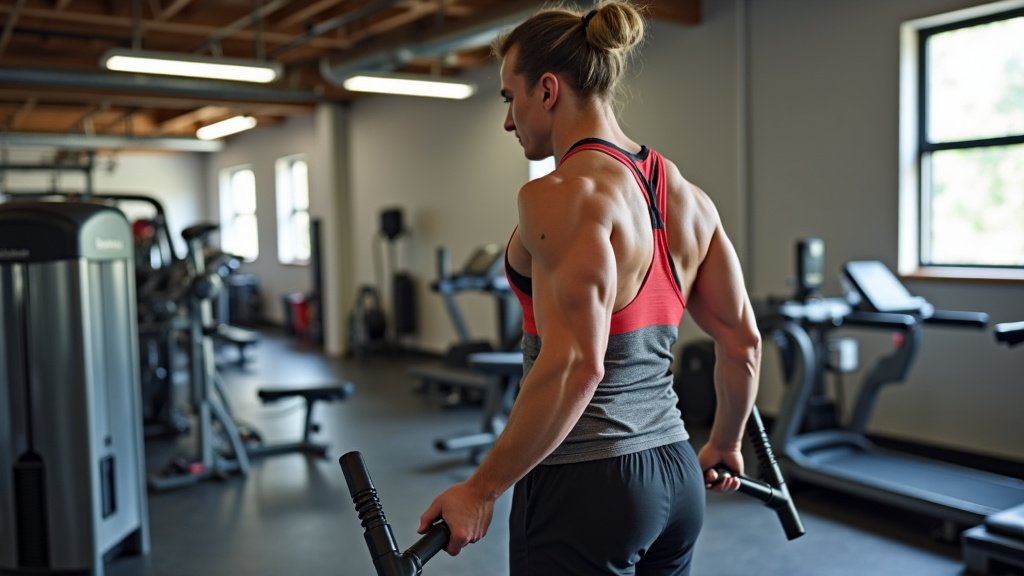
Now, let’s put it into a practical routine you can follow. For each exercise, aim for 2-3 sets of 10-15 repetitions. Choose a weight where the last few reps feel challenging but you can still maintain good form. For a structured approach, consider how to do a beginner cable machine circuit.
| Muscle Group | Exercise | Attachment | Sets x Reps |
|---|---|---|---|
| Chest | Cable Chest Press | Single Handle (2) | 2-3 x 10-15 |
| Back | Cable Row | Straight Bar | 2-3 x 10-15 |
| Shoulders | Cable Lateral Raise | Single Handle | 2-3 x 10-15 |
| Biceps | Cable Bicep Curl | Straight Bar | 2-3 x 10-15 |
| Triceps | Tricep Pushdown | Rope | 2-3 x 10-15 |
| Glutes/Hamstrings | Cable Kickback | Ankle Strap | 2-3 x 10-15 per leg |
Tips for a Successful Cable Workout
Getting started is exciting! Here are a few pointers to make your cable workouts effective and enjoyable. Remember, it’s a marathon, not a sprint. Celebrate small victories!
- Start Light: Always begin with a weight that allows you to perform the exercise with perfect form. You can always increase it later.
- Focus on Form: Quality over quantity. If your form breaks down, lower the weight. Watching videos can help you visualize the movement.
- Control the Movement: Don’t let the weight just snap back. Control both the lifting and lowering phases of each rep. This builds more muscle.
- Breathe: Exhale during the effort part of the exercise, and inhale as you return to the starting position.
- Listen to Your Body: Some soreness is normal, but sharp pain is not. If something hurts, stop and adjust.
- Stay Hydrated: Drink water before, during, and after your workout.
You’ve got this! Consistency and good form will lead to great results. We found that beginners who stick to a simple, consistent routine see the best progress.
Conclusion
You’ve discovered that yes, you absolutely can build a strong fitness foundation using just cable attachments. We’ve shown you how versatile these machines are, offering consistent resistance and a safe environment for learning proper form. By focusing on essential attachments and following our sample full-body routine, you can effectively work all your major muscle groups.
Remember to prioritize safety, control your movements, and listen to your body. Starting with light weights and concentrating on good form will set you up for long-term success. So, grab those handles and start your journey – your fitness goals are well within reach!
Frequently Asked Questions
Are cable workouts good for building muscle for beginners?
Yes, cable workouts are excellent for building muscle, especially for beginners. The constant tension provided by cables effectively engages your muscles throughout the entire movement. This consistent resistance helps stimulate muscle growth and strength.
How often should a beginner do cable workouts?
As a beginner, aim for 2-3 full-body cable workout sessions per week. It’s important to include a rest day between each session. This schedule allows your muscles adequate time to recover and adapt, which is crucial for building strength and preventing overtraining.
Can I get a full-body workout with just a few cable attachments?
Absolutely! You only need a few key cable attachments, like a single handle, rope, straight bar, and ankle strap, to achieve a comprehensive full-body workout. These versatile tools allow you to target every major muscle group effectively.
Is it safer to use cables than free weights for beginners?
Many beginners find cable machines safer than free weights. Cables offer more stability and guidance for movements, reducing the risk of injury while you learn proper form. You can also easily adjust the weight with a pin, making changes hassle-free.
What weight should I start with on a cable machine?
Always start with a weight that allows you to perform 10-15 repetitions with perfect form. It’s better to use lighter weight and focus on control than to lift too heavy and compromise your technique. You can gradually increase the weight as your strength improves.