Dumbbells: The Complete Buying Guide
The right dumbbell set matches your exercises, starting strength and room to progress. Choose fixed pairs for quick weight changes, or adjustable dumbbells to save space, and check the full weight range and storage before buying.
On this page (9 sections)
- How do you choose the right dumbbell weight?
- Should you buy fixed or adjustable dumbbells?
- Which dumbbell materials and head shapes make sense?
- How much room does a dumbbell set need?
- Which dumbbell set should you start with?
- How can you build a balanced dumbbell routine?
- What should you check before buying a dumbbell set?
- Explore dumbbells by topic
- Which dumbbell set is right for you?
A dumbbell set should give you useful weight choices for your workouts, fit your available space and leave room to progress. Fixed pairs are easy to grab between exercises, while adjustable dumbbells keep more weight options in a smaller footprint.
Start by listing the movements you plan to do and the weights you already use, if any. Then compare the set’s increments, grip, head shape and storage, rather than choosing by total pounds alone.
This guide covers the decisions that shape a home dumbbell setup, from choosing a starting weight to arranging a rack. If you need weights for a particular room or training plan, use the linked guides in each section to narrow the options.
How do you choose the right dumbbell weight?
Choose a weight that lets you complete your planned reps with steady form and control. The right load varies by exercise: you may need different weights for a shoulder raise, a row and a squat.
For a practical starting point, try a few controlled reps with a weight you can lift without swinging or rushing. If the last reps feel easy and your movement stays consistent, the weight may be too light for that exercise; if you lose control, use less weight.
A set with several increments can make those adjustments easier. A lightweight dumbbell set may suit lighter movements, while lifters planning to progress through heavier loads can compare a dumbbell set up to 100 lbs.
How can you choose a dumbbell set for your starting point?
Choose the range around your actual exercises and current ability, not a guess about what you might lift months from now. A pair that feels manageable for a curl may be too light for a lower-body move.
If 25 lb pairs suit your plan, compare 25 lb dumbbell pairs.
If you are new to strength training, include lighter options so you can practice control. A range of pairs can also help more than one person in a household choose a suitable load for the same movement.
Write down the weights you use or try during a few workouts. That gives you a more useful reference than choosing based on a single exercise or the set’s total weight.
Should you buy fixed or adjustable dumbbells?
Fixed dumbbells suit fast changes between exercises, while adjustable dumbbells save space by combining weights in one set. Your room, budget and preferred workout pace help decide which trade-off works better.
| Style | Works well when | Check before buying |
|---|---|---|
| Fixed pairs | You want to pick up a new weight quickly | Space for the full range and a rack |
| Adjustable | You want several weights in less space | Weight-change process, storage and total range |
| Neoprene pairs | You want lighter options for varied routines | Available increments and grip feel |
| Rubber hex pairs | You want flat-sided heads and heavier choices | Rack footprint, handle and floor setup |
Fixed pairs can make circuits smoother because you do not need to adjust a dial or swap plates between sets. The trade-off is that each added pair needs a place to live.
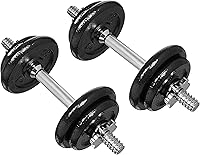
Adjustable sets can keep a small home gym tidy, but a weight change takes time. Compare adjustable dumbbells with stands if you want the weights and their storage in one setup, or see best value adjustable dumbbells for options focused on cost and function.
If your priority is a larger range in an adjustable design, compare heavy adjustable dumbbells and check their maximum load against your planned lifts.
Which dumbbell materials and head shapes make sense?
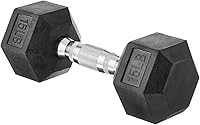
Choose dumbbells by how they feel in your hands, where you’ll use them and how you’ll store them. Rubber-coated hex heads have flat sides that help prevent rolling, while neoprene sets can offer lighter increments for varied routines.
Rubber-coated weights may help reduce noise and protect floors from scratches, but they are not permission to drop weights. For added floor protection, put the weights down with control and use flooring that suits your room and equipment.
A textured handle can help you keep a secure grip. Check whether the handle is metal, its shape and whether the grip feels comfortable to you if you can inspect it before buying.
Are rubber hex dumbbells a good choice for home gyms?
Rubber hex dumbbells can suit home gyms where you want non-rolling heads and a place to store the pairs. A rack keeps the weights off the floor, but its footprint still needs to fit your room.
The CAP Rubber Coated Dumbbell Weight Set includes five pairs from 5 to 25 lb and a vertical A-frame rack. For a rack-based fixed setup, compare rubber hex dumbbell sets with racks and dumbbell sets with tree racks.
If you’re deciding between a broad rack setup and a compact adjustable set, check the space each one needs when you’re using it as well as when it’s stored. A weight set with a rack can help keep pairs organized and within reach.
When does a neoprene dumbbell set make sense?
A neoprene set can work well when you want several lighter pairs for strength, cardio or circuit routines. Compare 10 lb dumbbell pairs if that weight fits your exercises.
The CAP Neoprene Dumbbell Pairs & Sets includes 5, 8, 10, 12 and 15 lb pairs, plus an A-frame rack.
Its flat-sided heads help prevent rolling, and the marked ends make the weights easier to identify. Consider the full range and handle feel before choosing it for exercises that call for heavier loads.
How much room does a dumbbell set need?
A dumbbell set needs space for the rack, access to each pair and safe movement during exercise. Measure the floor area and the path around it before you buy.
For fixed dumbbells, count the rack footprint and room to lift each pair out without bumping into a wall or other equipment. If there’s no rack, plan a stable storage spot where the weights won’t block a walkway.
Keep the workout area clear enough to perform each movement without reaching around furniture. If you train beside a functional trainer, see how to set up a functional trainer and leave space for its cable path and your dumbbell movements.
Some buyers want more than one kind of free weight. If that fits your training, compare a kettlebell and dumbbell set or a kettlebell set for a functional trainer and plan storage for both.
Which dumbbell set should you start with?
Match the set to the work you plan to do, then check whether its weight options and storage suit your room. These four options illustrate different ways a set can fit a home workout.
The CAP rubber-coated set suits buyers who want several fixed pairs and a vertical rack. If you need more than lighter and moderate weights, compare the specific increments available in the set configuration you’re considering.
The CAP neoprene set offers more steps among lighter pairs, from 5 to 15 lb. It can suit routines that use varied lighter loads, but it won’t replace heavier pairs if your planned exercises need them.
The BalanceFrom rubber-coated hex sets share the 5 to 20 lb pair range in the information here. Compare their rack dimensions and the storage space available to you before deciding between them.
How can you build a balanced dumbbell routine?
A useful dumbbell setup supports the movements you plan to train across your week. You might use weights for presses, rows, curls, squats and lunges, with load chosen separately for each exercise.
Start with a few movement patterns and choose a weight that lets you control the full rep. A set of dumbbells can support full-body work, upper-body sessions or shorter workouts, depending on how you arrange your exercises.
Use these guides to plan your training:
- For a full-body dumbbell workout at home, choose weights that suit both upper- and lower-body movements.
- A weekly dumbbell workout plan at home can help organize exercise days and recovery time.
- If you want a focused session, see the chest exercises with dumbbells and dumbbell push day workout.
- For arm work, follow the steps for incline dumbbell curls; for pulling movements, see how to work out your back with dumbbells.
- If you’re starting later in life, use the guidance in how to start a dumbbell workout after 50 and choose loads you can control.
A set that fits your routine should make it easy to use the right weight and return it to storage. Add more pairs only when your workouts show a clear need for them.
What should you check before buying a dumbbell set?
Check weight increments, storage dimensions, handle comfort and the set’s full contents before you choose. These details determine whether the equipment fits both your workouts and your home.
Use this checklist:
- List your exercises. Note which movements you’ll do and whether they need different weights.
- Compare increments. Check the individual pair weights, not only the set’s total.
- Measure your storage spot. Include the rack and room to access the weights.
- Check the handles. Look for a grip shape and texture you can hold securely.
- Plan for the floor. Use controlled set-downs and suitable flooring.
- Consider who will use the set. Multiple users may need a wider range of increments.
If two options seem close, compare the weight pairs and rack included in each exact set. A storage stand can be useful only if it fits the space you’ve measured.
Explore dumbbells by topic
- Best Dumbbells for Women
Which dumbbell set is right for you?
Pick fixed pairs with a rack if you want quick weight changes and have room to store them. Pick adjustable dumbbells if saving space matters more, and choose a lighter neoprene set if its increments suit your exercises.
Choose the weight range around the movements you do now, with some room to progress. For another perspective on home setups, see our best dumbbells for home gyms and best rubber hex dumbbells guides.
Frequently asked questions
How do I choose the right dumbbell weight?
Choose a weight that lets you complete your planned reps with steady form and control. If you have to swing the weight or shorten the movement, use a lighter one.
Since different exercises use different amounts of strength, a set with several increments can give you more options than one pair.
Are fixed or adjustable dumbbells better for a home gym?
Fixed dumbbells make weight changes quick and simple, but a full range of pairs takes more room. Adjustable dumbbells combine several weights in one set and can suit a compact space, though you need to pause to change settings.
Match the style to your available storage and workout pace.
What dumbbell set should a beginner buy?
A beginner should choose weights that feel manageable for the exercises they plan to do, with enough lighter options to learn control and enough range to progress. A set with several pairs can work well if you have room, while adjustable dumbbells can reduce storage needs.
Do rubber hex dumbbells protect floors?
Rubber-coated dumbbells can help reduce noise and protect floors from scratches, but they do not make drops safe for every surface. Use a suitable gym floor, set weights down with control and check the floor maker's care guidance before placing heavy equipment.
What is the difference between neoprene and rubber dumbbells?
Neoprene dumbbells typically have a coated finish and are often sold in lighter pairs for general training. Rubber-coated hex dumbbells are commonly available in heavier increments and may come with racks.
Compare the exact weights, handle feel and storage included in each set.