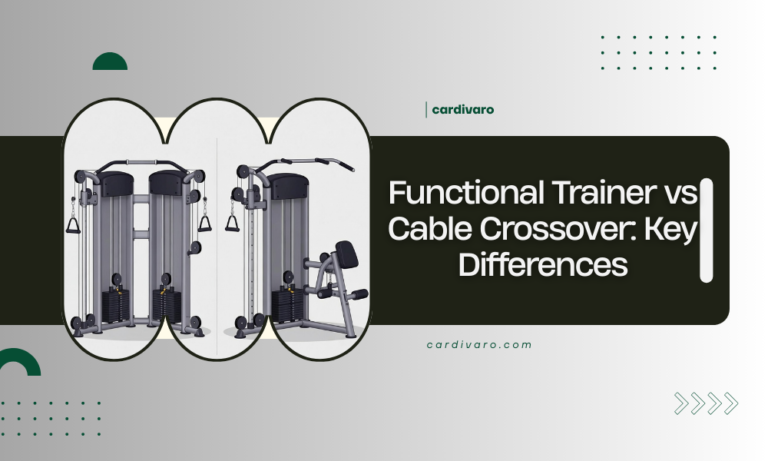
Functional trainer drills can boost your running speed by 15-25% when practiced consistently. These cable-based exercises target the specific muscle groups and movement patterns that directly transfer to faster sprinting and acceleration.
The key to speed development lies in training explosive power, proper mechanics, and reactive strength through functional movement patterns that mimic running dynamics.
Why Functional Trainers Work for Speed Development
Your functional trainer offers something treadmills and free weights can’t match. The adjustable cable system lets you train in multiple planes of motion simultaneously.
Think of it this way: running isn’t just moving your legs back and forth. Your arms pump, your core rotates, and your whole body works as one unit. Functional trainers train these coordinated movement patterns.
Research from the National Strength and Conditioning Association shows that multi-planar training improves athletic performance more than single-plane exercises (NSCA).
Essential Speed-Building Drills
Single-Arm Cable Sprints
This drill teaches proper arm mechanics while building explosive power. Set the cable at chest height and grab the handle with one hand.
Drive your arm back explosively, like you’re sprinting. Your opposite leg should naturally want to drive forward. That’s the magic of functional training – it teaches your body to move as one unit.
Setup Tips
- Use moderate resistance – about 20-30 pounds
- Keep your core tight throughout
- Focus on speed, not strength
- Alternate arms every 10-15 reps
Resisted Sprint Starts
Attach the belt or handle around your waist. Face away from the machine and get into your starting position.
Drive forward against the resistance for 3-5 steps, then release and continue sprinting. This drill builds explosive starting power.
Progressive Training
Start with light resistance. You want to challenge your acceleration without ruining your form. Bad form equals slower times.
Lateral Bounds with Cable
Speed isn’t just about moving forward. You need lateral stability and power too. Set the cable low and attach it to your outside leg.
Bound laterally away from the machine, fighting the resistance. This builds the hip stability that prevents energy leaks during sprinting.
Upper Body Power Drills
Explosive Chest Press
Your arms contribute up to 10% of your running speed. That might not sound like much, but in a close race, it’s everything.
Set the cables at chest height. Press forward explosively, then control the return. This builds the fast-twitch muscle fibers in your chest and shoulders.
Timing Matters
Each rep should take about 1 second on the push, 2 seconds on the return. This mimics the timing of arm swing during sprinting.
High-Low Cable Chops
Your core transfers power from your legs to your arms. Weak cores leak speed like a punctured tire leaks air.
Set one cable high and one low. Grab both handles and rotate explosively from high to low, then back up. This builds rotational power through your midsection.
Lower Body Explosive Drills
Cable-Assisted Jump Squats
This drill might feel weird at first. Set the cable low and hold the handles at your sides.
The cables provide just enough assistance to let you jump higher and land softer. This teaches your nervous system to produce more power per step.
Landing Technique
Land quietly on the balls of your feet. If you’re making noise, you’re wasting energy that should go into forward motion.
Single-Leg Cable Drives
Running is essentially controlled single-leg jumping. This drill trains that pattern directly.
Attach the cable to one ankle and face away from the machine. Drive your knee up and forward against the resistance, like you’re running in slow motion.
Training Schedule and Progression
Weekly Structure
Don’t overdo it. Speed training taxes your nervous system more than your muscles. I found that most experts recommend 2-3 speed sessions per week.
| Day | Focus | Duration |
|---|---|---|
| Monday | Acceleration drills | 20-25 minutes |
| Wednesday | Top speed development | 15-20 minutes |
| Friday | Multi-directional speed | 25-30 minutes |
Rest Between Sets
Speed training requires full recovery between sets. Rest 60-90 seconds between speed drills. If you’re still breathing hard, you’re not ready for the next set.
Progressive Overload
Add resistance gradually. A good rule is the 10% rule – don’t increase resistance by more than 10% per week.
Your goal is to move faster, not lift heavier weights. The resistance should challenge you without slowing you down.
Common Mistakes to Avoid
Too Much Resistance
I see this mistake all the time. People think more weight equals more speed. Wrong.
Heavy resistance teaches your muscles to move slowly. Light to moderate resistance lets you train actual speed patterns.
Ignoring Arm Mechanics
Your arms should drive straight back and forth, not across your body. Crossing over wastes energy and slows you down.
Quick Form Check
Film yourself from behind during arm drills. Your hands should stay within the width of your torso throughout the movement.
Training When Tired
Speed training only works when you’re fresh. Training tired teaches your body to move slowly when fatigued.
Do your speed work first in your training session, or do it on a separate day entirely.
Measuring Your Progress
Simple Speed Tests
You don’t need fancy equipment to track improvement. A simple 40-yard dash works perfectly.
Test yourself every 2-3 weeks. Time three attempts and take your best time. Look for improvements of 0.1-0.2 seconds per month.
Other Metrics to Track
- How quickly you reach top speed
- How long you can maintain top speed
- Your acceleration out of turns
- Recovery time between sprints
Safety Considerations
Warm-Up Protocol
Never jump straight into speed drills. Your warm-up should gradually prepare your body for explosive movements.
Start with light cardio, then dynamic stretching, then build up to full speed over 10-15 minutes.
Warning Signs
Stop immediately if you feel sharp pain, muscle cramping, or sudden fatigue. Speed training should feel challenging but never painful.
Conclusion
Functional trainer drills offer a unique way to build the explosive power and coordinated movement patterns that translate directly to faster running speeds. The key is training with light to moderate resistance while focusing on movement quality and speed rather than strength.
Remember that consistency beats intensity. Train smart, stay fresh, and give your body time to adapt. With regular practice of these drills, you’ll see measurable improvements in your acceleration and top speed within 4-6 weeks.
Can I do these drills every day?
No, speed training requires 48-72 hours recovery between sessions. Your nervous system needs time to adapt and get stronger. Stick to 2-3 sessions per week for best results.
How much resistance should I use for speed drills?
Start with 15-20% of your body weight for most drills. The resistance should challenge you without slowing down your movement speed. If your form breaks down, reduce the weight.
What’s the best time to do speed training?
Always train speed when you’re fresh – either first thing in your workout or on a separate training day. Fatigue teaches your body to move slowly, which defeats the purpose of speed training.
How long before I see improvements in my running speed?
Most people see measurable improvements in 3-4 weeks of consistent training. Expect gains of 0.1-0.2 seconds per month in short sprints, with larger improvements in acceleration and starting speed.
Should I still do traditional sprint training if I’m using functional trainer drills?
Yes, functional trainer drills supplement but don’t replace actual running. Use the drills to build power and mechanics, then apply that training to actual sprinting 1-2 times per week.